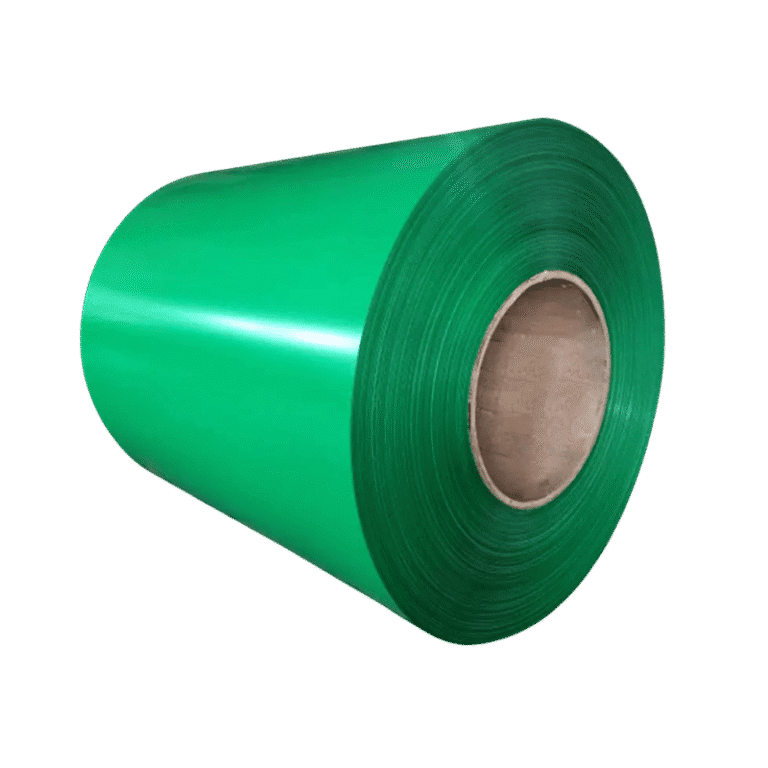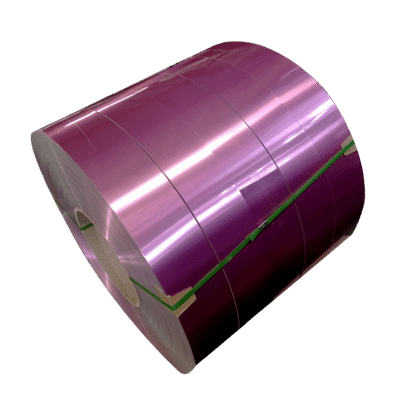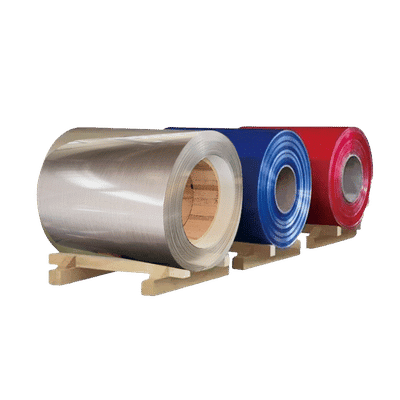

PPAL Coil & Sheet
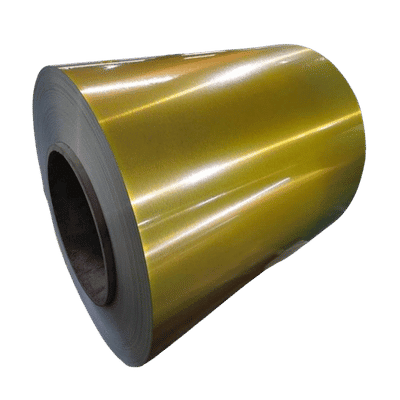
Prepainted aluminum coil and sheet for lightweight, corrosion-resistant panel applications
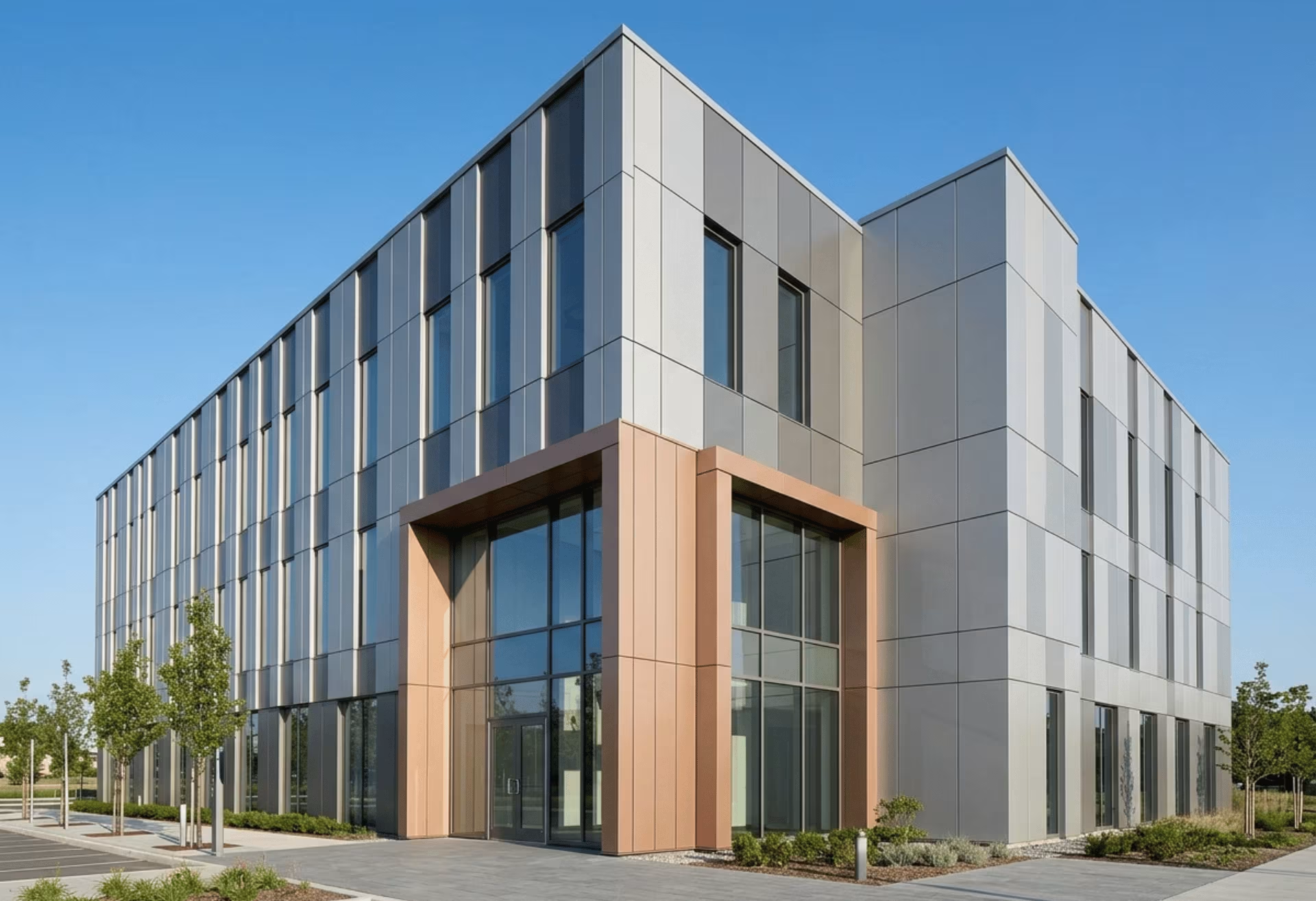
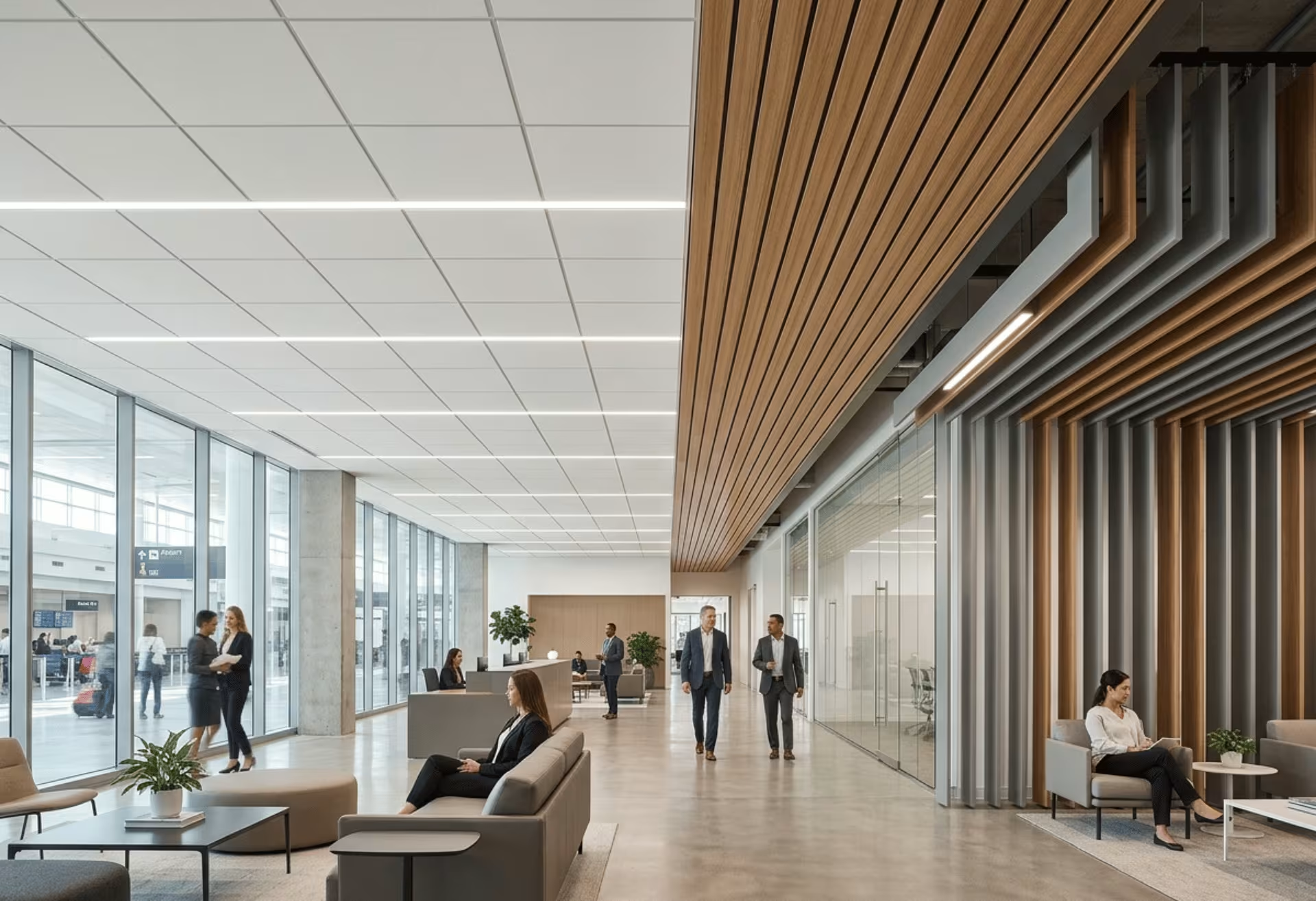
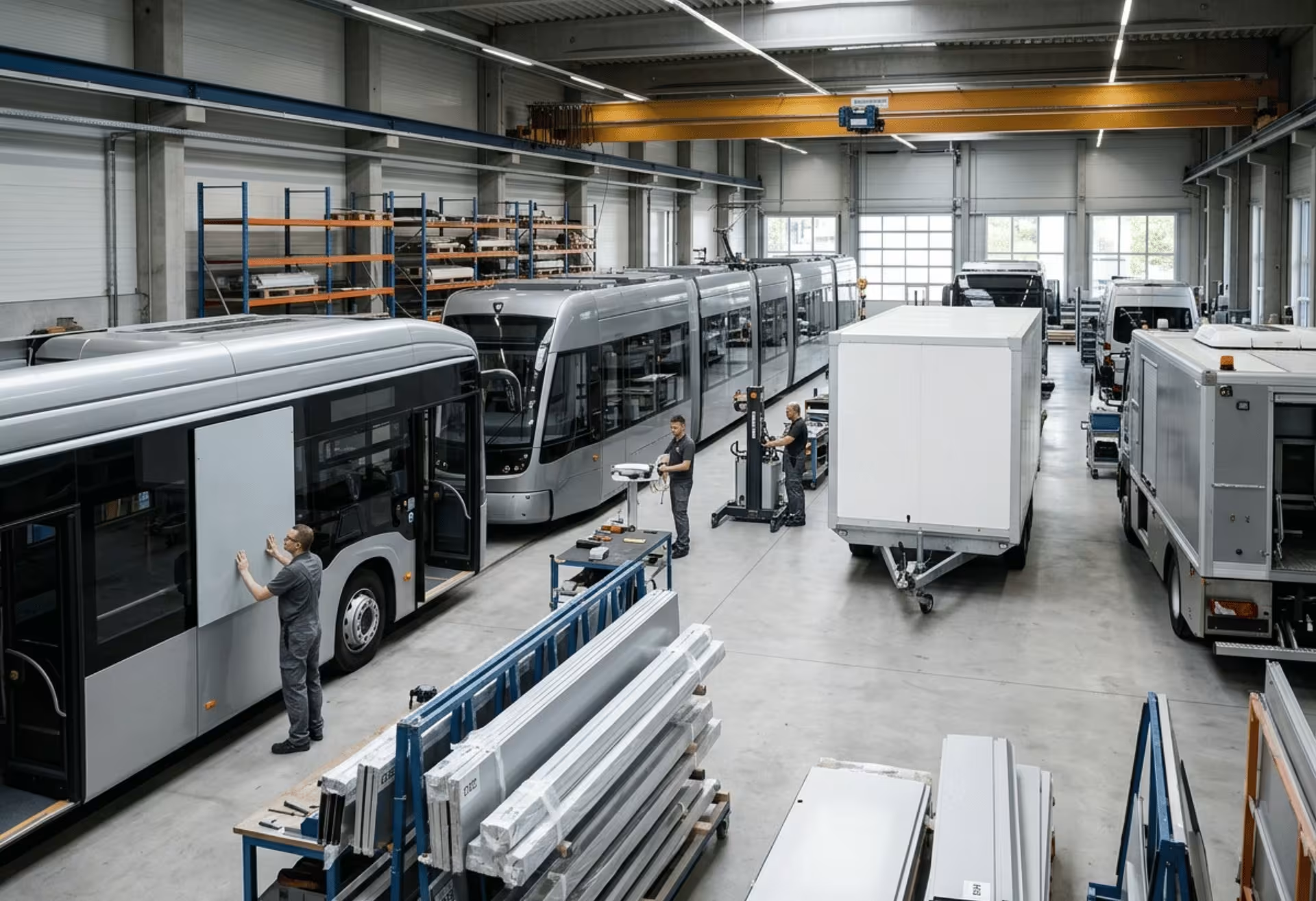
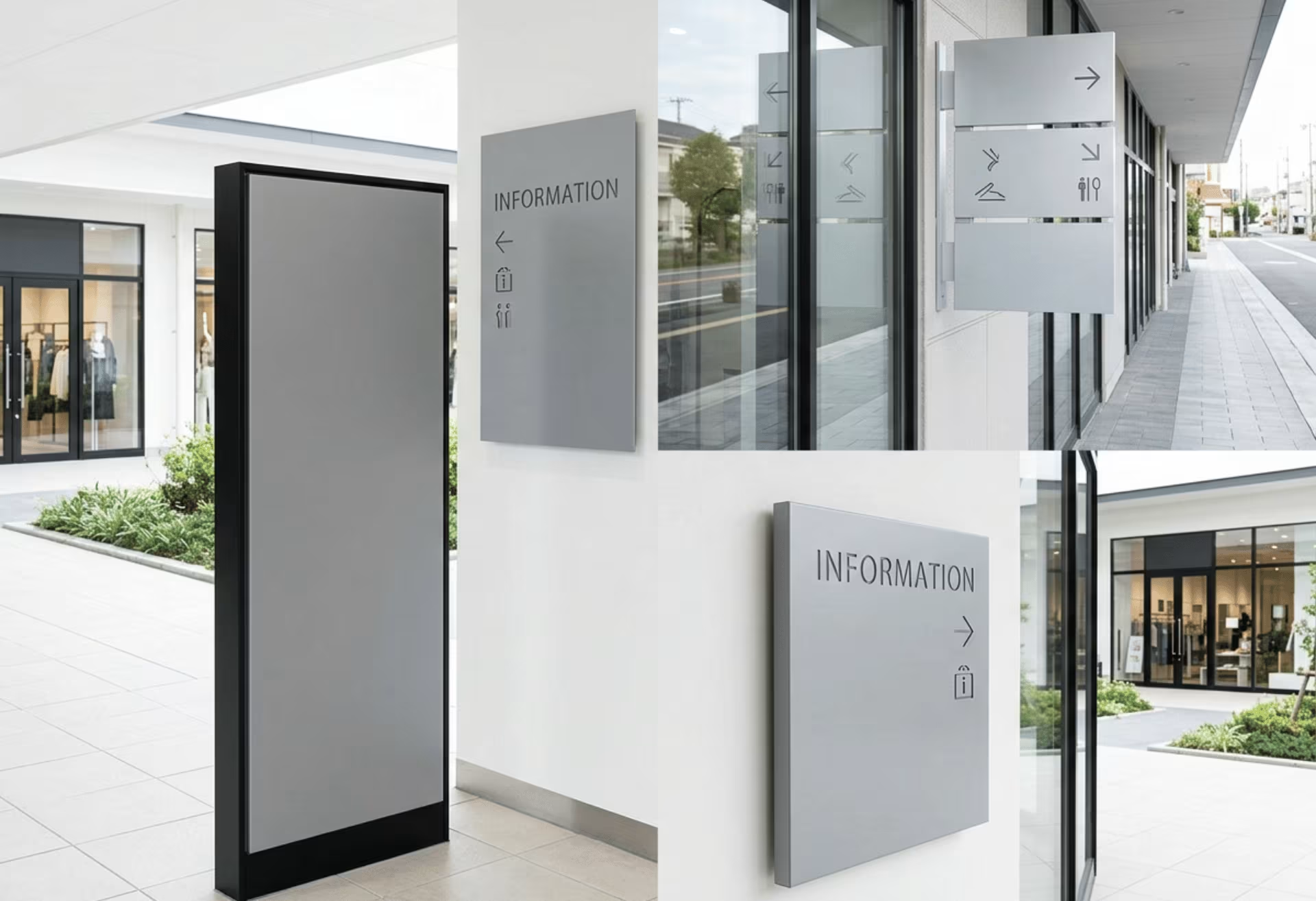
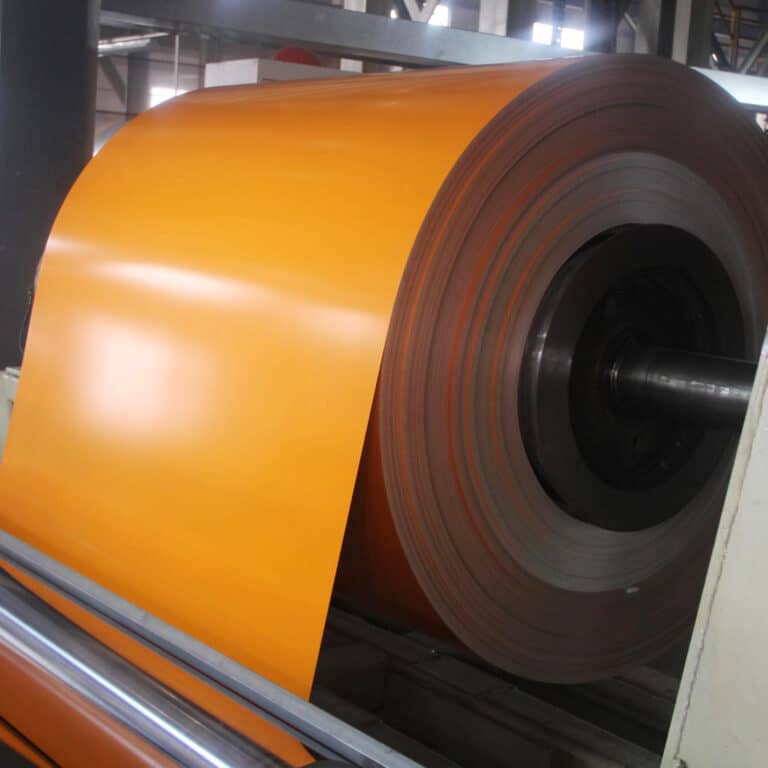
PPAL coil and sheet from Everesteel uses aluminum alloy substrates with factory-applied paint coatings to create a lightweight, ready-to-fabricate material for visible architectural and industrial applications. It is well suited to ceilings, cladding, signage, and transportation panels where corrosion resistance and reduced panel weight are important.
- Available on aluminum alloy substrates with natural corrosion resistance
- Designed for reduced weight, decorative finish quality, and fabrication efficiency
- Suitable for suspended ceilings, facades, signage, and transport-related panels
- Custom colors, slit coil, and cut-to-length support available
- MOQ from 5 tons for sampling and production supply
Own Factory, Own Coating Lines, Full Specification Control
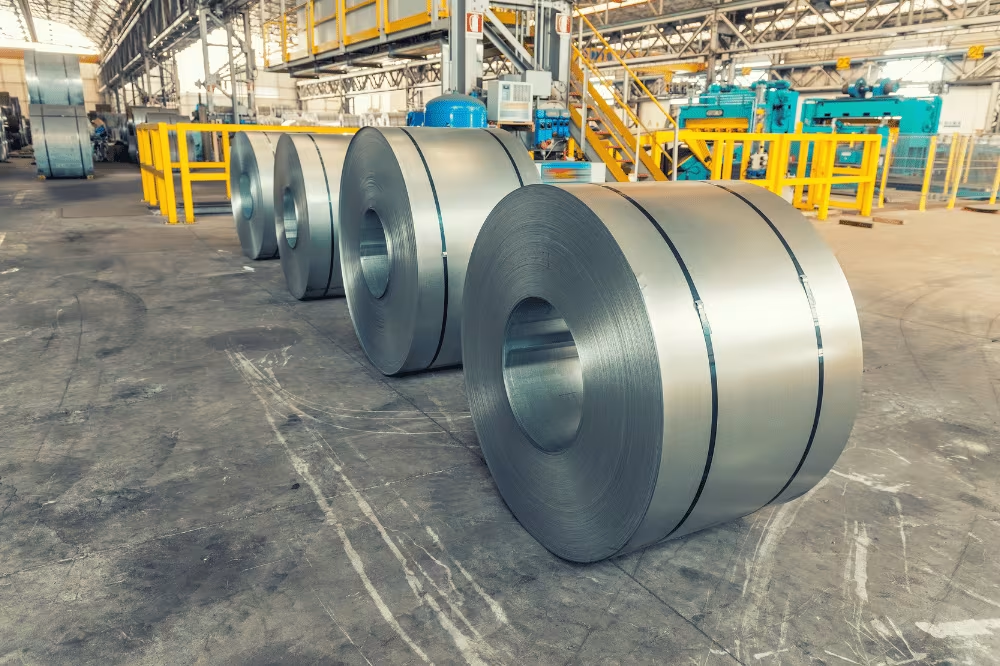
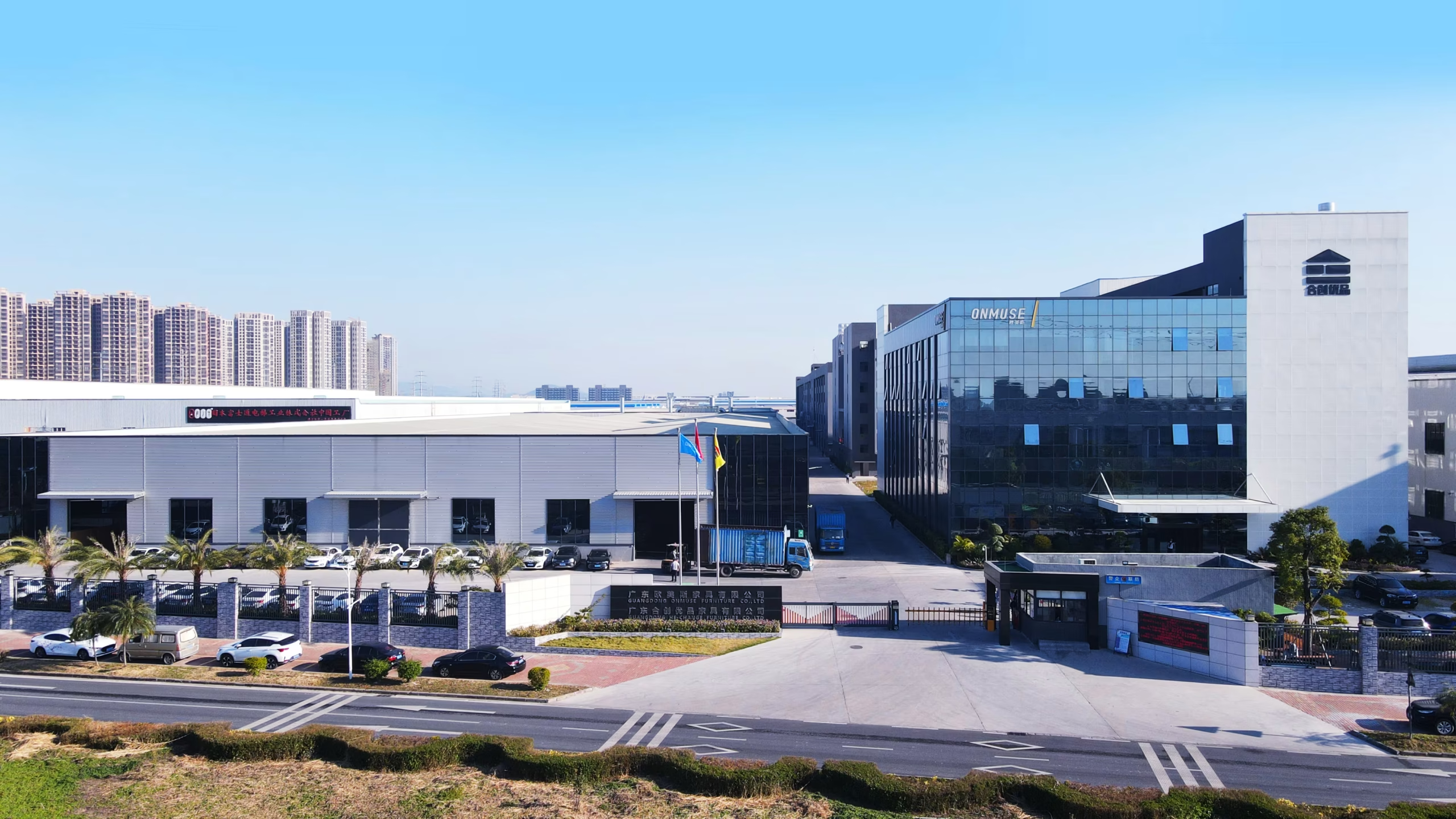
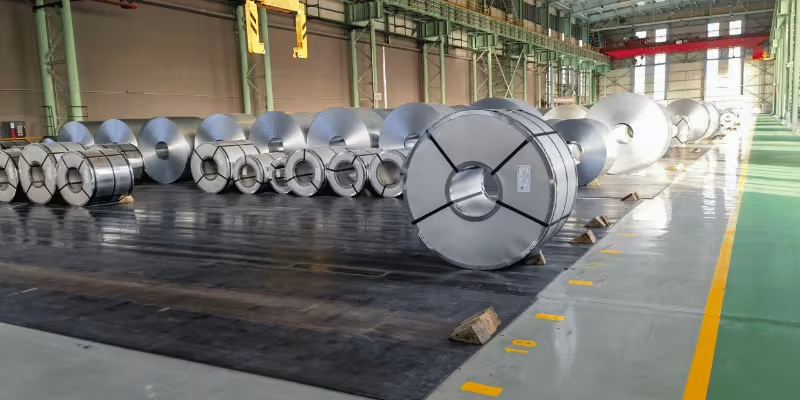
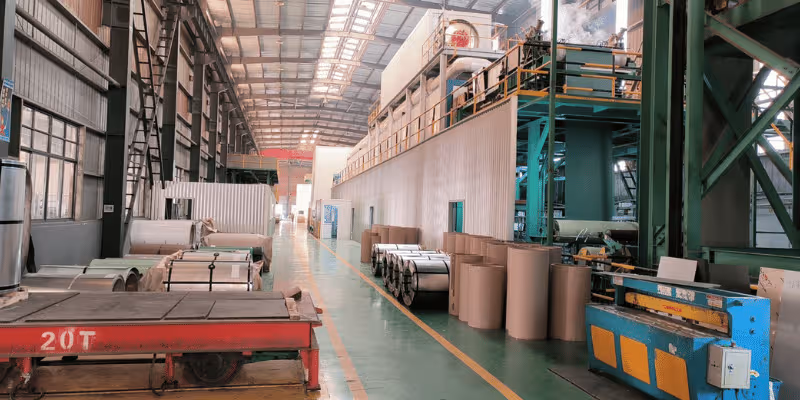
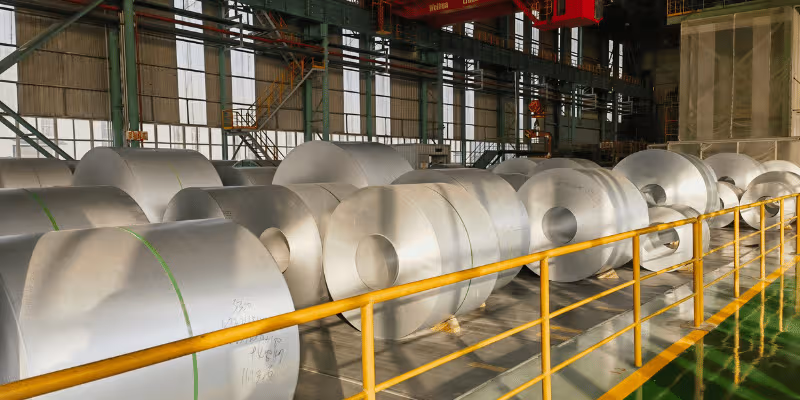
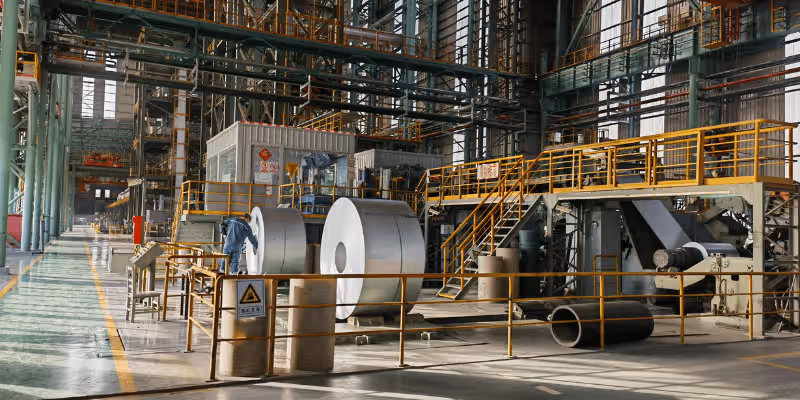
Everesteel designs and manufactures prepainted steel coils and sheets at our factory in Jiangyin, Jiangsu — one of China’s primary steel processing hubs. With 26,000+ tons of annual production capacity, we support procurement teams and panel manufacturers across 65+ countries, from initial sample approval through to full-volume orders.
We are not a trading company. Every coil that leaves our facility is produced on our own coating and processing lines, giving you direct control over specifications, lead times, and quality outcomes.
Contact Us Now
Enter your inquiry details, We will reply you in 6 hours.
26,000+
tons annual production capacity
6,800+
global buyers served
65+
countries supplied worldwide
98.7%
on-time delivery rate
What is PPAL?
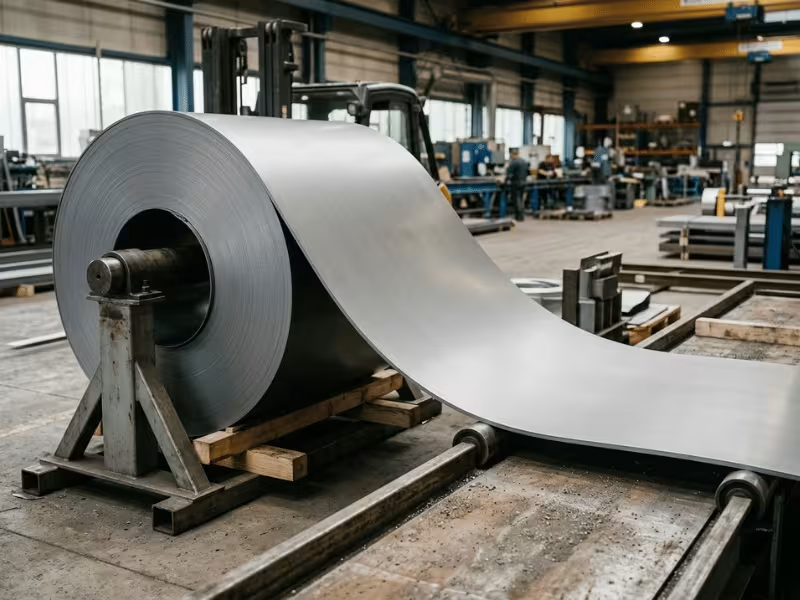
Prepainted aluminum (PPAL) — also called color-coated aluminum coil — is an aluminum alloy substrate that has been cleaned, chemically pretreated, primed, and coated with an organic paint system before fabrication.
What sets PPAL apart is the base metal itself. Steel-based products like PPGI and PPGL rely on a zinc or aluminum-zinc coating to resist corrosion. Aluminum needs no such coating — it forms a natural oxide layer that protects the metal on its own. Common alloys such as 1100, 3003, and 3105 combine this inherent corrosion resistance with good formability, and they weigh roughly one-third as much as steel of the same thickness.
Like other prepainted materials, PPAL arrives ready to use — no secondary painting at your facility. The difference is what the aluminum brings: lower weight, natural corrosion resistance, and a clean, uniform painted surface that suits high-visibility architectural and interior work.
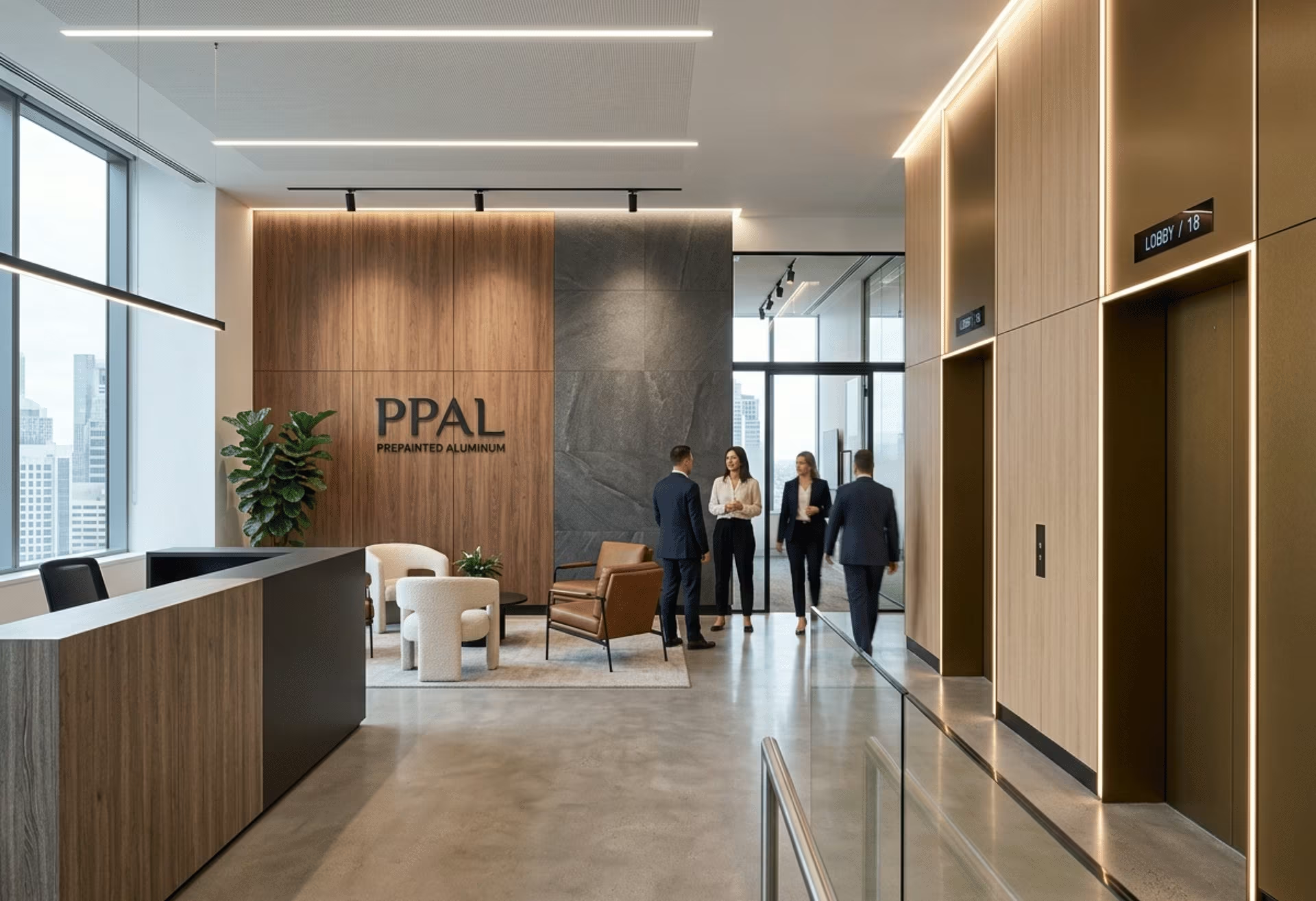
PPAL is most commonly specified for suspended ceilings, architectural facades, wall cladding, signage, and transportation panels.
PPAL vs PPGI / PPGL: Which Should You Choose?
Both are prepainted steel products with the same paint systems available. The difference is the metallic substrate beneath the paint.
| Factor | PPGI | PPGL | PPAL |
|---|---|---|---|
| Substrate | Galvanized steel (zinc) | Galvalume steel (Al-Zn) | Aluminum alloy |
| Corrosion resistance | Standard | Superior in outdoor/humid use | Excellent, no coating needed |
| Weight | Heavy | Heavy | ~1/3 of steel |
| Best environment | Indoor, general use | Coastal, humid, industrial | Weight-sensitive, architectural |
| Cost level | Economical | Premium | Premium |
| Typical use | Appliances, panels | Roofing, cladding | Ceilings, facades, signage |
- Choose PPGI for economical general use, PPGL for demanding outdoor steel applications, and PPAL when low weight, natural corrosion resistance, or a premium architectural finish is the priority.
Why Buyers Source PPAL from Everesteel
A Lightweight Substrate That Cuts Your Costs Downstream
Aluminum weighs roughly one-third of steel at the same thickness, which lowers freight, simplifies handling, and reduces the load on fixings and support structures. Because we coat on our own lines, we match alloy and thickness to your application — light gauges for ceiling tiles, heavier tempers for structural facade panels — so you get the weight savings without giving up the rigidity your product needs.
Corrosion Resistance Built Into the Metal
Aluminum resists corrosion naturally through a stable oxide layer, with no zinc coating to specify or maintain. This makes PPAL a dependable choice for humid interiors, coastal facades, and outdoor signage. Our pretreatment and priming stages are controlled in-house, so paint adhesion and long-term surface durability stay consistent from batch to batch.
A Consistent Finish That Removes Your Painting Step
Every coil leaves our line pre-finished with a smooth, uniform surface — eliminating painting booths and secondary finishing at your factory. We measure gloss and color against approved reference standards on every batch, so large facade runs and repeat ceiling orders stay visually matched, protecting your throughput and reducing rework.
Custom Colors and Patterns, Produced In-House
Standard RAL and Pantone colors are held as references, and we formulate custom matches for brand and project palettes directly on our coating lines. Decorative options — including wood grain, stone effect, and anti-fingerprint finishes — are produced on the same equipment. You receive a lab drawdown and production sample for approval before mass production, with one supplier accountable for the match.
Technical Specifications
| Parameter | Specification |
|---|---|
| Product | Prepainted aluminum coil & sheet (PPAL) |
| Substrate | Aluminum alloy (1100, 3003, 3105, 5052 on request) |
| Temper | H14, H16, H18, H24 (per application) |
| Thickness | 0.15 mm – 1.5 mm |
| Coil width | 600 mm – 1,600 mm (slit widths available) |
| Paint system | PE, HDP, PVDF |
| Top coat thickness | 5 – 25 microns (primer + topcoat system) |
| Finish options | High gloss, matte, semi-gloss, wrinkle, embossed, anti-fingerprint |
| Color | RAL / Pantone standard; custom color matching available |
| Coil inner diameter | 405 mm / 505 mm |
| Coil weight | 1 – 3 tons per coil |
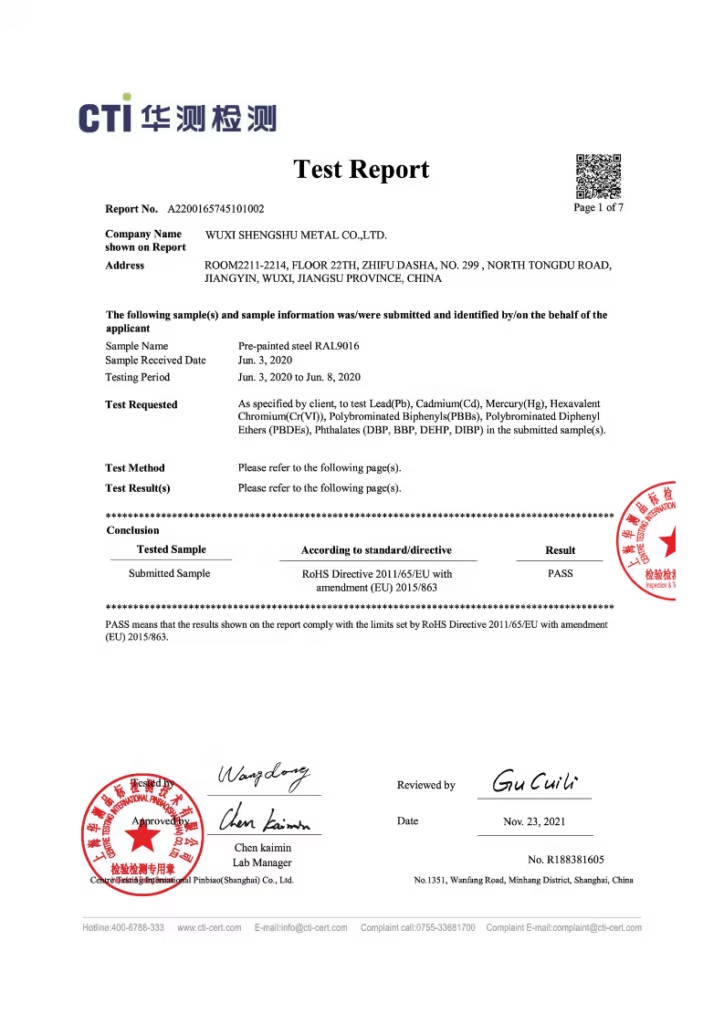
| Surface treatment | Chromate or chromate-free pretreatment (RoHS-compliant) |
| Standards | ASTM B209, EN 485, GB/T 3880, or agreed project standard |
| Typical applications | Ceiling tiles, wall cladding, facades, signage, transportation panels |
- Specifications are indicative. Custom alloys, tempers, gauges, and widths are available on request. Minimum order quantity: 5 tons.
Surface and Pattern Options
PPAL is available across a broad range of surface effects, with a weighting toward architectural, interior, and high-visibility applications.

Solid Colors
Uniform sing le-tone finishes in white, grey, silver, black, blue, and custom RAL/Pantone references. The standard choice for ceiling systems, cladding panels, and signage faces.
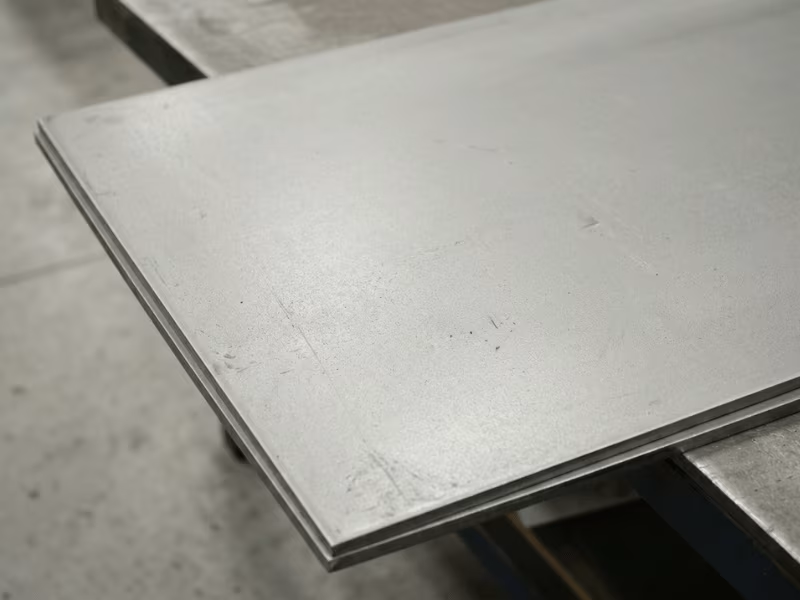
Matte / Low Gloss
Flat finish with reduced reflection — widely specified for modern facades, interior ceilings, and architectural panels where a low-sheen look is preferred.
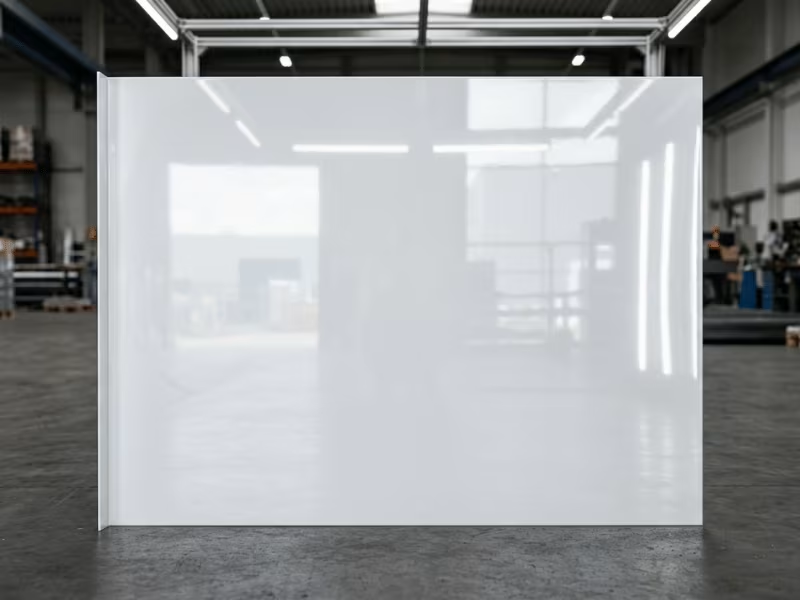
High Gloss
Higher reflectivity for signage, display fixtures, and decorative panels where a bright, clean surface is required.
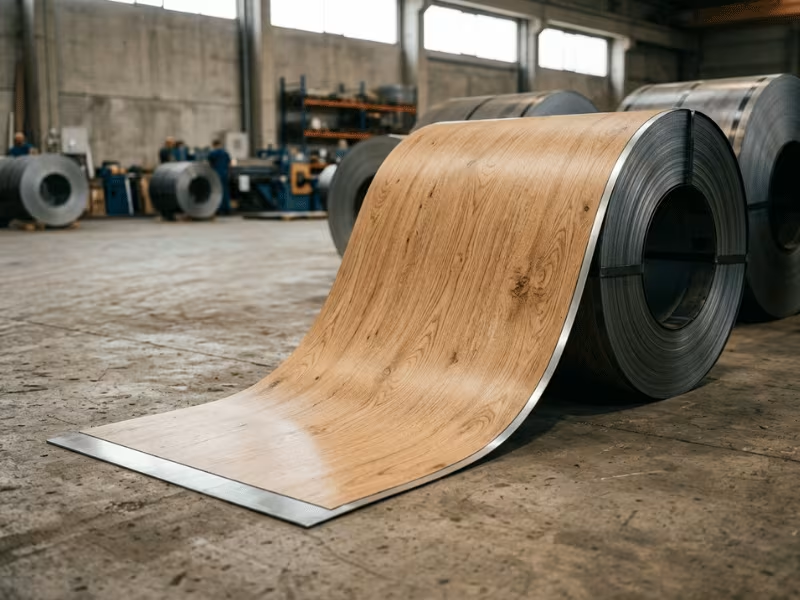
Wood Grain Print
Photorealistic timber patterns for ceilings, wall cladding, and interior decorative panels — replacing natural veneer with a lightweight, moisture-resistant alternative.
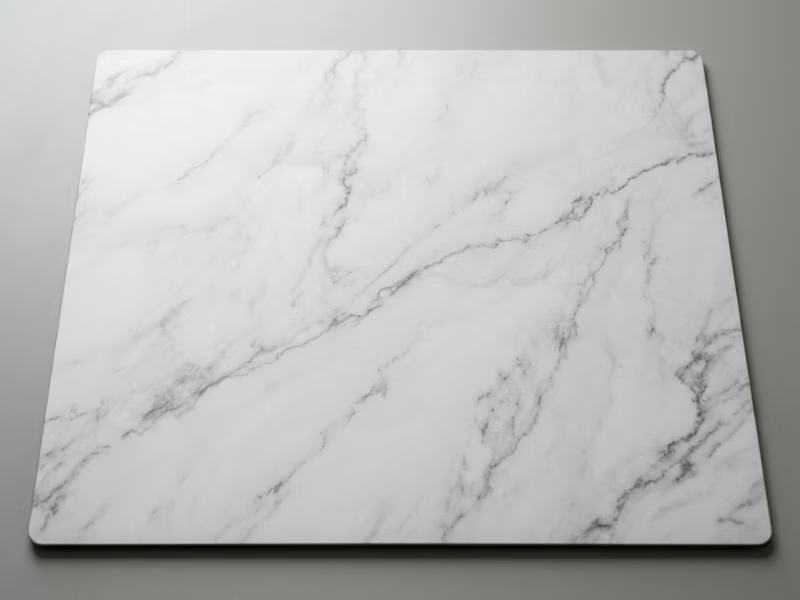
Stone / Marble Effect Print
Decorative stone-effect surfaces for feature facades, entrance cladding, and commercial fit-out projects that need a premium look at a fraction of the weight.
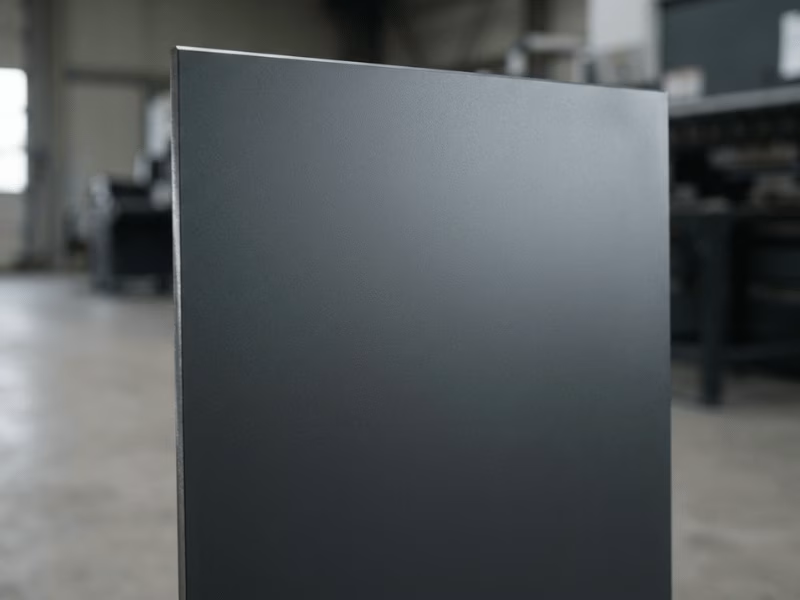
Anti-Fingerprint Coating
Topcoat formulation that resists surface smudging — specified for high-touch panels, elevator interiors, and premium interior fixtures.
Processing Capabilities
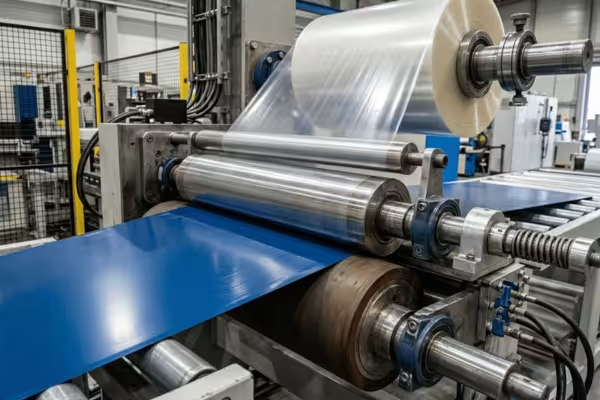
Downstream processing is available in-house, so your PPAL can arrive in the format your ceiling line, panel plant, or sign workshop actually needs — not just as master coil.
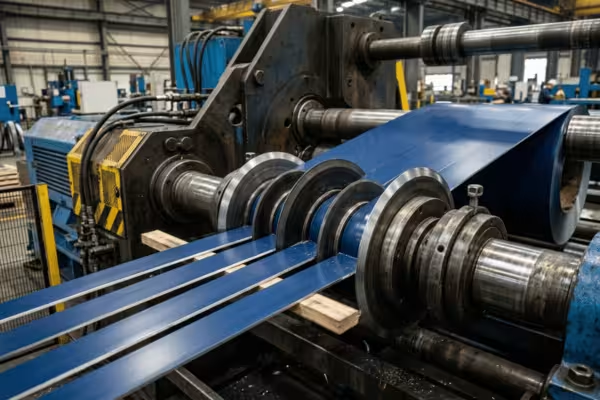
Slitting
Coils are slit to custom widths from 20 mm and above, with tight tolerances and clean edges suited to ceiling tile production, panel forming, and profile lines.
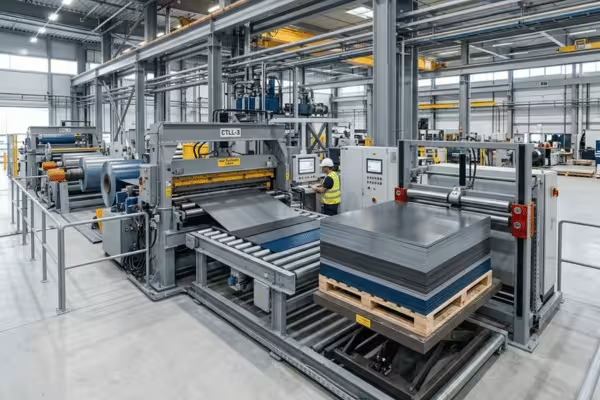
Cut-to-Length
Sheet blanks cut to your dimensions with flatness and squareness tolerances suitable for direct press, panel forming, or sign fabrication.
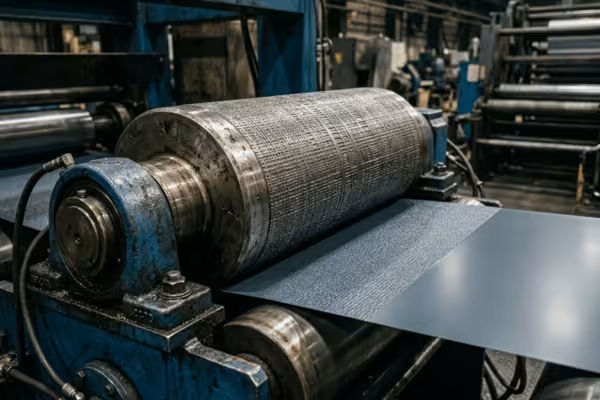
Embossing
Structural or decorative emboss patterns applied in-line, including linen, stucco, and custom profiles. Embossing adds rigidity to light gauges and hides minor handling marks.
Lamination
Protective or decorative films applied over the coated surface for transit protection, added scratch resistance, or a specific decorative effect on visible panels.
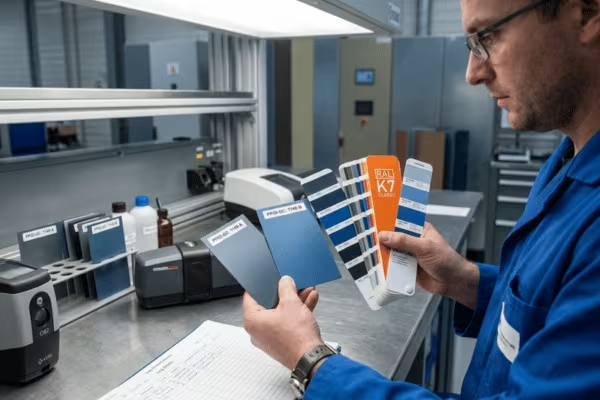
Custom Color Matching
Submit a physical sample, RAL code, or Pantone reference, and our technical team formulates a matched batch — with a lab drawdown and production sample provided for approval before the full run begins.
Sourcing slit strip or custom-cut blanks for a ceiling or facade project?
Send your width, thickness, alloy, and color, and our team will confirm lead time and pricing within one business day.
Recommended Specifications by Application
| Application | Recommended Thickness | Alloy / Temper | Paint System | Surface |
|---|---|---|---|---|
| Suspended ceiling tiles | 0.40 – 0.70 mm | 3003 H24 | PE | White matte |
| Wall cladding | 0.60 – 1.00 mm | 3003 / 3105 H16 | HDP / PVDF | Smooth or embossed |
| Lightweight panels | 0.30 – 0.60 mm | 1100 / 3003 H18 | PE / HDP | Solid color |
| Signage | 0.30 – 0.80 mm | 1100 / 3003 H14 | PE / PVDF | High gloss / matte |
| Transportation panels | 0.80 – 1.50 mm | 5052 H32 | PVDF | Matte solid |
| Architectural facades | 0.70 – 1.20 mm | 3003 / 5052 H16 | PVDF | Matte / stone / wood grain |
- These are indicative starting points. Final specifications should be confirmed based on your climate, exposure level, forming process, and target service life.
Typical Applications
Quality Control and Certifications
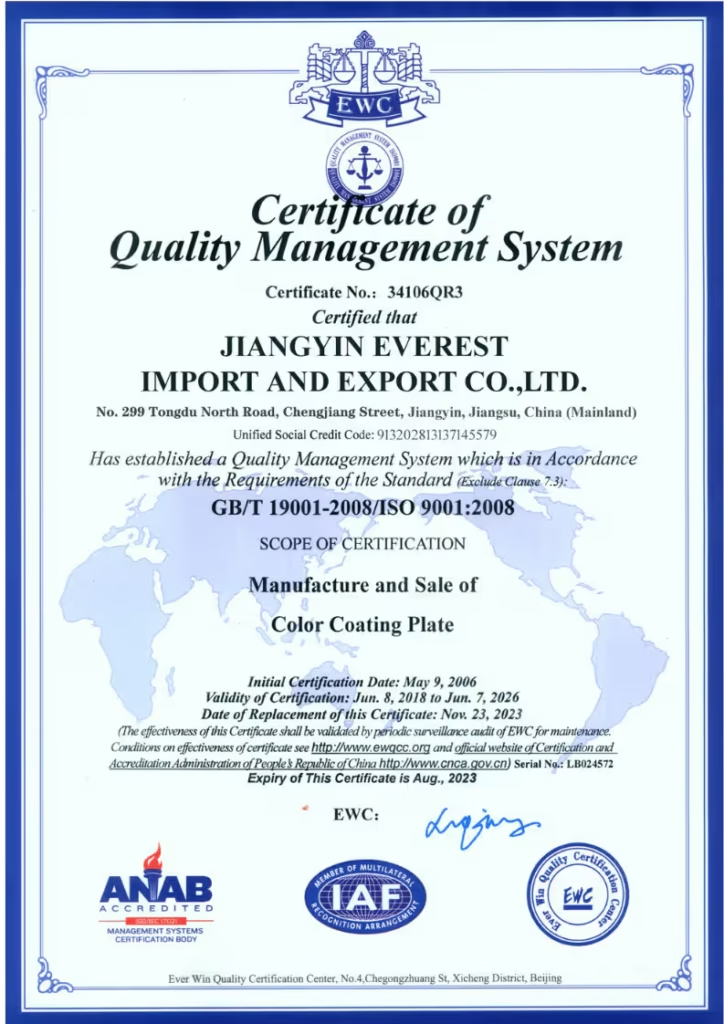
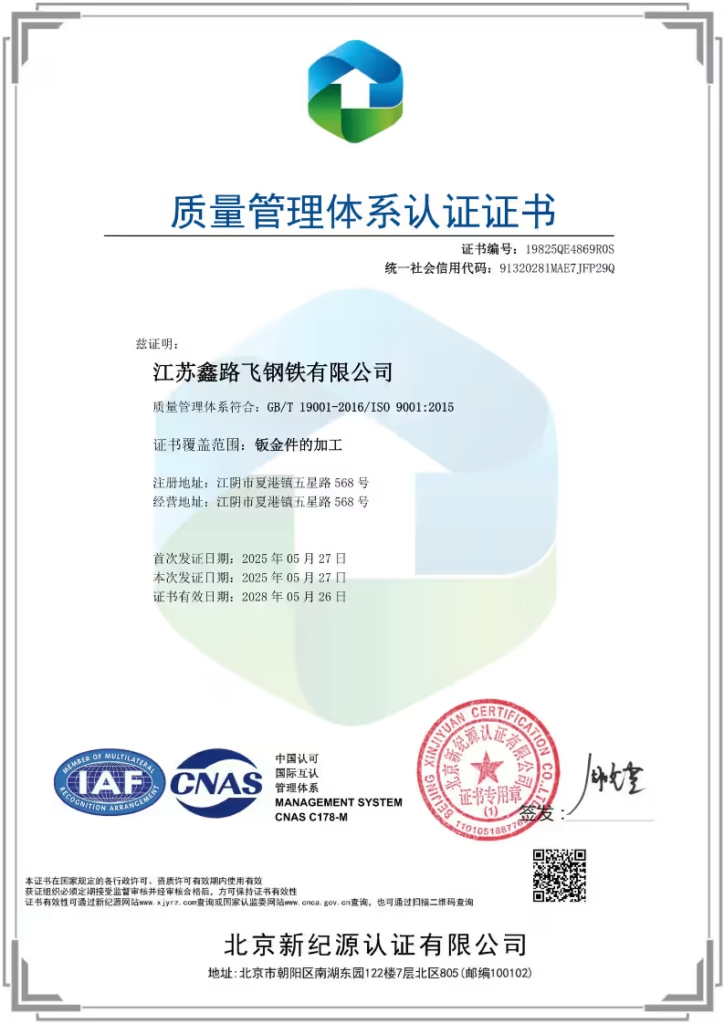
Everesteel maintains a documented quality management system across every stage of production — from incoming substrate inspection through to final coil labeling and packaging.
In-process controls include:
- Incoming aluminum substrate inspection (thickness, alloy, temper, mechanical properties)
- Paint film thickness measurement at the coating line
- Adhesion testing (cross-cut and T-bend)
- Gloss and color measurement against approved reference standards
- Salt spray and humidity cabinet testing for exterior grades
- Final dimensional check before packaging
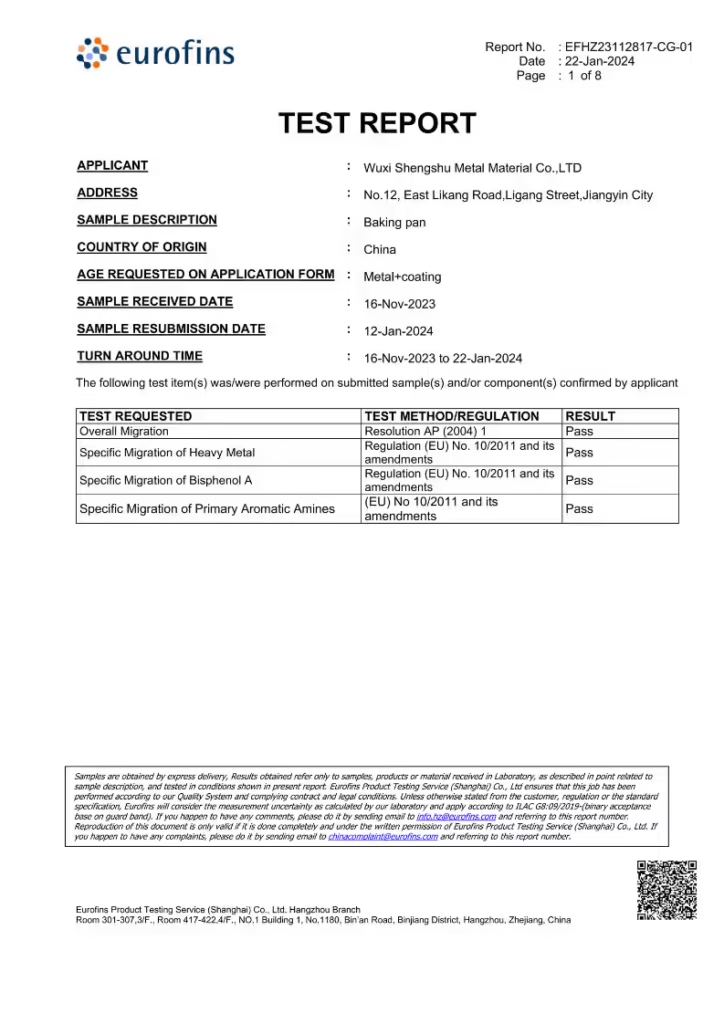
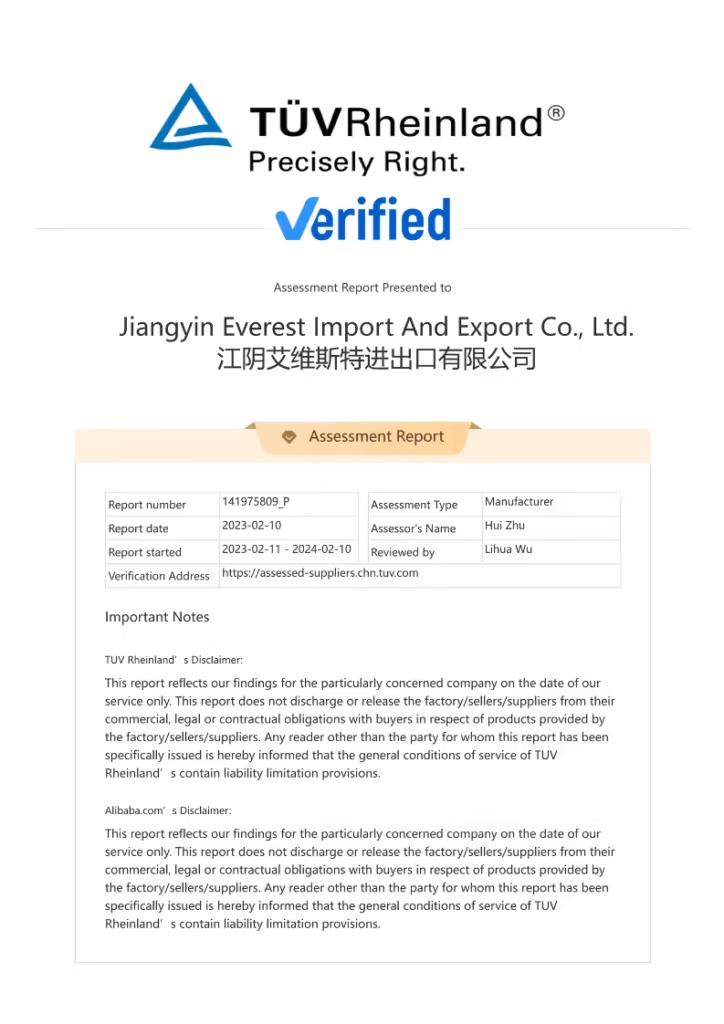
Test reports and mill certificates are issued with each shipment. Third-party inspection — including SGS, BV, and CCIC — can be arranged before loading on request.
FAQs
Q1. How much lighter is PPAL than steel-based prepainted products?
Aluminum weighs roughly one-third of steel at the same thickness. For the same panel area, this means significantly lower freight costs, easier handling on site, and reduced load on support structures and fixings — a major advantage for ceilings, facades, and transportation panels.
Q2. Does PPAL need a zinc coating for corrosion resistance?
No. Unlike PPGI and PPGL, aluminum resists corrosion naturally by forming a stable oxide layer, so no zinc or aluminum-zinc metallic coating is required. The paint system adds further protection and the decorative finish. This makes PPAL well suited to humid interiors, coastal facades, and outdoor signage.
Q3. Which paint system is best for outdoor applications?
For facades, exterior cladding, and outdoor signage in high-UV or coastal areas, we recommend PVDF or HDP systems for long-term color retention and weather resistance. PE is suitable for interior applications such as ceilings, and for cost-sensitive or lightly exposed exterior use.
Q4. What is your minimum order quantity for PPAL?
Our standard minimum order quantity is 5 tons per specification. For custom colors or non-standard dimensions, we recommend 5–10 tons to cover setup and color formulation costs. Contact us to discuss your project volume.
Q5. What is the typical lead time for PPAL orders?
Standard lead time is 15–25 days from order confirmation and deposit receipt. Custom colors requiring new paint formulation may add 7–10 days for approval. Expedited scheduling may be available depending on production capacity at the time of order.
Q6. Can you supply custom colors and provide samples before bulk production?
Yes. Submit a physical sample, RAL code, or Pantone reference, and we produce a lab drawdown for review. Once you approve the color and specification in writing, we schedule mass production. Sample production typically takes 5–10 working days.
Q7. Can PPAL be supplied as cut sheet rather than coil?
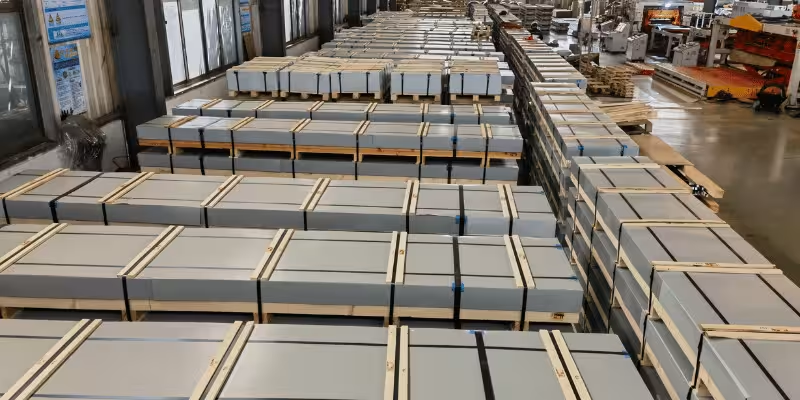
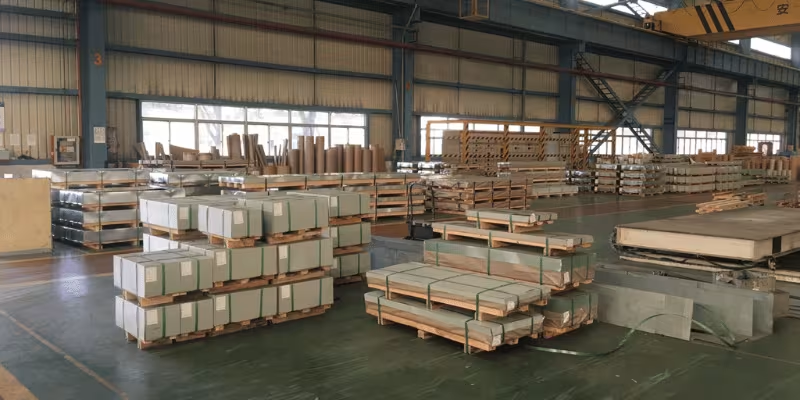
Yes. We operate slitting and cut-to-length lines on-site and can supply PPAL as master coil, slit coil, or cut-to-length sheet to your specified dimensions. Sheets are stacked, interleaved with protective paper where required, and packaged for export.
Q8. When should I choose PPAL instead of PPGI or PPGL?
Choose PPAL when weight reduction, natural corrosion resistance, or a premium architectural finish is the priority — for example ceilings, facades, signage, and transportation panels. Choose PPGI for economical general use and PPGL for demanding outdoor steel applications where cost per square meter matters more than weight.
Related Products
PPGI Coil & Sheet
PPGL Coil & Sheet
PPCR Steel
Custom Color Coated Steel
Ready to Source PPGL? Start with the Right Information.
Send us the details below and our team will respond with pricing, lead time, and availability within one business day.
- Application — what the material will be used for (e.g., ceiling tile, facade panel, sign face)
- Thickness — in millimeters (e.g., 0.60 mm)
- Width — in millimeters (e.g., 1,000 mm)
- Alloy / temper — if known (e.g., 3003 H24)
- Paint system — PE, HDP, PVDF, or not sure yet
- Color reference — RAL code, Pantone number, or physical sample
- Quantity — in metric tons, and whether one-time or recurring
- Destination country — for freight and lead time estimation