




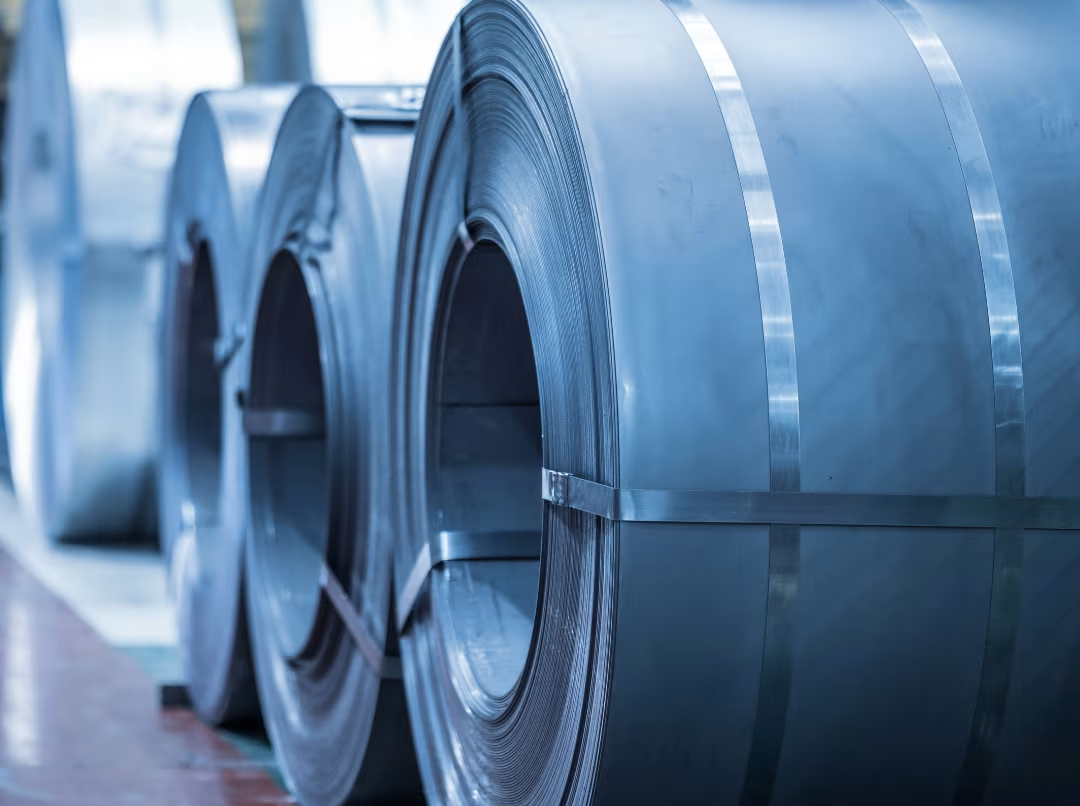
Ask ten suppliers for the “average” weight of a steel coil, and you’ll get ten different answers. That’s not evasion — it’s physics. Coil weight depends on width, thickness, and diameter, so no single number fits every order.
Here’s the short version: most carbon steel coils used in manufacturing weigh between 5 and 25 metric tons. Processed and coated coils sit on the lighter end; hot-rolled mill coils push toward the top. If you need one planning figure with nothing else to go on, assume 10 to 20 metric tons and refine from there.
A range only gets you so far, though. The real value is pinning down the exact number for the coil on your dock — and knowing what that number means for your truck, your crane, and your production line. Let’s work through it.
Who Needs Coil Weight — and Why It Matters
Coil weight isn’t trivia. Three groups depend on it daily, each in a different way.
- Buyers use weight to compare quotes per ton and book freight correctly. Quote the wrong tonnage and your landed-cost estimate falls apart.
- Plant managers use it to select cranes, coil cars, and racks. Lifting gear is rated for a maximum load — guess wrong and you overload the equipment or waste its capacity.
- Process engineers plan press runs and scrap yield from coil weight. A heavier coil means longer runs between changeovers and less end scrap per ton.
If you buy coated coils — PPGI, PPGL, VCM, or PCM — the same rules apply, with one extra wrinkle: the coating adds weight, and it shows up in what you pay and what you ship. More on that below.
What Controls a Steel Coil’s Weight
A coil is just a long steel strip wound tightly around a mandrel. Its weight depends on how much steel is in that strip. Four factors drive the total.
Strip Width and Thickness
Width is the most direct lever. At the same thickness and diameter, a 1,250 mm wide coil weighs about 25% more than a 1,000 mm coil. Wider strip, more steel, heavier coil — it scales cleanly.
Thickness works two ways. A thicker strip weighs more per meter, and it fills the coil diameter faster, so fewer meters fit on one build. That second effect surprises people: doubling thickness doesn’t simply double coil weight, because you’re winding a shorter strip.
Coil Geometry: Inner and Outer Diameter
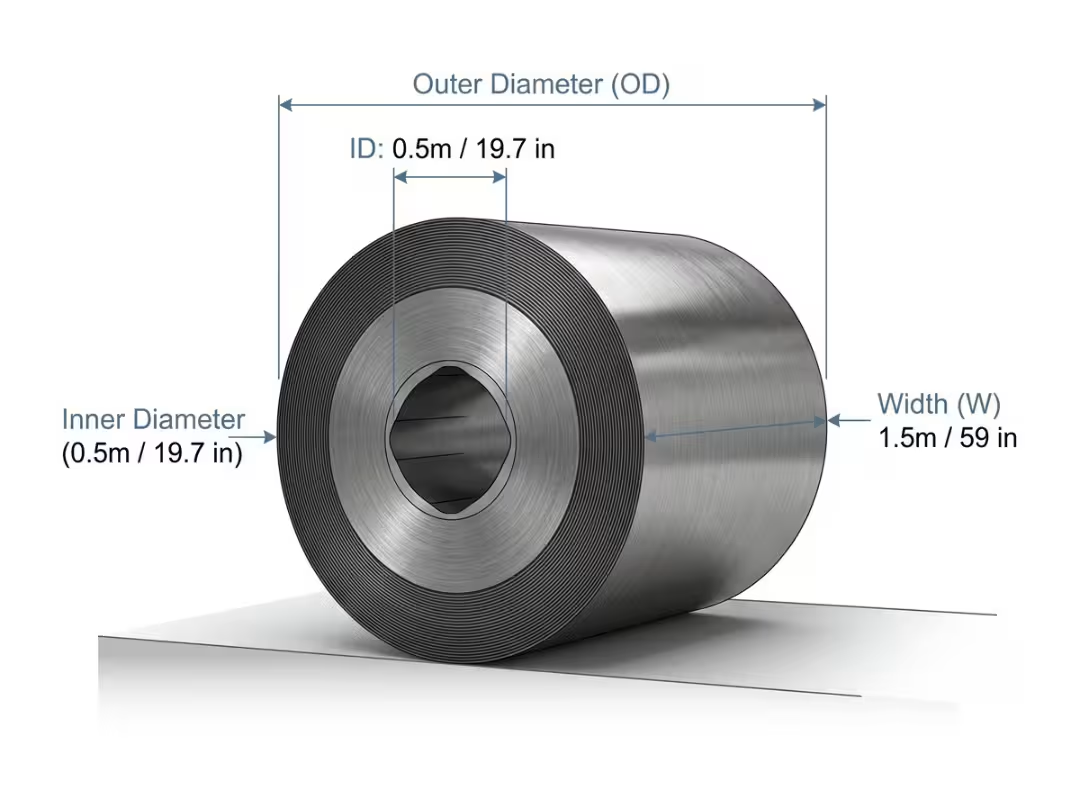
The inner diameter (ID) is set by the mill’s mandrel. Common IDs are 508 mm (20 in) and 610 mm (24 in). The outer diameter (OD) is capped by whatever downstream equipment can handle — a larger OD holds more strip and produces a heavier coil.
Picture the steel end-on as a ring. The ring’s area (the space between ID and OD) multiplied by strip width gives the volume of steel. That’s the whole basis for the dimension-based formula later. Two coils with the same OD but different IDs can weigh very differently, because a smaller ID means a wider ring — and more steel.
Steel Density
Carbon steel has a density of about 7,850 kg/m³ (0.284 lb/in³). This is the standard figure in every coil weight formula, and it’s accurate for the vast majority of commercial grades.
For reference, stainless runs slightly denser — generally 7,900 to 8,000 kg/m³, with ferritic grades closer to 7,700. For carbon and coated carbon steel, which covers most coils on the market, stick with 7,850.
Coating Weight
This matters if you buy galvanized or prepainted stock. The zinc layer on galvanized or PPGI/PPGL coils adds roughly 1% to 3% to total weight, depending on coating class. Paint and laminate films add a smaller amount on top.
On a single coil, that’s a rounding error. On a 500-ton order, it’s real tonnage you pay for and ship. When coating weight affects your costing, ask for it explicitly on the spec — don’t assume it’s folded into the net figure.
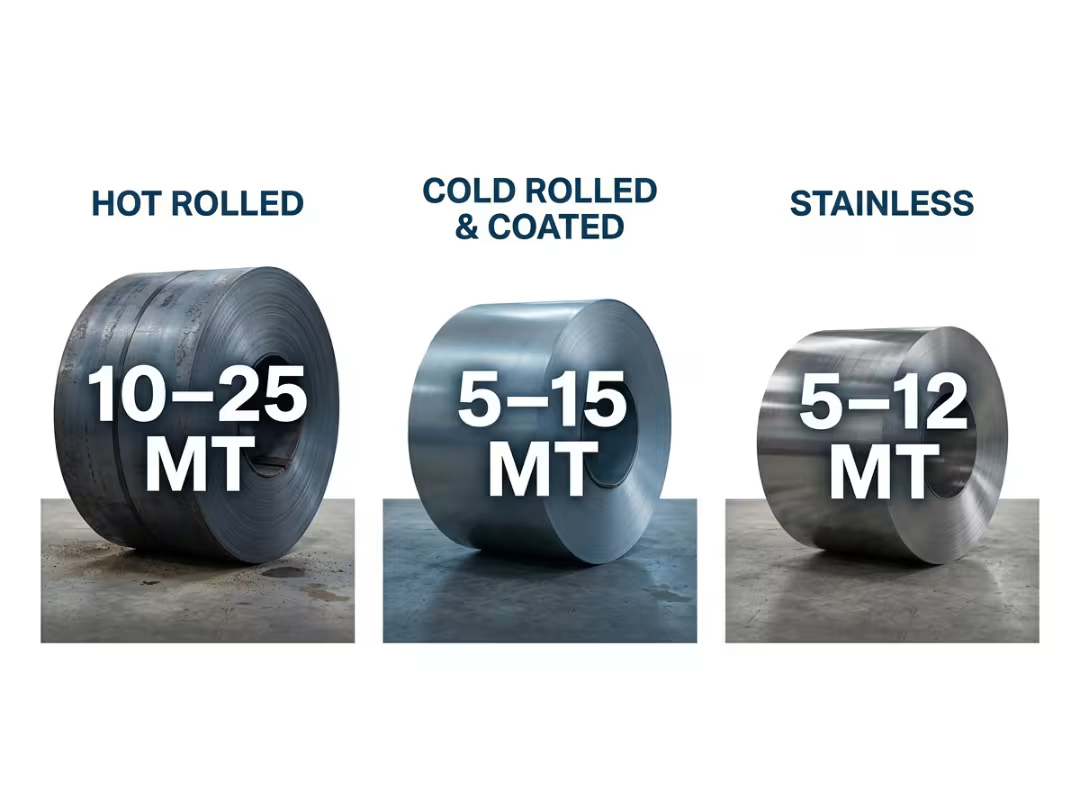
Typical Weight Ranges by Coil Type
Use this as a planning reference, not a spec.
|
Coil type |
Typical weight |
Notes |
|---|---|---|
|
Hot rolled |
10–25 MT (up to 30+ MT) |
Heaviest category; mills wind as much as practical |
|
Cold rolled & coated (PPGI, PPGL, galvanized) |
5–15 MT |
Built to customer-friendly sizes after multiple processing steps |
|
Stainless |
5–12 MT |
Lighter builds, not lighter metal |
Hot-rolled coils come straight off the strip mill and anchor the heavy end. Mills start with large slabs and wind as much strip as they can to cut handling between processes. When these get slit into narrow widths for tube, pipe, or roll forming, the resulting coils can weigh anywhere from a few hundred kilograms to several tons.
Cold-rolled and coated coils — the category most relevant if you source coated steel — go through pickling, cold reduction, annealing, temper rolling, then coating lines. Every step involves uncoiling and rewinding, so finished coils are built to a smaller, more practical size. If you buy VCM or PCM laminated steel for appliance panels, expect coils in the 5–15 MT range, often narrower and lighter when cut for a specific press job.
Stainless coils run lighter — 5 to 12 MT — but not because stainless is a lighter metal. It’s actually denser than carbon steel. Producers simply wind smaller coils, often narrower for specific work. A stainless coil with the same dimensions as a carbon coil would weigh slightly more; in practice, the two rarely match in size.
One regional note: some mills standardize on heavier coils for export efficiency, while domestic processors cut them down for local buyers. The same grade can arrive at very different weights depending on where it was built.
How to Calculate the Weight of a Steel Coil
This is the section worth bookmarking. Two reliable routes, plus a field shortcut. Both deliver planning-grade numbers in minutes.
Method 1: Strip Dimensions and Density
Use this when you know the strip length — it often appears on the product data sheet or packing list.
Weight = Length × Width × Thickness × Density
Worked example (metric): a strip 1,200 m long, 1.25 m wide, and 2 mm (0.002 m) thick.
- Volume = 1,200 × 1.25 × 0.002 = 3.0 m³
- Weight = 3.0 × 7,850 = 23,550 kg ≈ 23.5 metric tons
Clean and direct. The only trap is unit consistency — keep everything in meters before you multiply.
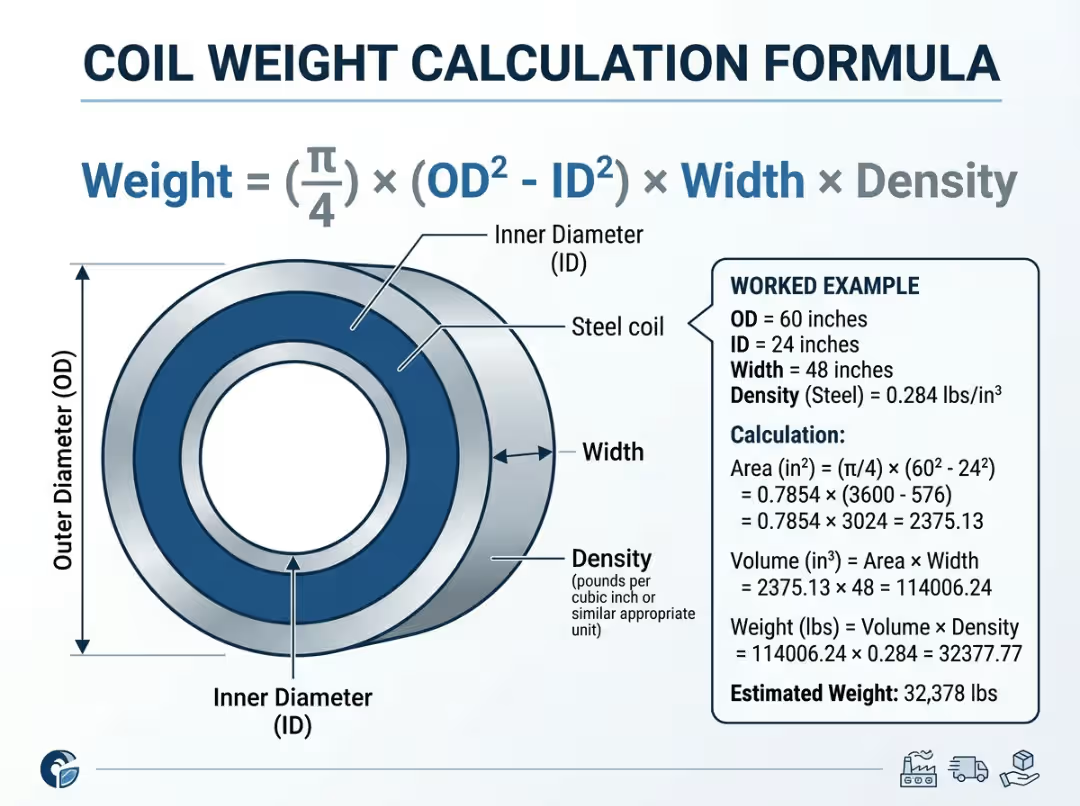
Method 2: Coil OD and ID
Use this when you have the physical coil but not the strip length. This is the one you reach for on the warehouse floor with a tape measure.
Weight = (π / 4) × (OD² − ID²) × Width × Density
Worked example (metric): a coil with OD 1,200 mm, ID 508 mm, width 1,250 mm. Convert to meters first: OD 1.2 m, ID 0.508 m, width 1.25 m.
- Ring area = (π / 4) × (1.2² − 0.508²) = 0.7854 × (1.44 − 0.258) = 0.7854 × 1.182 ≈ 0.93 m²
- Volume = 0.93 × 1.25 ≈ 1.16 m³
- Weight = 1.16 × 7,850 ≈ 9,100 kg ≈ 9.1 metric tons
Notice how much the ID matters. Skip it and estimate from OD alone, and you’ll badly overstate the weight — the hollow core is a big chunk of that outer circle.
The Linear Mass Shortcut
For quick field estimates, first find the weight per meter of the strip, then multiply by the length. For a carbon steel strip 1,250 mm wide and 2 mm thick:
- Cross-section = 1.25 × 0.002 = 0.0025 m²
- Per meter = 0.0025 × 7,850 ≈ 19.6 kg per meter
Now any length is a fast mental multiplication — handy when comparing coils on the fly.
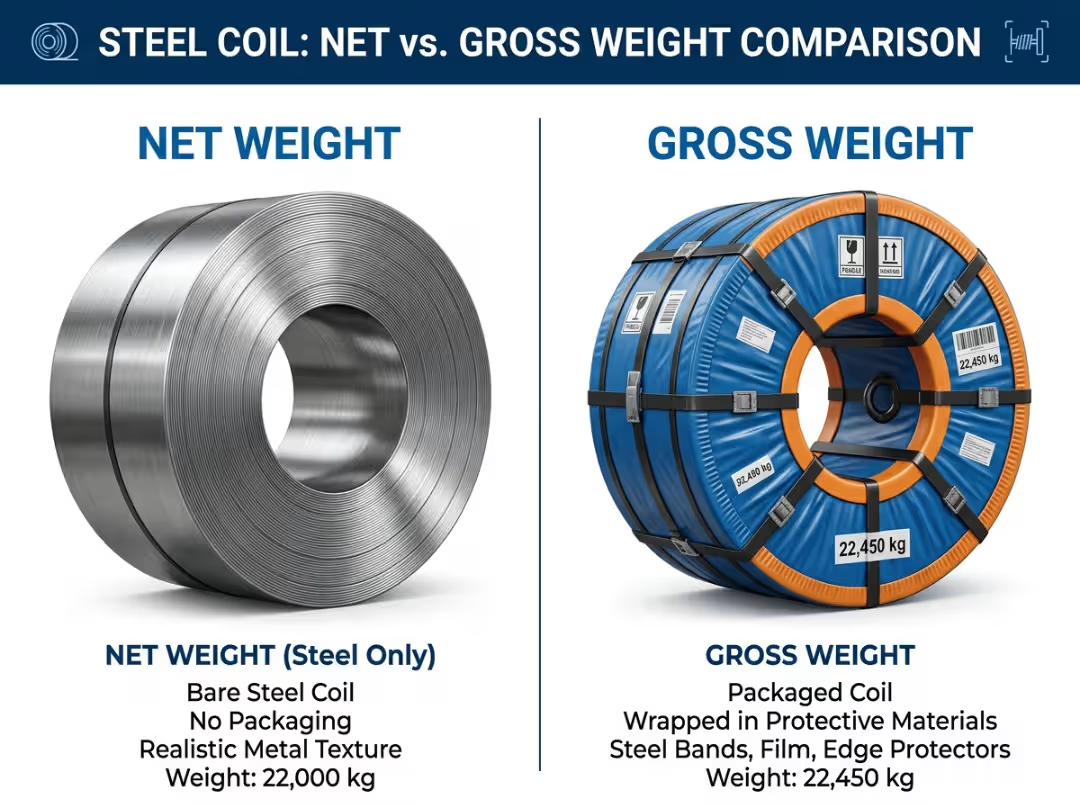
Net Weight vs. Gross Weight
Every mill certificate or packing list shows two numbers, and mixing them up causes real problems.
- Net weight is the steel alone.
- Gross weight includes the steel plus wrapping, bands, inner and outer packaging, and protective eye inserts.
Packaging tare typically adds 50 to 150 kg per coil, and more for heavy-duty sea-freight export packing.
Which do you use? Net weight for steel value and production planning — that’s the metal you actually process. Gross weight for freight quotes and crane capacity — that’s the full load you lift and haul. Confuse the two and you either short your freight estimate or overload your rigging.
Common Calculation Mistakes to Avoid
Even experienced buyers trip on these:
- Using nominal thickness instead of actual. Rolling tolerances mean real thickness varies. For tight estimates, use the measured value.
- Mixing units. Millimeters, meters, and inches in the same formula is the single most common error. Convert everything to one system first.
- Estimating from OD alone. Two coils with the same OD can weigh very differently if their IDs differ. Always include the ID.
- Confusing metric tons and short tons. A metric ton is 1,000 kg; a US short ton is 2,000 lb (about 907 kg). Quote the wrong one and the whole deal gets misread.
What Coil Weight Means for Your Operation
The math only pays off when it changes a decision. Here’s where it does.
Trucking and Payload Limits
A standard 5-axle semi in the US is capped at 80,000 lb gross vehicle weight, leaving a usable payload of roughly 40,000-48,000 lb (about 18–22 MT). That comfortably fits one or two moderate coils — but not a single 30-ton mill coil, which requires a specialized trailer, permits, or rail service.
For export, 20-ft and 40-ft containers carry both weight limits and physical door constraints. A large-diameter coil might clear the weight limit but not the door opening, so orientation and blocking matter as much as tonnage. Worth confirming before you finalize a coated-coil order headed overseas.
Crane and Rack Capacity
Overhead cranes are rated for a maximum load — and so are the coil grabs, C-hooks, and lifting beams that hang from them. Add the attachment weight to the coil weight on every pick. A 20-ton coil on a 2-ton C-hook is a 22-ton lift.
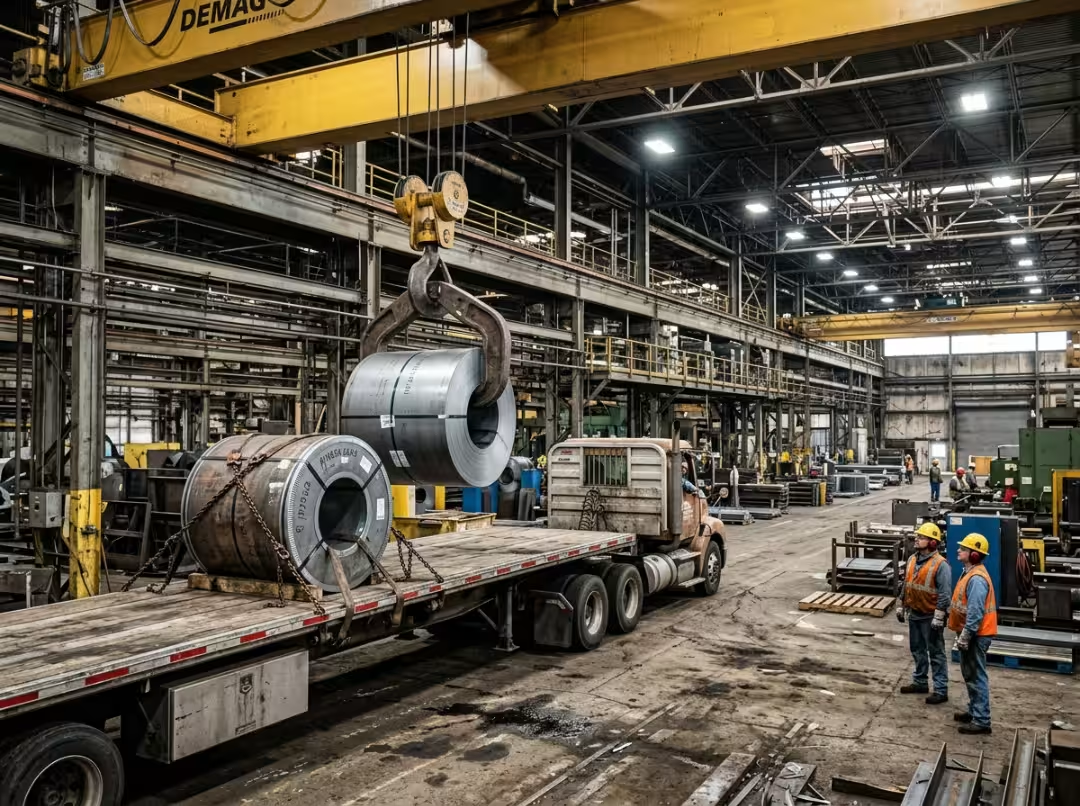
Storage matters too. Stacking 20-ton coils two high puts a 40-ton load on the bottom coil’s edges. Rack ratings and floor limits exist for a reason; coil weight tells you whether you’re inside them.
Cost per Part
Heavier coils mean fewer changes, longer uninterrupted runs, and less end scrap per ton — all good for throughput. Lighter coils are easier to handle, store, and load, but they spread fixed logistics costs over less steel, raising per-ton freight and handling costs.
The takeaway: the best coil weight isn’t the biggest available. It’s the one that fits your equipment, your trucking option, and your schedule. For coated coils used in roofing, cladding, and construction panels, the balance usually falls within the 5–15 MT range that standard handling gear can handle cleanly.
Frequently Asked Questions
What is the average weight of a steel coil?
There’s no single average. Most carbon steel coils fall between 5 and 25 metric tons. For a quick planning figure with no other details, use 10 to 20 metric tons and confirm against the mill certificate.
How much does a coated (PPGI/PPGL) coil weigh?
Typically 5 to 15 metric tons, with the zinc coating adding roughly 1–3% over the bare steel. Narrower, job-specific coils sit at the lower end.
How do I calculate coil weight from its dimensions?
Use Weight = (π/4) × (OD² − ID²) × Width × Density, with density at 7,850 kg/m³ for carbon steel. Convert all dimensions to meters first.
What’s the difference between net and gross weight?
Net weight is the steel alone; gross weight adds packaging, usually 50–150 kg per coil. Use net for steel value and production, gross for freight and crane capacity.
Does a galvanized coil weigh more than a bare cold-rolled coil of the same size?
Yes — the zinc adds about 1–3%. Small on one coil, meaningful across a large order.
How many steel coils fit on a standard truck?
A standard US semi carries roughly 18–22 MT of payload, so one to two moderate coils. A single 30-ton coil needs a specialized trailer or rail.
The Bottom Line
Coil weight is a planning input, not a surprise waiting at the dock. There’s no universal average, but most carbon steel coils land between 5 and 25 metric tons — hot rolled at the heavy end, coated and processed coils in the manageable middle.
You have two reliable routes to the exact number: strip dimensions with density, or coil OD and ID with density. Either one gives you a solid estimate in minutes.
Before you order coated steel, confirm the specs that drive weight and handling: width, thickness, coating class, ID/OD, and target coil weight. Nail those down early, check them against your truck, crane, and rack ratings, and the coil that arrives will be the one your line was built to run.
