




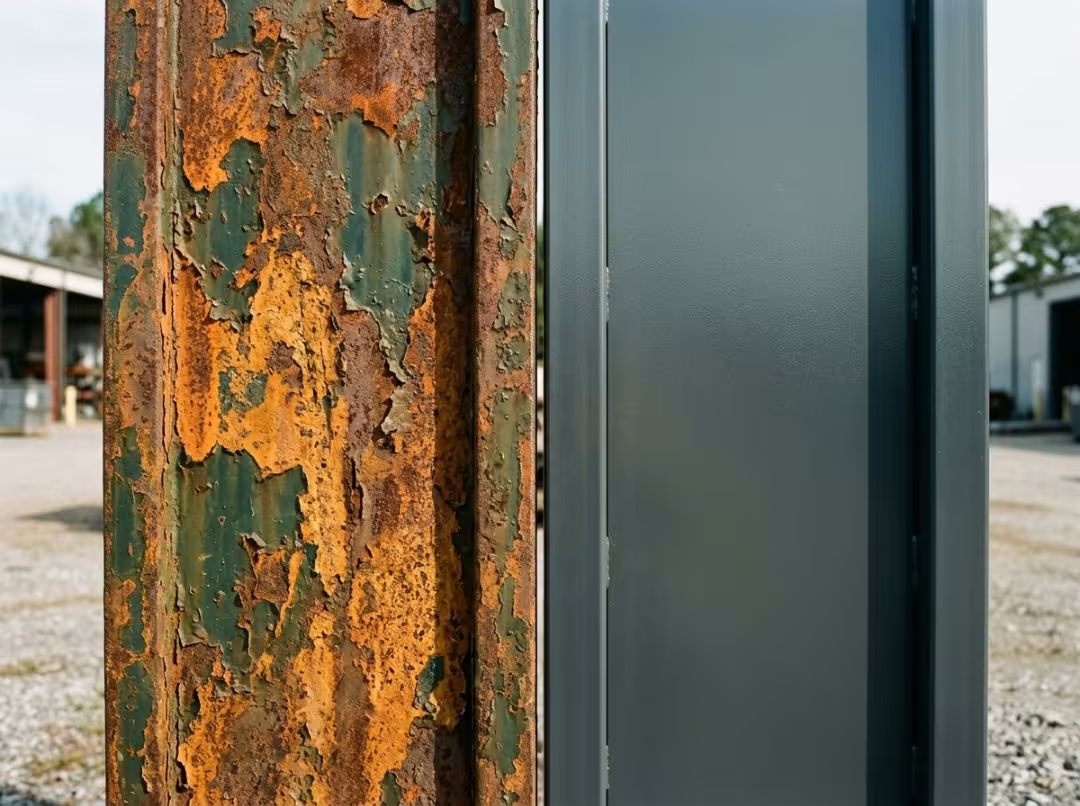
Metal fails from the surface inward. Air, water, and salt attack the moment raw metal is exposed, and a coating is the primary line of defense between them. Skip it, and you’re not saving money — you’re scheduling a future repair.
The scale is hard to ignore. NACE International estimates the global cost of corrosion at roughly $2.5 trillion per year, about 3.4% of global GDP. This guide walks through why bare metal breaks down, how coatings stop it, which coating type fits which job, the cost math behind the decision, and a clear way to choose the right system.
Why Bare Metal Fails
Metal doesn’t fail all at once. It degrades through a few distinct mechanisms, each with its own warning signs. Knowing which one you’re up against is the first step in picking protection that holds up.
Corrosion and Rust
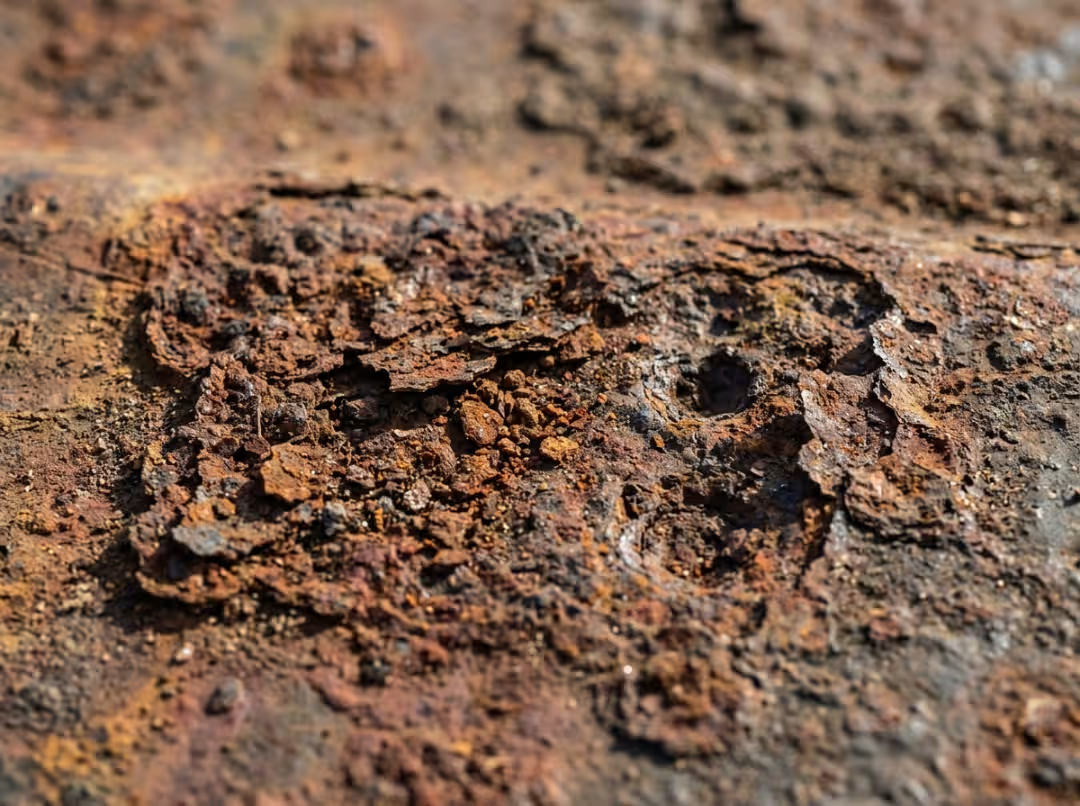
Rust is an electrochemical reaction. Iron gives up electrons to oxygen in the presence of water, forming iron oxide. That oxide flakes off, exposing fresh metal underneath, so the reaction keeps feeding itself.
It shows up in several forms: uniform rust across a surface, pitting that drills deep local holes, galvanic corrosion where two different metals touch, and crevice corrosion hidden in tight joints. Here’s the part most people miss — corrosion removes load-bearing material, so a part weakens long before the rust looks serious.
Abrasion and Mechanical Wear
Sliding friction, impact, and grit erosion strip material off metal surfaces over time. Think conveyor belts, mining equipment, steel floor plates, and cutting tools in constant contact.
Wear does a second kind of damage too. It scrapes off protective oxide layers and any coating film, leaving fresh metal open to corrosion right after. Abrasion and rust often work as a team.
Chemical Attack
Acids, alkalis, solvents, fertilizers, and de-icing salts all attack metal directly. Salts are especially brutal — they dissolve into surface moisture, turning it into a highly conductive electrolyte that dramatically accelerates corrosion. The tricky part is that chemical damage often starts below a surface that still looks sound.
Moisture and Weathering
Humidity, rain, and condensation keep surfaces wet, and moisture is the electrolyte corrosion needs to run. Add freeze-thaw cycles and temperature swings, and the metal expands and contracts, opening tiny cracks that let water reach deeper. Coastal salt spray is the worst case, combining constant moisture with chloride to punish any unprotected outdoor metal.
How Coatings Interrupt Failure
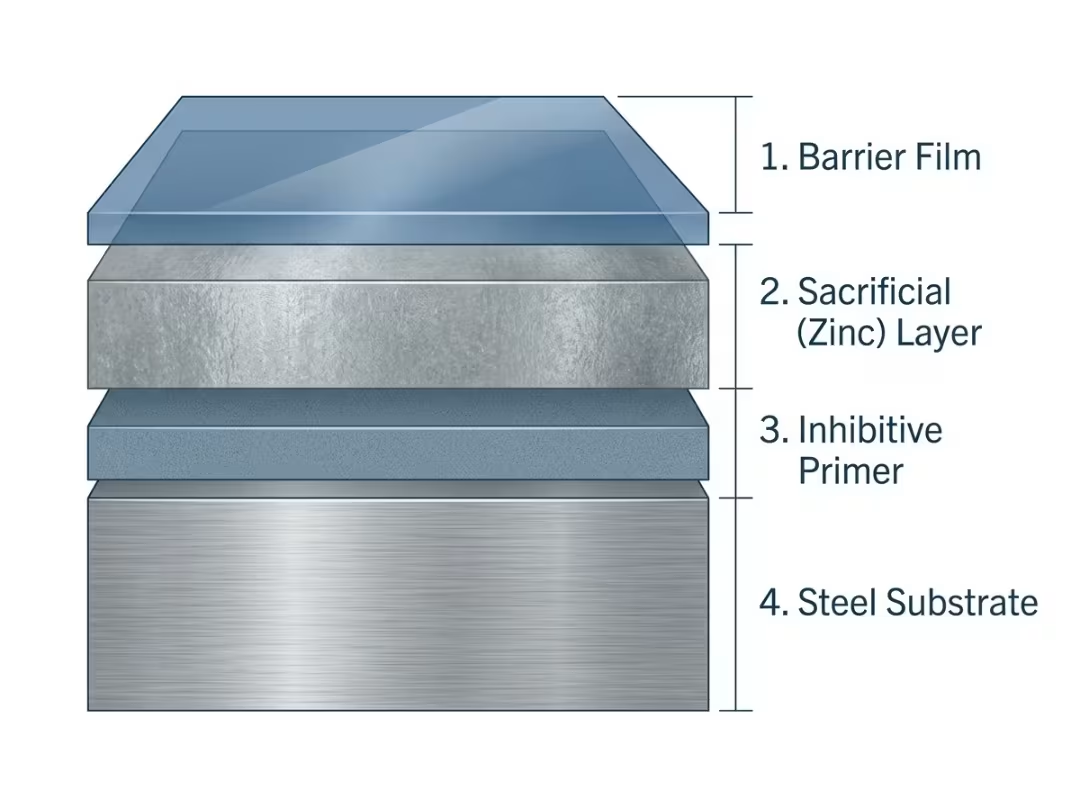
Coatings don’t just hide metal. They interrupt the physical and chemical processes that destroy it, and they do it in four ways.
- Barrier protection physically separates metal from oxygen, water, and chemicals. Film thickness and adhesion decide how well it works, so pinholes and scratches become weak points. Paint and powder coating are the clearest examples.
- Sacrificial protection puts a more reactive metal in the line of fire. Zinc is the classic case: in galvanized steel, zinc corrodes before the steel does because it’s more electrochemically active. Even with an exposed scratch, the surrounding zinc continues to protect the bare spot.
- Inhibitive protection uses primers that release chemicals to slow the corrosion reaction at the surface. Phosphate and chromate treatments are traditional here, though environmental rules have pushed the industry toward chrome-free formulas. These usually sit as a first layer under paint or powder.
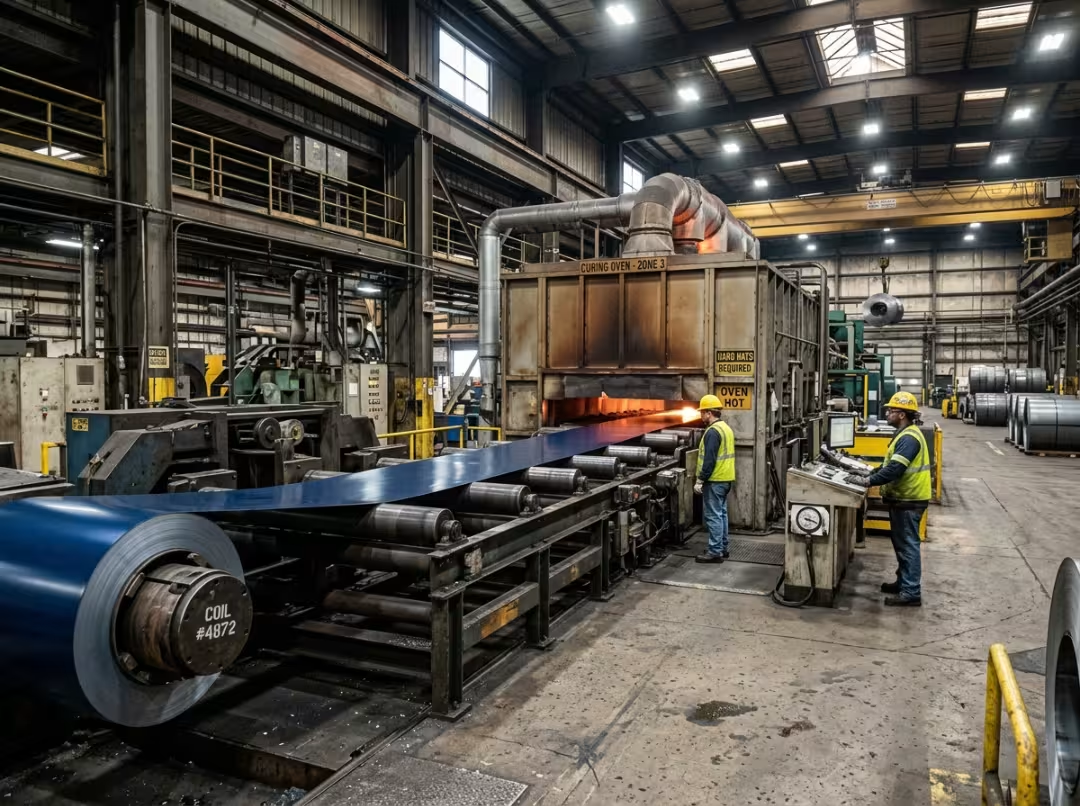
- Functional and decorative properties round it out. Coatings add color, gloss, and texture, and they change how a part behaves — slip-resistant floors, dielectric layers, reflective heat-management finishes. Appearance also drives commercial value, since a clean, consistent finish supports a higher price. That’s the whole logic behind prepainted steel, where protection and finish arrive on the coil together.
Types of Coatings and Where Each Fits
This is where decisions actually get made. Coating options fall into three families — organic finishes, metallic layers, and conversion treatments. Below are the six systems you’ll meet most often, with a focus on what each is good for and where it struggles.
Liquid Paint Coatings
Liquid paint runs from basic alkyd enamels to high-performance epoxy and polyurethane systems. It’s the go-to for complex shapes, large structures, and field repairs where oven curing isn’t an option.
You can apply it by spraying, brushing, rolling, or dipping. The main trade-off is solvent-borne versus water-borne: solvent systems often flow and cure better, while water-borne paints cut VOC emissions and simplify compliance. Where it falls short: liquid paint is generally thinner and less chip-resistant than powder paint, and its quality depends heavily on application skill.
Powder Coating
Dry powder is sprayed onto a grounded part and then cured in an oven to form a tough, uniform film. The upside is real — thick coverage, strong adhesion, no solvents, and solid resistance to chipping and chemicals.
It’s a strong fit for metal furniture, enclosures, frames, appliance housings, and automotive wheels. The catch: the part has to fit in an oven and tolerate the cure temperature, which rules out very large structures and heat-sensitive assemblies.
Galvanizing and Zinc Coatings
Hot-dip galvanizing immerses steel in molten zinc, forming a metallurgically bonded layer that can provide protection for decades. Electrogalvanizing deposits a thinner, smoother zinc layer on parts that require a cleaner as-coated finish.
Best uses: structural steel, utility poles, guardrails, and outdoor fasteners. Zinc-coated steel is also the base for many PPGI coils, which add a paint layer on top of the galvanized layer — giving you barrier and sacrificial protection in one product.
Electroplating
An electric current deposits a thin layer of nickel, chrome, zinc, or another metal onto a conductive part. It boosts corrosion, surface, and wear resistance, and produces a bright decorative finish.
You’ll see it on fasteners, automotive trim, hand tools, and electrical connectors — small parts where hardness and appearance both matter. The layers are thin, so plating alone rarely suits harsh outdoor service without a topcoat.
Anodizing
Anodizing is an electrolytic process that thickens the natural oxide layer on aluminum, turning the metal’s own surface into its protection. The layer is hard, corrosion-resistant, and accepts dyes for colored finishes.
Best for aluminum architectural parts, consumer electronics, cookware, and outdoor products. It works only on aluminum and a few other metals, not on steel.
Conversion Coatings
Chemical treatments like phosphating and chromating prepare a metal surface for painting or powder coating. They improve adhesion and add a thin corrosion-resistant layer that works with the topcoat.
This step is quiet but decisive. It’s often the difference between a coating that peels within a year and one that lasts a decade.
Coating Comparison
|
Coating type |
Typical thickness |
Expected service life |
Relative cost |
Best-use applications |
|---|---|---|---|---|
|
Liquid paint |
25–150 µm |
3–10 years |
Low–medium |
Large structures, complex shapes, field repair |
|
Powder coating |
60–120 µm |
10–20 years |
Medium |
Furniture, enclosures, appliance housings, wheels |
|
Hot-dip galvanizing |
45–85 µm |
20–50+ years |
Medium |
Structural steel, poles, guardrails, fasteners |
|
Electroplating |
5–25 µm |
5–15 years |
Medium–high |
Fasteners, trim, tools, connectors |
|
Anodizing |
5–25 µm |
10–20+ years |
Medium |
Aluminum parts, electronics, cookware |
|
Conversion coating |
0.5–3 µm |
Pretreatment layer |
Low |
Adhesion base under paint/powder |
Service life figures assume proper surface prep and a matched environment. Push any system into the wrong conditions and those numbers drop fast.
The Economics: Why Coating Pays for Itself
The corrosion bill isn’t abstract. That $2.5 trillion breaks down into direct costs — replacement parts, repair labor, downtime — and indirect costs such as lost production, safety incidents, and reputational damage. The indirect side is usually the larger and less visible half.
Here’s the counterintuitive part: coating typically adds only a small percentage to a part’s manufacturing cost, while it multiplies the part’s lifespan. A well-coated steel part can last three to five times longer than a bare one in the same environment.
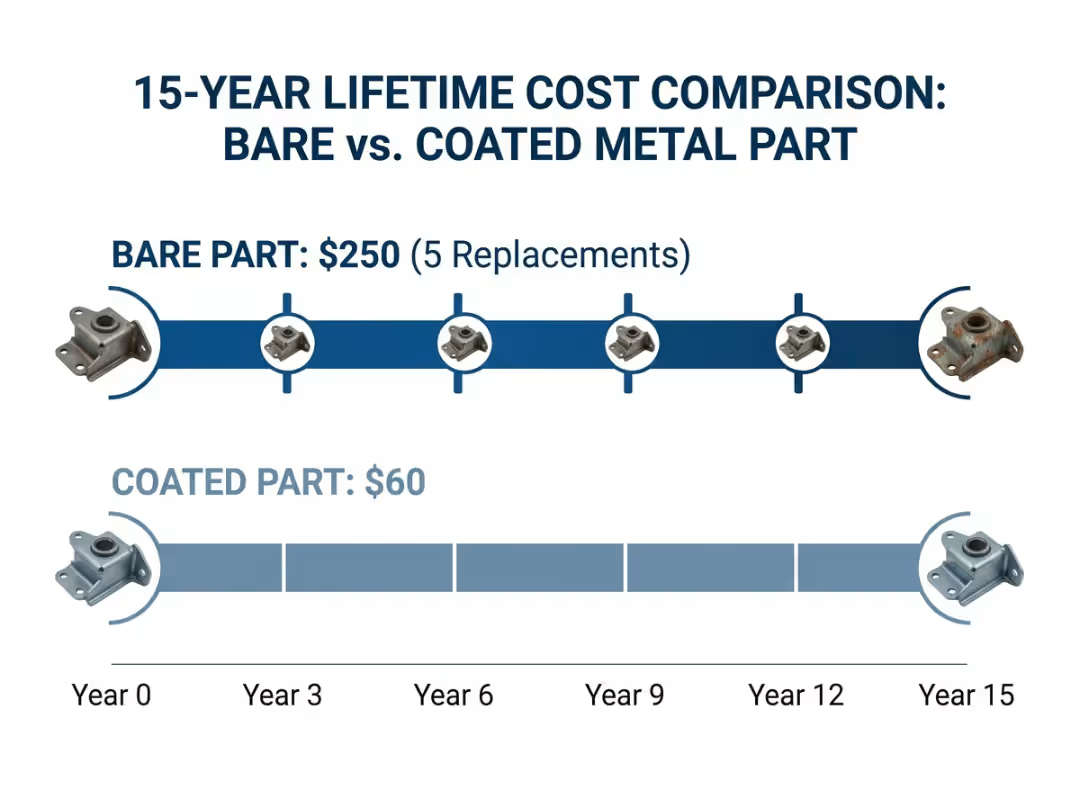
Run the simple math. A $50 part replaced every three years costs $250 over fifteen years — five replacements, plus the labor and downtime each swap drags along. Add a $10 coating up front, and the same part may still be in service at year fifteen. You spent $60 instead of $250, and you skipped four disruptions on the shop floor.
No coating lasts forever, so build in maintenance. Planned recoating, spot repairs, and regular inspection cost far less than replacing failed metal. The trick is catching coating damage early, before corrosion takes hold beneath the surface and turns a touch-up into a teardown.
How to Choose the Right Coating
The right coating comes from asking clear questions in the right order. Work through these six.
1. Start with the service environment. Define where the part lives: indoors or outdoors, wet or dry, hot or cold, near saltwater or far from it. List every chemical, abrasive, and weather condition the surface will face over its life. This one factor quickly eliminates most options.
2. Match the coating to the base metal. Steel, aluminum, and zinc-coated substrates each need different chemistry. Compatibility is real — some primers simply won’t adhere to aluminum without the right adhesion promoter.
3. Set a realistic service life target. A product designed for five years can use an economical system. Infrastructure meant to last thirty needs a premium one. Tie the spec to your warranty period and maintenance schedule so the numbers line up.
4. Account for part geometry and volume. Large or awkward parts may not fit an oven, ruling out powder coating. High-volume production rewards fast, automated, repeatable processes. Coil-based coated steel wins here because the finish is applied before forming, so every part comes off the line already protected.
5. Don’t skip surface preparation. Abrasive blasting, chemical cleaning, and phosphating set up adhesion. Most coating failures trace back to poor prep, not bad paint. If you have to cut a corner, cut it somewhere else.
6. Review regulations and standards. VOC limits restrict which solvent-borne paints a shop can legally use. Food-contact, potable-water, and medical applications carry their own requirements. Where it matters, look for products tested against ASTM, ISO, or NACE standards.
Common Misconceptions About Metal Coatings
“Stainless steel doesn’t need a coating.” Stainless steel resists rust through a chromium oxide layer, but it can still pit, suffer galvanic corrosion, and stain in marine or chloride-rich environments. More resistant, not immune.
“Coating is just for looks.” Appearance is part of the job, but the primary purpose is extending the life of the metal underneath. The finish you see is the smaller half of what a coating does.
“A coated part will never rust.” Coatings slow corrosion dramatically — they don’t make metal immune. Scratches, edge wear, and poor prep can still let moisture reach bare metal.
“Coating is too expensive.” Compare the coating cost against the cost of part failure, and the math flips. The $10 you skip today often becomes a $200 replacement plus downtime later.
Frequently Asked Questions
Why does bare metal rust so quickly?
Iron reacts with oxygen and water to form iron oxide, and the rust flakes off, exposing fresh metal. Without a barrier, the reaction keeps feeding itself, so bare steel can show rust within days in a wet environment.
What’s the difference between powder coating and liquid paint?
Powder is a dry film cured in an oven, giving a thick, tough, solvent-free finish. Liquid paint is applied wet and is well-suited to large structures, complex shapes, and field repairs where oven curing isn’t possible.
Which lasts longer: galvanizing or powder coating?
Hot-dip galvanizing usually wins on raw lifespan, protecting steel for 20 to 50+ years. Powder coating adds a durable, decorative finish. Many products use both—galvanized steel with a topcoat for the best of both.
Does anodized aluminum still need a protective coating?
Often not. Anodizing thickens the aluminum’s oxide layer into a hard, corrosion-resistant protective layer. In very aggressive or high-wear settings, an additional sealant or coating can further extend its life.
Can you apply a coating over rust?
Not reliably. Coating over rust traps active corrosion underneath, and the film soon lifts. Remove the rust and prep the surface first — prep is where coating success is won or lost.
What coated steel works best for appliances and interior panels?
Film-laminated products like VCM-laminated steel provide a clean, durable, easy-to-clean surface that’s ready to use straight off the line — ideal for appliance housings and decorative panels.
Coating Is an Investment, Not an Expense
The logic is simple: metal fails at the surface, coatings prevent that failure, and the upfront cost is small compared to the cost of premature replacement. Get the system right, and you buy years of service for a fraction of what the failure would cost.
Take one practical step this week. Inventory the metal products you make or buy, note the exact conditions each part faces, and write down a service life target for each. That short list tells you almost everything you need to know about the coating.
The best system matches the part, the environment, and the maintenance plan. Whether you’re producing roofing and cladding for construction or panels for home appliances, choosing coated metal deliberately is far cheaper than paying for the consequences of skipping it.
