




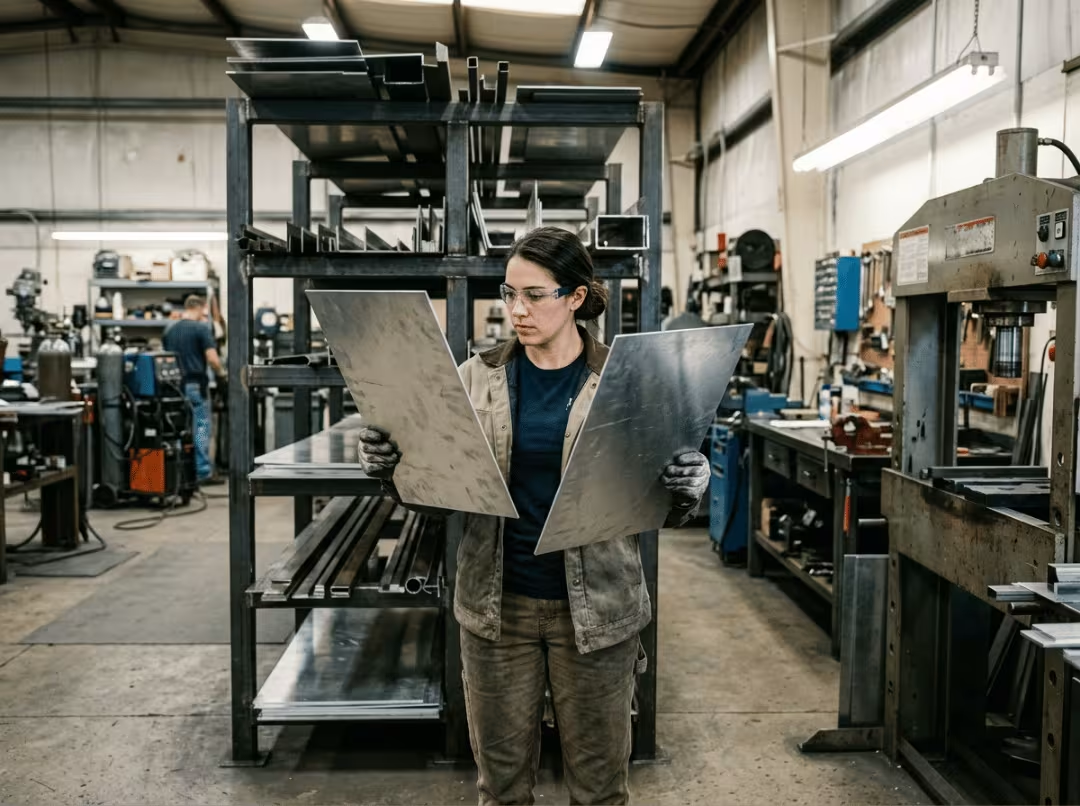
A fabricator stands at the rack, holding two identical aluminum sheets. Same silver finish, same gauge, nearly the same price. One of them will bend cleanly and last for decades on the job. The other will crack at the brake, or worse, corrode within a season of saltwater exposure. The sheets look the same. They are not.
3003 and 5052 are the two most common aluminum sheet alloys in the shop, and confusing them is one of the most expensive mistakes in metal fabrication. Pick the wrong one and you pay for it later in cracked parts, failed welds, or premature corrosion. This guide compares the two on the factors that actually decide a project: strength, formability, corrosion resistance, finish quality, and real cost over the life of the part. Neither alloy wins across the board. Each one owns a specific set of jobs, and the goal here is to help you match the right sheet to the right application.
What Sets 3003 and 5052 Apart
Both alloys conform to ASTM B209, both come in the same tempers, and both machine and weld with standard equipment. The difference lives in the alloying element.
3003 is an aluminum-manganese alloy (3xxx series). Manganese gives it moderate strength and outstanding workability. It’s the everyday sheet metal alloy: easy to form, easy to weld, forgiving in the shop, and inexpensive.
5052 is an aluminum-magnesium alloy (5xxx series). Magnesium delivers noticeably higher strength, far better fatigue resistance, and the best saltwater corrosion resistance of any non-heat-treatable alloy. It’s the workhorse for marine and structural sheet work.
Here’s the composition side by side:
|
Element |
3003 |
5052 |
|---|---|---|
|
Manganese |
~1.2% |
— |
|
Magnesium |
— |
~2.5% |
|
Chromium |
— |
~0.25% |
|
Aluminum |
Balance |
Balance |
That small shift in chemistry, manganese versus magnesium, drives every performance difference that follows. Magnesium alloys harder and resists chloride attack far better, which is exactly why 5052 costs more and lasts longer in harsh conditions.
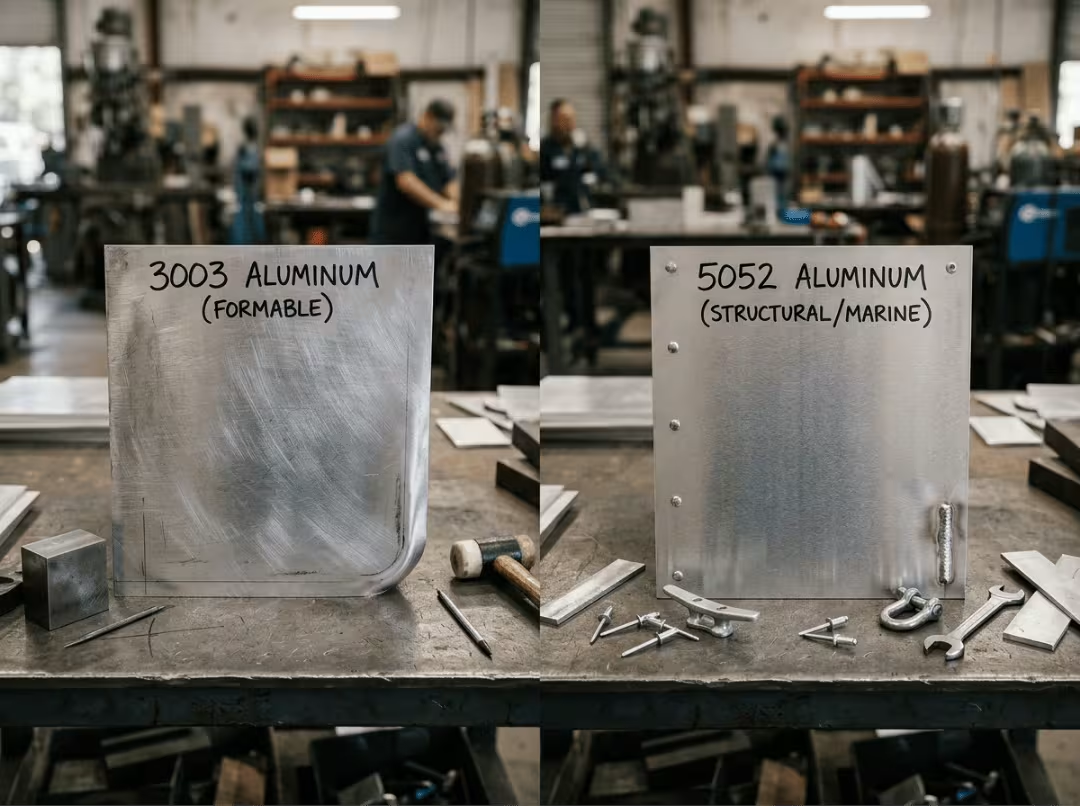
The Differences That Actually Drive Your Decision
Skip the exhaustive spec sheet. Four factors decide almost every 3003-versus-5052 purchase.
Strength and Fatigue Resistance
This is where 5052 pulls clearly ahead. At comparable tempers, it runs roughly 20 to 30% stronger than 3003. Here are the typical mechanical values:
|
Alloy & Temper |
Yield Strength |
Tensile Strength |
|---|---|---|
|
3003-O |
~15 ksi |
~16 ksi |
|
3003-H14 |
~21 ksi |
~22 ksi |
|
5052-O |
~13 ksi |
~28 ksi |
|
5052-H32 |
~23 ksi |
~33 ksi |
|
5052-H34 |
~26 ksi |
~37 ksi |
Look at the tensile numbers even in the soft O temper: 5052 nearly doubles 3003. That strength gap matters when a part carries load, resists denting, or takes abuse in the field.
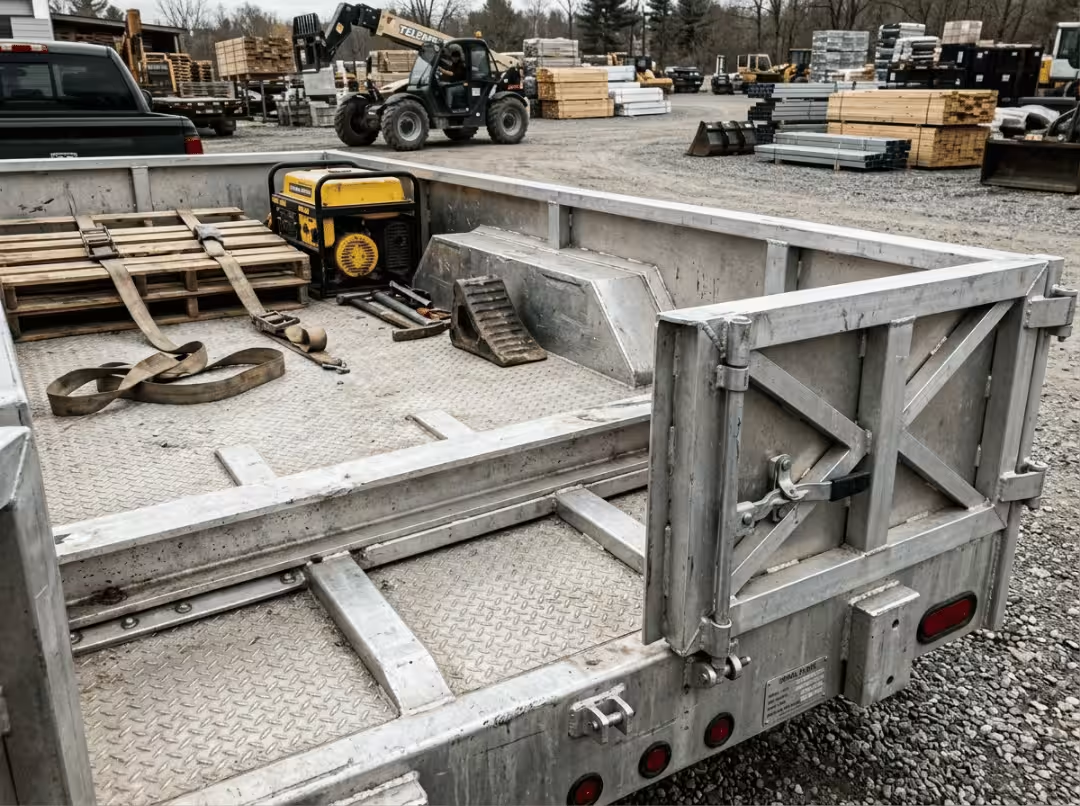
Fatigue resistance is the underrated half of this story. 5052 handles repeated loading cycles far better than 3003, which fatigues and cracks under vibration much sooner. Any part that flexes over and over- a trailer floor pounding down the highway, a boat hull slamming waves, a bracket near a running motor- belongs in 5052. Use 3003 on a vibrating component, and you’re building in a failure point.
Formability and Bending
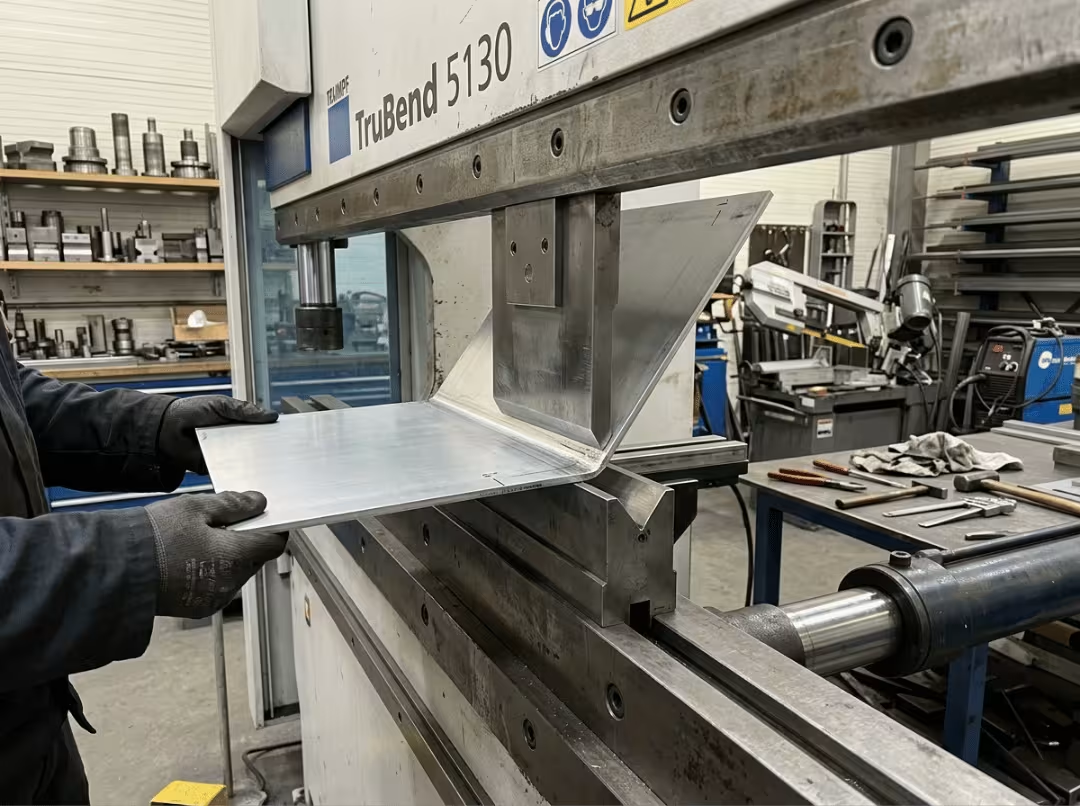
Now the advantage flips. 3003 is the more forgiving alloy at the brake. It bends tighter, draws deeper, and shapes into intricate profiles without cracking, especially in thicker gauges. For tight-radius bends, deep draws, or complex formed parts, 3003 is the safer bet.
5052 is stronger, and that strength comes at the expense of flexibility. It needs a larger bend radius to avoid cracking, and the risk climbs sharply in tempers above H32. A bend that 3003 shrugs off can split 5052-H34 right along the fold.
The practical rule: if your design demands aggressive forming, lean 3003; if it demands strength and durability, lean 5052. When a part needs both, work in a softer 5052 temper (O or H32) and open up your bend radius accordingly.
Corrosion Resistance, Especially Saltwater
Both alloys resist ordinary atmospheric corrosion well, and both form a natural protective oxide layer. Inland, in dry air, or indoors, either one holds up fine.
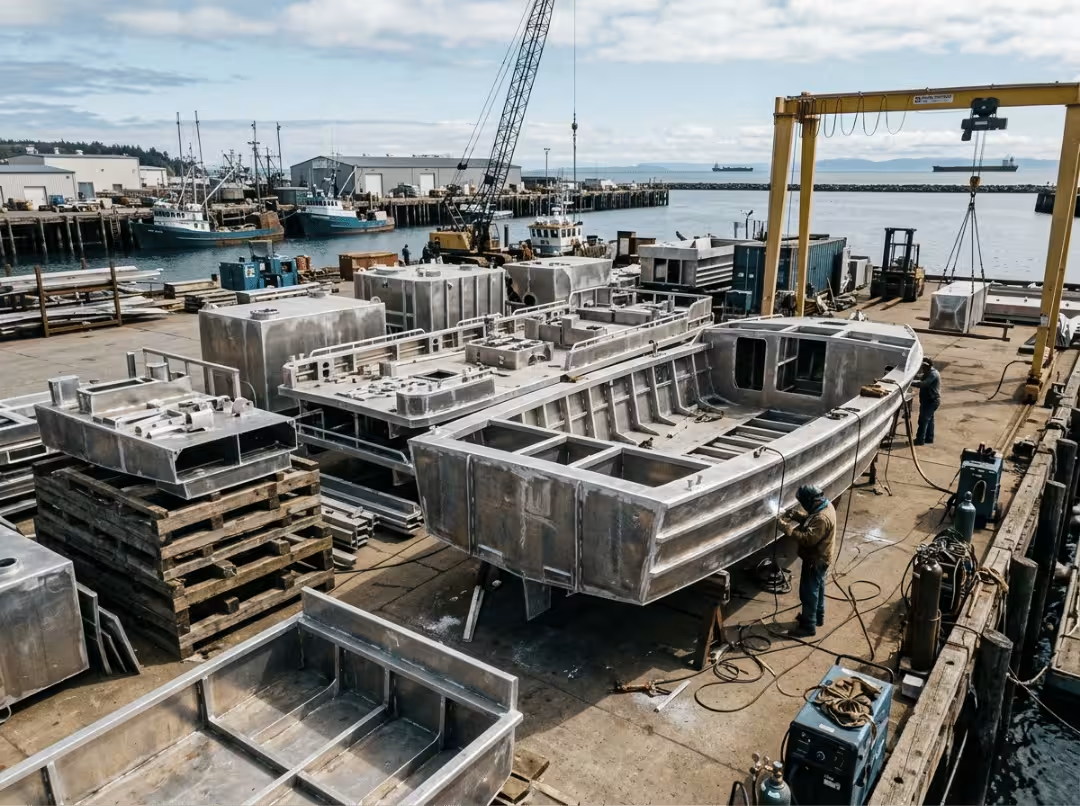
Saltwater changes everything. Magnesium gives 5052 exceptional resistance to chloride corrosion, and that’s why it’s the standard for anything near the ocean: boat hulls, fuel tanks, docks, deck hardware, coastal structures. It shrugs off salt spray that would slowly eat away at a lesser alloy.
3003 does not belong in marine service unless it’s painted or only lightly exposed. Put bare 3003 in a saltwater splash zone, and you’re signing up for early corrosion. 5052 also withstands a wider range of chemicals, including alkalis and dilute acids, whereas 3003 degrades more quickly under chemical stress. For marine builders and anyone specifying marine-grade aluminum sheet, 5052 isn’t a preference; it’s the requirement.
Anodizing and Finish Quality
If the finished part will be anodized and appearance matters, 5052 wins again. It anodizes to a clearer, more uniform finish. 3003 can take on a slightly yellowish or gray tint after anodizing due to its manganese content, which shows up poorly on architectural or cosmetic pieces.
One welding note worth flagging: on 5052, welds anodize to a different shade than the parent metal, so a welded-then-anodized 5052 part can show visible color mismatch at the seams. Plan your finish sequence around that if the look matters.
For paint and powder coat, both alloys accept coatings well after proper surface prep. Use an etching primer for marine or outdoor work to lock down adhesion.
Cost vs. Lifecycle Value
3003 is the cheaper alloy per sheet, and the gap widens in thicker gauges. Both are widely stocked, though 5052 may need a special order in some regions or thicknesses.
But price per sheet is the wrong number to optimize. Frame the decision around total project cost instead. A sheet that costs less upfront but fails early is expensive once you add the labor to rebuild the part, the downtime, and the replacement material. A cracked marine tank or a fatigued trailer floor doesn’t just cost the metal; it also costs rework and callbacks.
Here’s the honest math: on a low-stress, dry, indoor part, 3003’s lower price is pure savings, and paying for 5052 is a waste of money. For a marine, structural, or high-vibration part, 5052’s premium is cheap insurance against a failure that would cost many times the material difference. Match the alloy to the risk, then let the cost follow.
Application Scenarios by Use Case
The fastest way to decide is to find your project in this list.
Marine and saltwater → 5052. Boat hulls, fuel tanks, deck structures, dock components. Saltwater corrosion resistance and fatigue strength make this a non-negotiable choice.
Trucks and trailers → 5052. Trailer bodies, cargo boxes, fuel tanks, floors. Constant road vibration demands 5052’s fatigue resistance, and the added strength resists dents and dings.
Pressure vessels and storage tanks → 5052. Higher strength and chemical resistance handle the pressure and the contents.
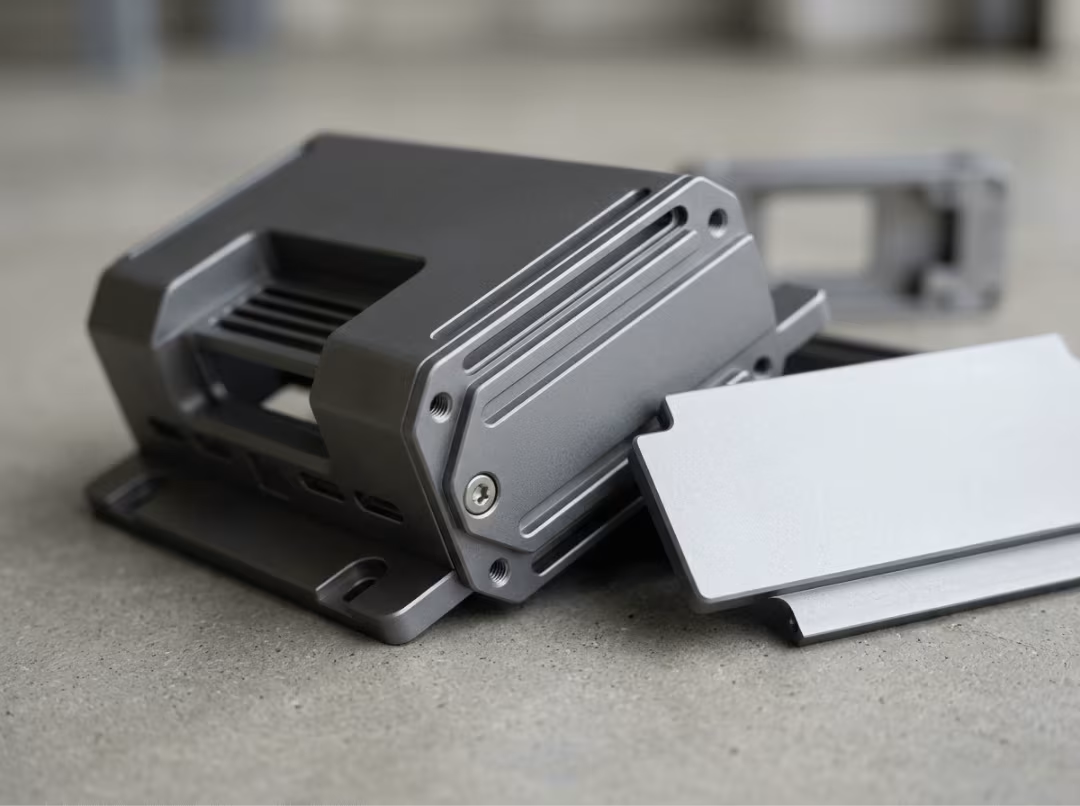
Electronic enclosures and chassis → 5052. Strength keeps thin-wall enclosures rigid, and clean anodizing looks professional.
Roofing, siding, and gutters → 3003. Formability and low cost suit large, low-stress panels and easy-to-shape gutters and downspouts.
Heat exchangers and condensers → 3003. Excellent workability and good thermal behavior make it the standard here.
Ductwork, cabinetry, and general sheet metal → 3003. Easy to cut, bend, and weld for everyday fabrication where loads are light.
Decorative trim and formed parts → 3003. Tight bends and intricate shapes form cleanly without cracking.
If your project sits between categories, or you need help matching a temper and gauge to your build, browse the full aluminum sheet product range to compare available specs.
A Clear Buyer’s Decision Framework
Don’t choose by habit or by whichever sheet is on the rack. Run the part through these two profiles.
Choose 3003 when:
- Your design needs maximum formability for complex bends or deep draws
- The part is cosmetic or decorative and won’t carry real load
- Weight and workability matter more than raw strength
- Your budget is tight, and the application is low-risk and dry
Choose 5052 when:
- The part will face saltwater, chemicals, or high humidity
- You need higher strength without a big weight penalty
- The component will see vibration or repeated loading
- You plan to anodize and need a clean, consistent finish
Five Questions to Ask Before You Buy
Run through these before you place the order:
- Will this part touch saltwater or harsh chemicals? Yes points hard to 5052.
- How much bending or forming does the design need? Aggressive forming favors 3003.
- What load will the finished part carry? Real structural load favors 5052.
- Does appearance after anodizing matter? A clean finish favors 5052.
- What does a premature failure actually cost? High failure cost justifies 5052’s premium.
If your answers pull in two directions, prototype both. Order small samples, run your bends and welds, and test in the real environment before committing to a full purchase.
Frequently Asked Questions
Can 3003 and 5052 be welded together?
Yes. They weld together readily with standard TIG or MIG using 5356 filler rod, which suits the higher-magnesium 5052. The joint takes on properties closer to the weaker alloy, so design the connection around 3003’s lower strength.
Which alloy is more suitable for a boat fuel tank?
5052, without question. Its saltwater and chemical resistance, along with fatigue strength, make it the marine standard for fuel tanks and hulls. 3003 is not appropriate for bare marine service.
Does 5052 cost significantly more than 3003?
5052 costs more per sheet, and the gap grows in thicker gauges. On low-risk, dry parts, that premium is wasted; on marine, structural, or high-vibration parts, it’s minor next to the cost of an early failure.
Can I use 3003 for structural framing?
Generally no. 3003’s moderate strength and weaker fatigue resistance make it a poor fit for load-bearing or vibrating structures. Use 5052, or a heat-treatable alloy like 6061, for structural work.
Is 5052 harder to bend than 3003?
Yes. 5052 is stronger and less ductile, so it requires a larger bend radius to avoid cracking, especially at temper levels above H32. 3003 bends tighter and handles deep draws more easily.
What tempers are available for each alloy?
Both come in O (annealed) and a range of strain-hardened H tempers. 3003 is common in O, H14, and similar. 5052 is common in O, H32, H34, and H36, with strength climbing as the temper number rises.
Will both alloys work for food-contact applications?
Both are used in food-related equipment, but food-contact suitability depends on finish, cleaning, and regulatory approval for your specific use. Confirm the grade and any coating meet the relevant food-safety standard before you commit.
How do I prevent weld discoloration on 5052 after anodizing?
Weld discoloration comes from the filler and heat-affected zone anodizing to a different shade. Minimize it by closely matching the filler chemistry, keeping heat input low and consistent, and thoroughly cleaning the weld zone. Where appearance is critical, anodize a sample first to confirm the result.
The Bottom Line
3003 and 5052 aren’t interchangeable, and treating them that way is where projects go wrong. 3003 wins on formability and cost. 5052 wins on strength, fatigue resistance, saltwater corrosion resistance, and finish quality. The right pick depends entirely on your project’s demands, not on which alloy is more familiar or cheaper on the invoice.
Three takeaways to get this decision right:
- Match the alloy to the environment and load. Saltwater, chemicals, vibration, or real structural load mean 5052. Dry, low-stress, heavily formed parts mean 3003.
- Judge cost over the life of the part, not per sheet. A cheap sheet that fails early is the most expensive choice you can make.
- Prototype when you’re unsure. Order small samples of both, run your actual bends and welds, and test before you buy a full lot.
Get this call right and you save yourself the time, money, and headaches that come from a sheet that looked fine on the rack but failed in the field.
