




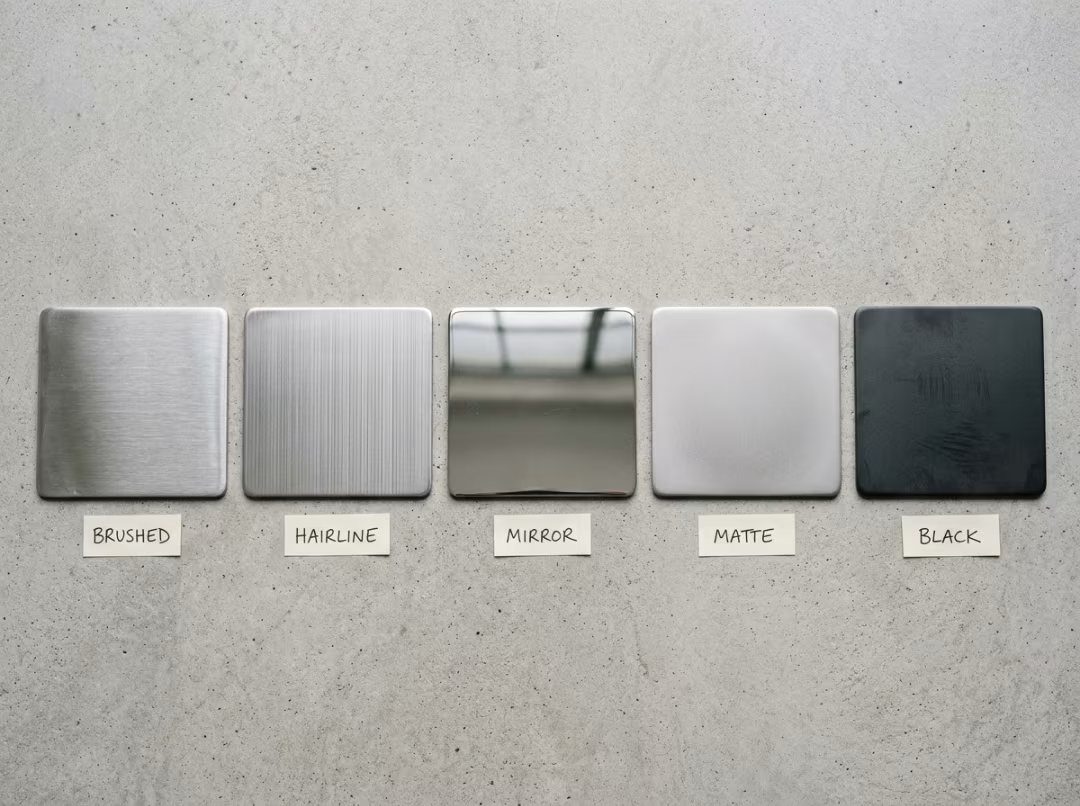
Two sheets of stainless steel with identical composition can look worlds apart — one bright and reflective, the other soft and muted. That difference is the finish, and it decides how the surface looks, wears, and cleans for decades. Treat it as a performance spec, not a cosmetic afterthought.
Why the Finish Choice Matters
A finish is the surface texture and reflectivity applied to the base metal, created through mechanical work like sanding, polishing, and buffing, or through applied coatings. Three things ride on that single decision:
- Appearance. Bright, dull, glossy, or textured — the finish sets the visual tone of the whole space.
- Durability. Some finishes hide scratches and daily wear; others broadcast every mark.
- Maintenance. Fingerprints, smudges, and water spots behave completely differently from one finish to the next.
One point that settles a common worry: stainless gets its corrosion resistance from a chromium oxide layer, and most finishes don’t touch that protection. The exception is applied coatings — like those on black stainless — which add a layer that needs its own care.
The Five Stainless Steel Finishes
Brushed Finish
Brushed stainless has a unidirectional satin texture, created by running an abrasive belt across the surface in one direction. The result is a fine linear grain that reflects light softly.
- Looks like: A warm, low-gloss sheen with visible directional lines. Understated, not flashy.
- Best environments: Kitchen appliances and sinks, elevator doors, commercial food-service equipment, restaurant countertops.
- Hides vs. shows: Hides fingerprints, smudges, and minor scratches well — the texture breaks up light. Shows water spots if you don’t dry it.
- Maintenance reality: The most forgiving everyday finish. It cleans with standard stainless cleaners, and light scratches touch up by re-brushing along the grain with a scouring pad. Just match the grain direction.
If you want a surface that survives real-world contact and hides its wear, brushed is the safe default.
Hairline Finish
Hairline is brushed’s more refined cousin. The grain is finer, tighter, and more uniform, producing a continuous line texture that reads as smooth and precise rather than rugged.
- Looks like: A delicate, consistent grain that catches light gently. More polished than brushed.
- Best environments: Decorative trim and moldings, appliance handles, architectural accents and railings, electronic device casings.
- Hides vs. shows: Still hides fingerprints effectively and blends beautifully with glass or wood. But scratches that run against the fine grain are more visible than on brushed.
- Maintenance reality: Slightly less forgiving than brushed if it scuffs, and it usually costs a bit more because of the finer finishing process.
This is a go-to for premium interior surfaces where the grain has to look intentional. If you’re sourcing material for that kind of work, hairline finish steel delivers the consistency designers expect across large runs.
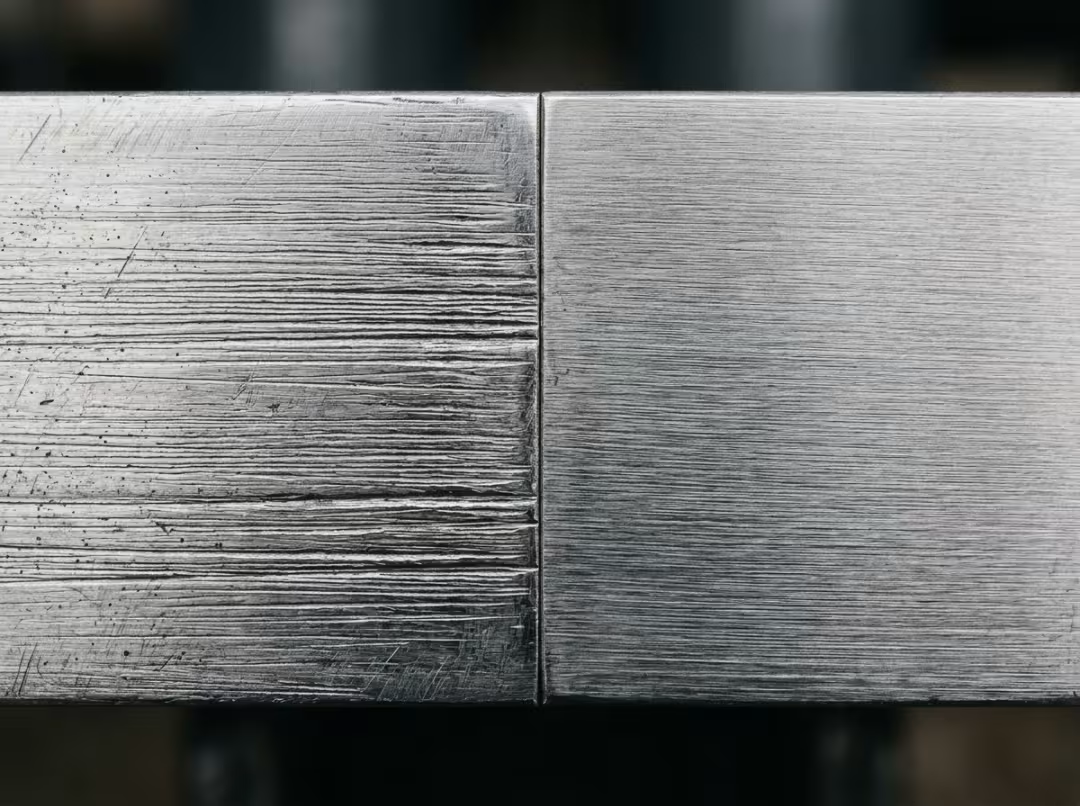
Choose hairline when refinement matters more than maximum scratch-hiding.
Mirror Finish
Mirror finish — also called #8 — is polished through progressively finer compounds until it reflects a crisp, clear image. There’s no visible grain at all.
- Looks like: A true silvered mirror. Bright, reflective, luxurious.
- Best environments: Decorative wall panels and columns, elevator interiors, art and sculpture, medical equipment, clean rooms, high-end appliance fronts.
- Hides vs. shows: Hides nothing. Every fingerprint, smudge, water spot, and minor scratch is immediately visible.
- Maintenance reality: Demands daily wiping to stay presentable, and scratches can’t be fixed on-site — they need professional re-polishing. But the smooth, non-porous surface resists bacterial buildup and sanitizes easily, which is exactly why it dominates clean rooms and medical settings.

Mirror delivers drama and hygiene, but only commit if someone will maintain it. Keep it off high-touch surfaces.
Matte Finish
Matte stainless has a uniform, non-reflective surface produced by abrasive blasting, chemical etching, or a coarser polishing pass that suppresses gloss. Light scatters diffusely instead of bouncing back.
- Looks like: A flat, even tone with no glare and no directional grain.
- Best environments: Exterior architectural cladding, industrial equipment, outdoor fixtures and signage, glare-sensitive commercial kitchens.
- Hides vs. shows: Hides scratches, fingerprints, and smudges better than any other finish. The dull surface won’t draw attention to dents or imperfections.
- Maintenance reality: Low-maintenance and very forgiving overall, though the flat surface picks up oils and grime that need regular wiping. Deeper scratches are harder to polish out.
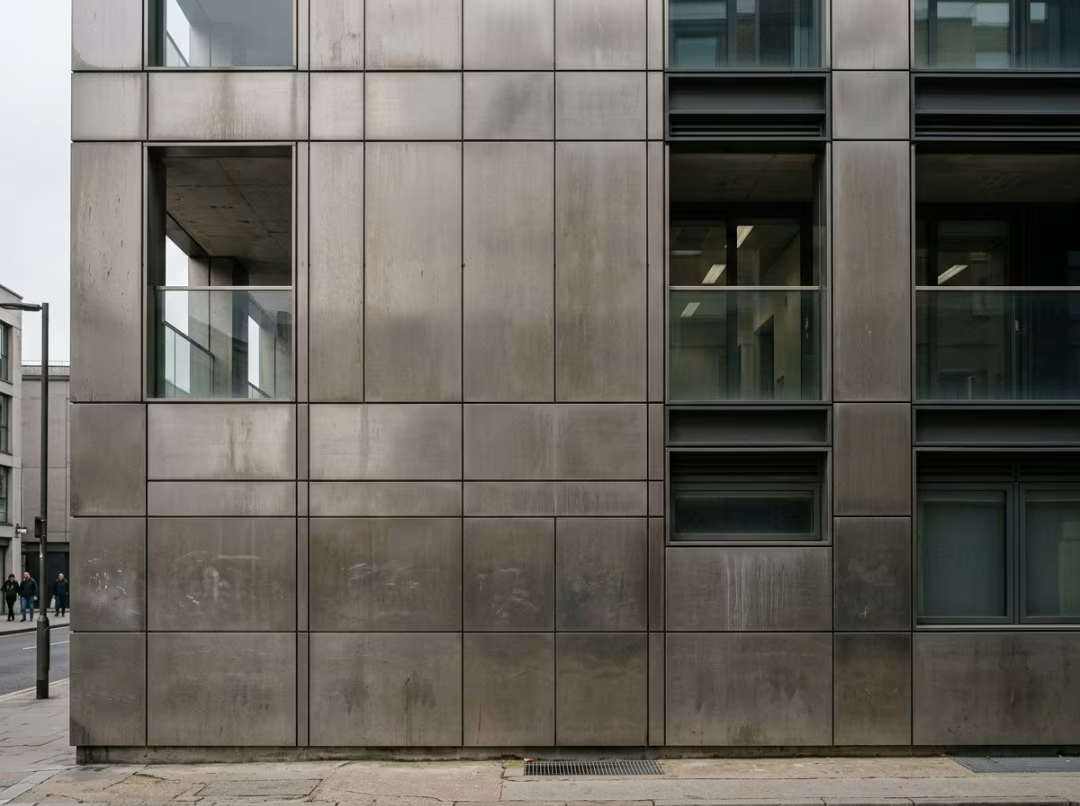
For outdoor and industrial work where glare and wear are the enemies, matte is the most practical choice.
Black Stainless Finish
Black stainless isn’t a finish of the metal itself. It’s a standard stainless base with a dark coating applied on top — usually through physical vapor deposition (PVD) — over a brushed, matte, or mirror texture.
- Looks like: Deep charcoal to true black, with the underlying texture still visible. Most black stainless on the market has a brushed or matte base.
- Best environments: Modern kitchen appliances, bathroom fixtures and faucets, cabinet hardware, wine refrigerators and specialty appliances.
- Hides vs. shows: Hides water spots well. Shows fingerprints, especially over a brushed base.
- Maintenance reality: This is where black demands respect. The PVD coating is not scratch-proof — a deep scratch exposes the silver base underneath, with no touch-up. It needs specialized cleaners, since standard stainless sprays and abrasive pads can streak or damage the coating. It also runs more expensive and is hard to match across brands, so mixing pieces can reveal visible differences.
For projects that want color and consistency without the coating fragility of appliance-grade black stainless, color coated stainless steel offers a more controlled, repeatable finish across large panels.
Black stainless makes a bold statement, but you’re accepting a coating’s limits. Best used as an accent, not everywhere.
Finish Comparison at a Glance
|
Finish |
Reflectivity |
Hides fingerprints |
Hides scratches |
Maintenance |
Relative cost |
Best environments |
|---|---|---|---|---|---|---|
|
Brushed |
Low satin |
Good |
Good |
Easy |
Low |
Kitchens, high-traffic, appliances |
|
Hairline |
Low–medium satin |
Good |
Fair |
Moderate |
Medium |
Trim, accents, premium interiors |
|
Mirror |
Very high |
Poor |
Poor |
High |
High |
Clean rooms, feature panels, medical |
|
Matte |
None |
Very good |
Very good |
Low |
Low |
Exterior cladding, industrial, outdoor |
|
Black |
Varies by base |
Fair |
Poor (exposes base) |
High, special care |
High |
Accent appliances, fixtures, hardware |
How to Choose the Right Finish
There’s no universal “best.” The right finish comes from four questions, worked in order.
1. Start With the Environment
Where the material lives narrows the field faster than anything else.
- High-traffic commercial spaces: Brushed or matte absorb constant contact without looking worn.
- Clean rooms and medical facilities: Mirror is the standard — it sanitizes easily and resists biofilm.
- Outdoor installations: Matte reduces glare and hides environmental wear. Vet black coatings carefully for UV exposure, since some degrade over years in direct sun.
- Residential kitchens: Brushed is the everyday workhorse. Black works for statement pieces but needs careful handling.
2. Weigh Maintenance Honestly
Be realistic about who cleans this surface and how often.
- Brushed and matte hide fingerprints; mirror needs daily wiping to look right.
- Black stainless requires specialized cleaners — standard sprays leave streaks or damage the coating.
- Abrasive pads and harsh chemicals are fine on bare stainless but ruin a black coating.
- For repair: brushed touches up with a scouring pad; mirror needs professional re-polishing.
3. Think Through the Aesthetics
Finishes carry a mood. Mirror and hairline read formal and refined. Brushed reads practical and warm. Matte reads industrial and modern.
Two design rules save regret. First, adjacent surfaces should share the same finish — a brushed faucet next to a mirror sink drain looks like a mistake. Second, black stainless works best as an accent; an all-black kitchen feels heavy, while black handles or one major appliance land as sharp and modern. Also check the finish under your actual lighting: mirror creates bright spots, matte absorbs light, and brushed gives a soft directional glow. Feature walls lean heavily on this play of light, which is why finish choice for decorative wall panels deserves as much attention as the layout itself.
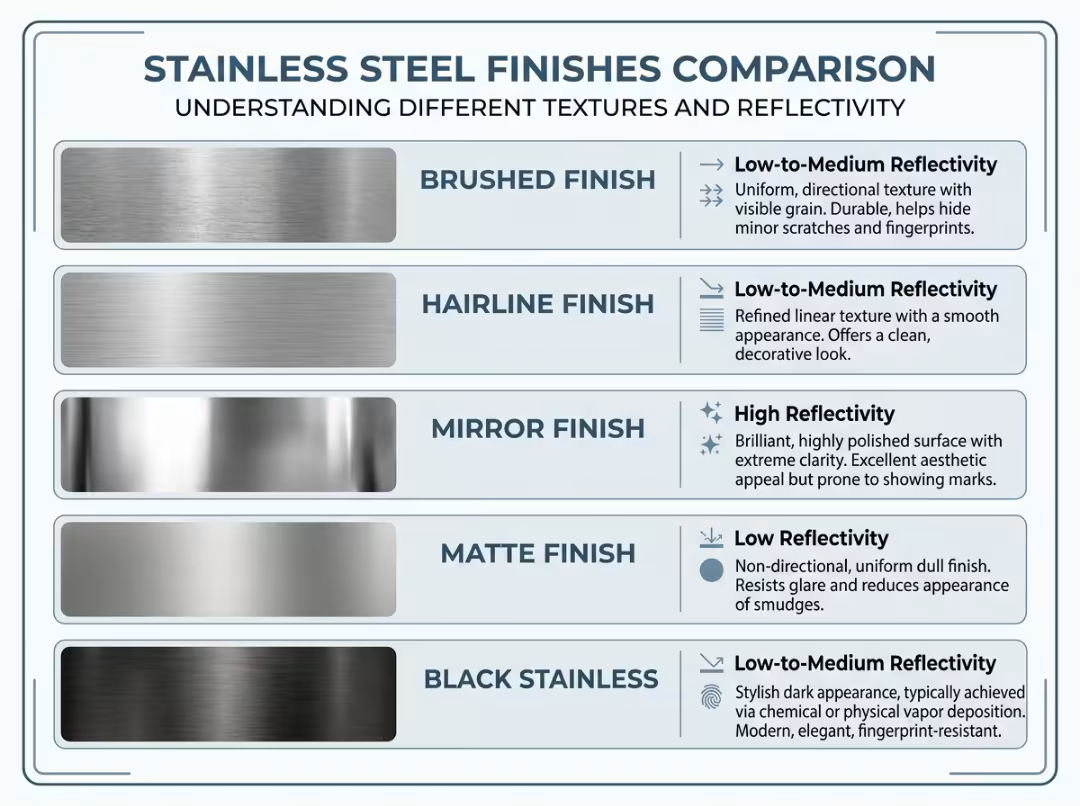
4. Factor in Cost and Lead Time
- Matte and brushed are the most economical — less polishing time.
- Hairline sits mid-range, depending on complexity.
- Mirror costs more due to labor-intensive polishing.
- Black stainless commands a premium due to the added PVD step.
Frequently Asked Questions
Which finish hides fingerprints best?
Matte, followed closely by brushed. Both scatter light so oils and smudges don’t stand out. Mirror is the worst offender — it shows everything.
Is brushed stainless steel the same as satin?
Effectively yes. “Satin” is a common name for the low-gloss, directional grain that brushing produces. Terminology varies by supplier, so confirm the grain spec rather than trusting the label.
What’s the difference between hairline and brushed?
Both are directional, but hairline has a finer, tighter, more uniform grain. It looks more refined and precise, while brushed is coarser and slightly better at hiding scratches.
Does the finish affect corrosion resistance?
For bare finishes, no — the chromium oxide layer protects the steel regardless of texture. Black stainless is different: its PVD coating adds protection but also a vulnerability, since a deep scratch exposes the base metal.
How do I clean black stainless steel without streaking?
Use a cleaner made for coated or black stainless, applied with a soft microfiber cloth. Skip abrasive pads and standard stainless sprays, which can streak or damage the coating.
Which finish is best for outdoor use?
Matte. It cuts glare, hides environmental wear, and weathers evenly. If you want black outdoors, confirm the coating is rated for UV exposure first.
The Bottom Line
Choosing a stainless finish is a balance of looks, durability, and upkeep. Brushed and matte give you the most forgiving surfaces for daily use. Mirror delivers a high-end, hygienic look but demands constant care. Black stainless offers a distinct modern edge — as long as you respect the coating’s limits.
Before you commit, answer three things: where the piece will live, how often people touch it, and how much maintenance you’re willing to do. Match the finish to that reality, confirm the grain and coating specs with your supplier, and the steel will look right for decades. Get it wrong and you’ll spend years wiping, babying, or staring at scratches you can’t remove. The finish isn’t a detail — it’s a specification, and it earns the same scrutiny as the metal beneath it.
