




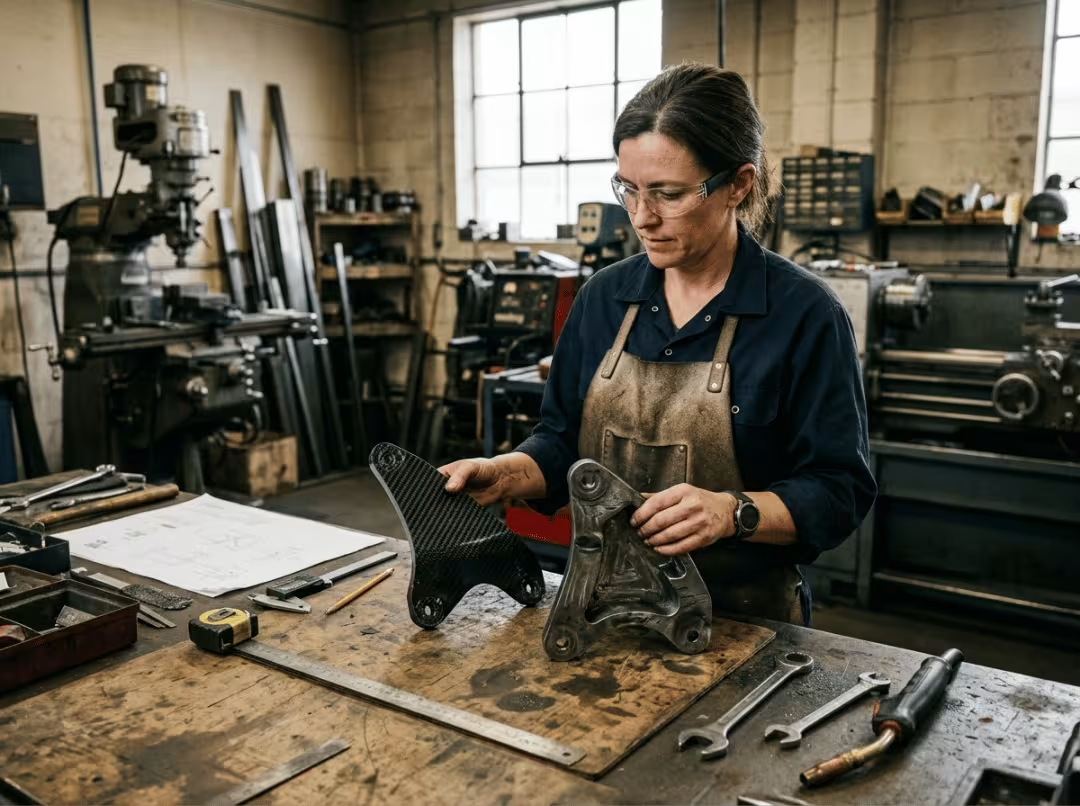
A design engineer sketches a bracket that needs to shed weight without giving up strength. Carbon fiber looks like the obvious answer, right up until the quote comes back at ten times the steel version, and the shop admits it can’t repair the part if it ever cracks. That single moment captures the real question. It’s not “which material is better?” It’s “which material fits this job, at this budget, under these conditions?”
Both materials anchor modern engineering, but they win in completely different situations. Steel is heavy, cheap, tough, and endlessly workable. Carbon fiber is light, expensive, stiff, and unforgiving when it fails. Pick the wrong one, and you pay for it in cost overruns, failed parts, or a repair bill nobody budgeted for. This guide walks through the differences that actually change a decision: mechanical behavior, physical properties, cost and manufacturing, repairability, and where each material earns its place in real builds.
Why This Choice Trips People Up
Most material comparisons list specs and stop there. That’s the problem. Carbon fiber’s headline numbers make it look like a clear upgrade over steel, and on a spec sheet it often is. But specs don’t tell you how a part behaves when it gets hit, how much a small production run costs, or whether your team can fix it in the field.
The honest answer is that neither material wins across the board. Carbon fiber trades cost and toughness for weight savings and fatigue life. Steel trades weight for durability, price, and repairability. Once you frame the decision that way, the choice usually becomes obvious for your specific project.
The Mechanical Differences That Actually Matter
Skip the exhaustive property tables. Three mechanical factors decide most carbon-fiber-versus-steel calls.
Strength-to-Weight Ratio
This is carbon fiber’s headline advantage, and it’s real. Specific strength measures how much load a material can carry per unit weight, and carbon fiber composites deliver roughly 5 to 10 times the specific strength of most structural steels.
Steel fights back with high absolute strength. Alloy grades reach well past 1,000 MPa, and even common structural steel can handle substantial loads. The catch is weight. To match a carbon fiber part’s strength, a steel version carries a heavy penalty, and in any weight-critical application that penalty is the whole story. When every gram counts, carbon fiber wins this round cleanly.
Failure Mode: The Difference That Keeps Engineers Honest
Here the advantage flips hard toward steel, and it’s the most underrated factor in the whole comparison.
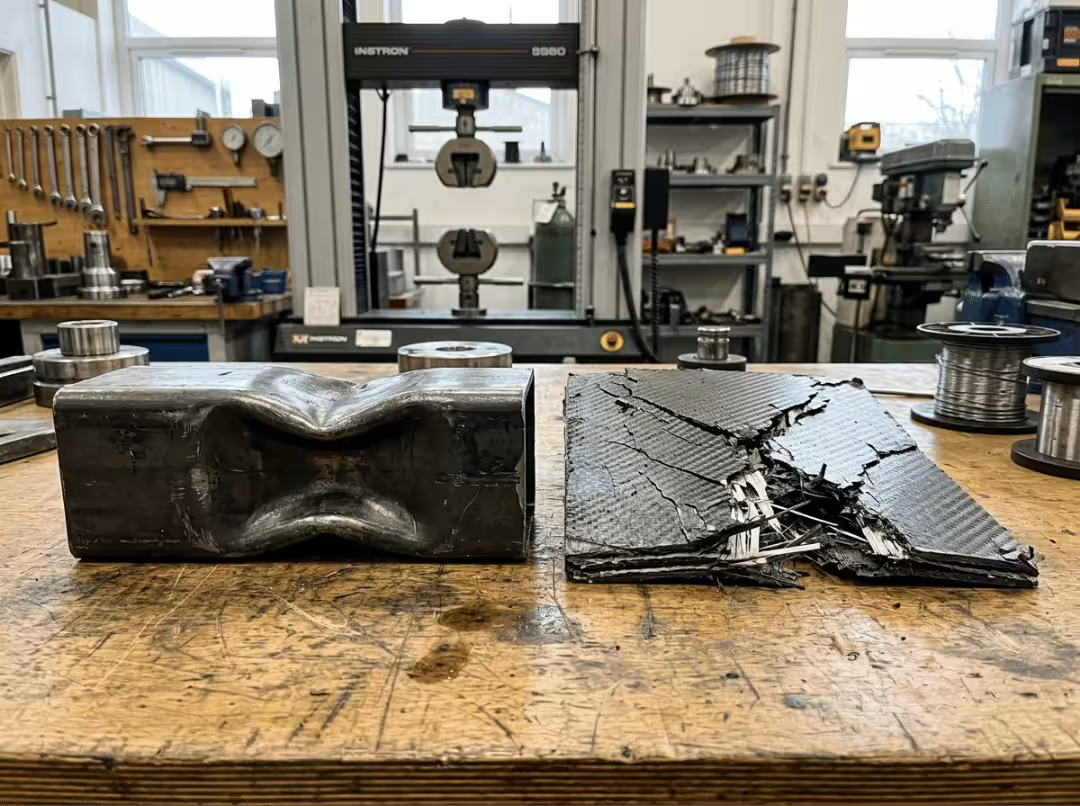
Steel yields before it breaks. Push it past its limit, and it bends, dents, and deforms plastically, giving you a visible warning long before catastrophic failure. That forgiving behavior is why steel dominates safety-critical structures. It absorbs impact energy by crumpling, which is exactly what you want in a crash.
Carbon fiber does the opposite. It behaves elastically right up to its limit, then shatters suddenly with no warning. There’s no yield point, no bend, no second chance. In a controlled load case that’s fine. In an impact or an overload event, that brittle failure is a genuine liability. A steel part that dents can often keep working; a carbon fiber part that fails is done, instantly.
Fatigue Resistance
For parts that flex over and over, carbon fiber pulls ahead again. It resists the fatigue mechanisms that plague metals, so it doesn’t develop the creeping crack propagation that eventually splits steel under cyclic loading.
Steel is vulnerable here, especially at weld points and stress concentrators, where microcracks form and grow with every cycle. Any component that sees millions of load cycles, a driveshaft or a rotating structure, benefits from carbon fiber’s fatigue life. This is one reason it shows up in high-performance rotating and vibrating parts where steel would slowly crack itself apart.
How the Physical Properties Compare
Beyond raw mechanics, a few physical traits swing the decision.
The Density Gap
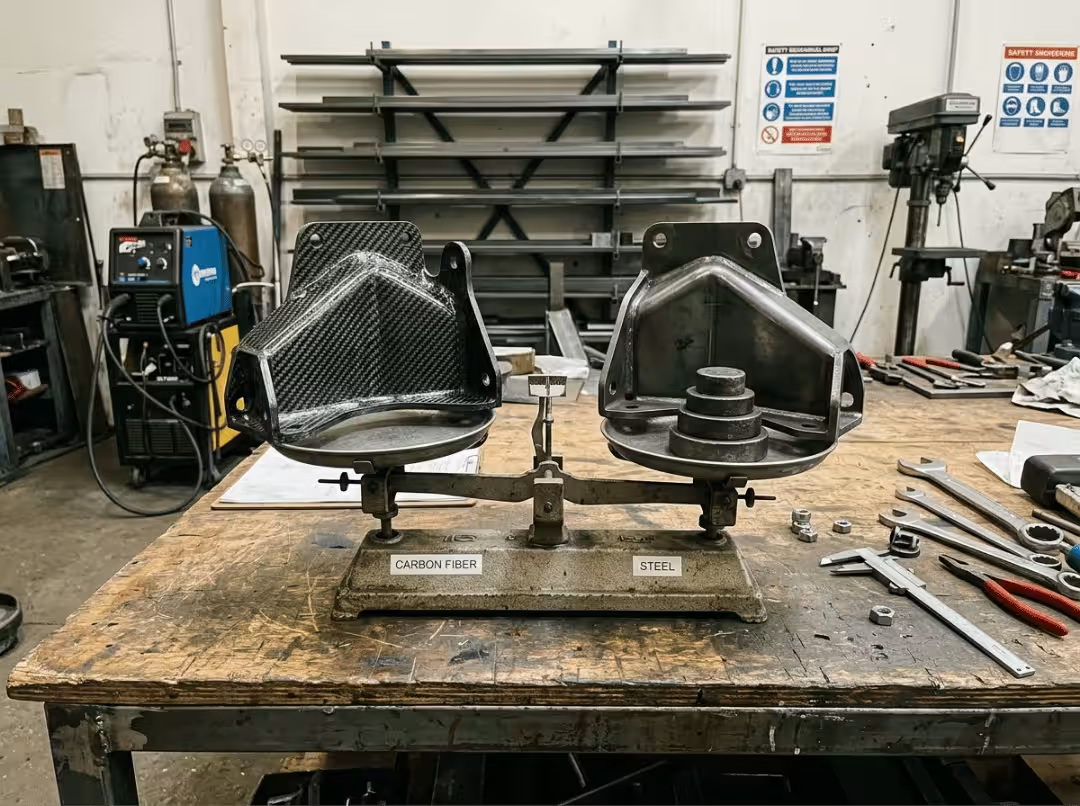
Steel sits around 7.85 g/cm³. Carbon fiber composites have a density near 1.6 g/cm³. That roughly 5-to-1 difference is the single biggest reason carbon fiber is used in weight-critical designs. Everything else about carbon fiber- the cost, the brittleness, the repair headaches- gets tolerated because of this one number. If weight isn’t a priority for your project, most of carbon fiber’s appeal disappears.
Corrosion and a Hidden Galvanic Trap
Carbon fiber doesn’t rust or oxidize. Steel does, which is why bare steel needs protection to survive moisture and salt. Coating handles that well: galvanized steel resists corrosion for decades in harsh environments, and painted or powder-coated surfaces provide an additional reliable barrier. Once properly coated, steel tolerates harsh weather far better than people assume.
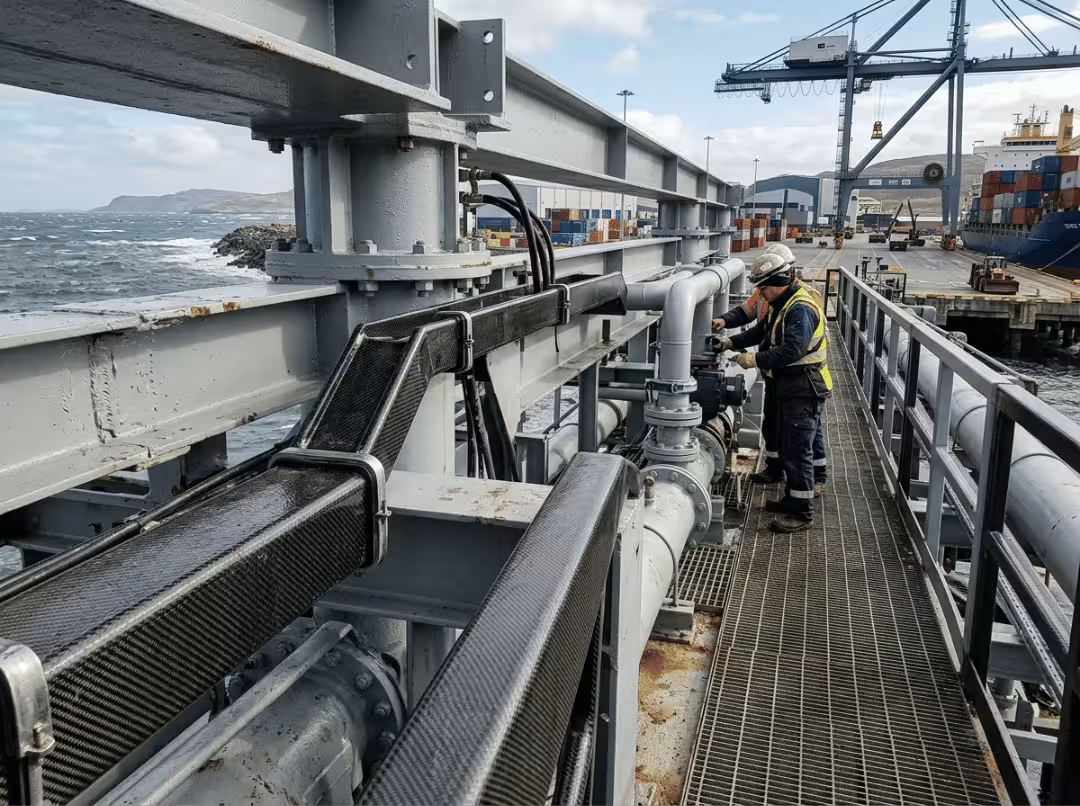
There’s a trap worth flagging, though. When carbon fiber comes into direct contact with steel or aluminum, it triggers galvanic corrosion. The carbon acts as a cathode, accelerating corrosion of the metal it touches. Any mixed-material assembly needs an isolation barrier between the carbon fiber and the metal, or the metal part corrodes faster than it would on its own. This surprises a lot of first-time carbon fiber users.
UV and Environmental Degradation
Carbon fiber’s strength lives in the fibers, but the resin matrix holding them together is the weak link outdoors. Epoxy and polymer resins degrade under prolonged UV exposure and absorb moisture over time, which slowly weakens the part. Outdoor carbon fiber needs a protective gel coat or UV-stable topcoat, and that protection has to be maintained.
Steel flips this equation. It has no resin to break down, and a properly coated steel part shrugs off sunlight and weather that would slowly cook an unprotected composite. For long-term outdoor structures, this durability edge matters more than the spec sheet suggests.
Cost, Manufacturing, and Repair
This is where carbon fiber’s dream numbers meet a tight budget.
The Raw Cost Gap
Raw carbon fiber runs roughly 10 to 30 times more expensive than structural steel per pound. That gap alone rules out carbon fiber for most cost-sensitive work before the conversation even starts.
Production Volume Changes Everything
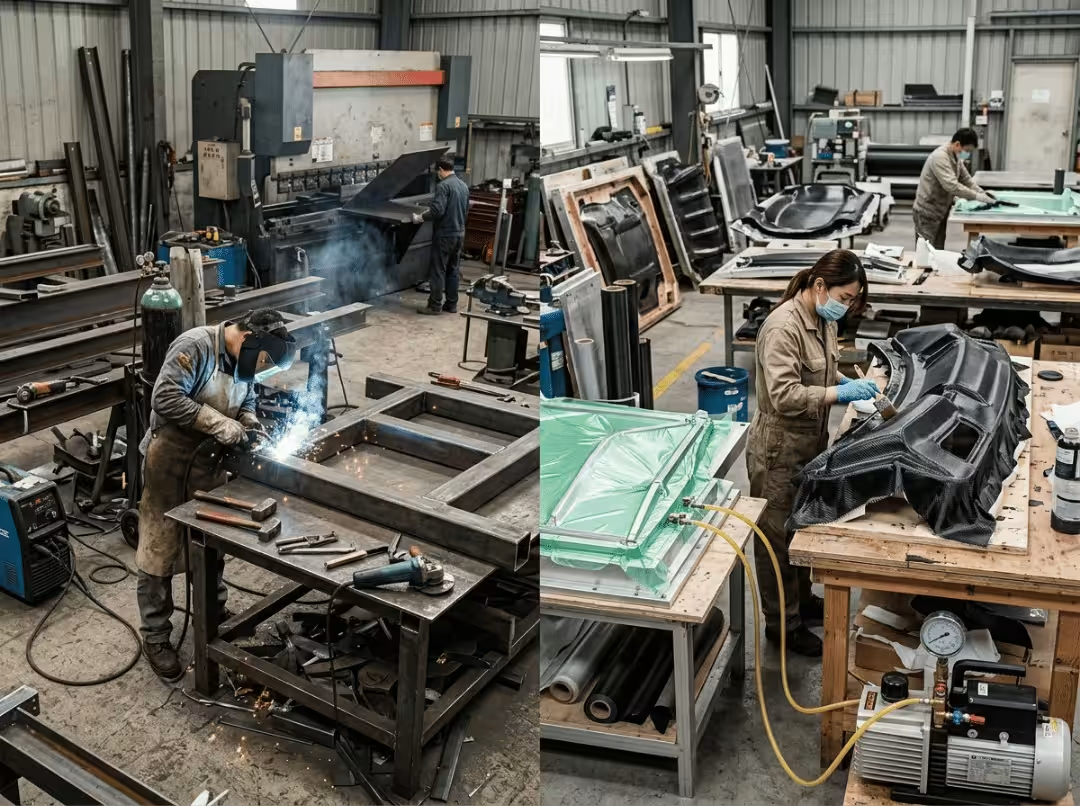
The cost story isn’t just the raw material; it’s the tooling and the process. Steel fabrication is mature and fast: welding, machining, bending, stamping, and bolting are all cheap, widely available, and scalable. Stamping lines spread tooling costs across hundreds of thousands of units, so steel gets cheaper per part as volume climbs.
Carbon fiber goes the other way. Processes like autoclave curing and hand layup are labor-intensive, slow, and expensive to tool. That makes carbon fiber viable mainly for low-volume, high-performance parts where weight savings justify the premium. For a single custom bracket, steel fabrication is almost always cheaper. For an aerospace component where shaving weight saves fuel for decades, carbon fiber’s cost can pay for itself. Match the material to the volume and the performance target, not to the spec sheet.
The Repairability Gap
This factor gets ignored until something breaks, and then it dominates. Steel damage is obvious. Dents, cracks, and rust are easy to spot, and almost any metal shop can weld, grind, or plate a repair. A steel part is field-repairable by general staff with common tools.
Carbon fiber hides its damage. Delamination, the separation between fiber layers, often shows no exterior sign until the part fails. Repairs require patch layups, vacuum bagging, and controlled cure cycles, and a botched repair leaves the part weaker than before. If your component has to be fixed on-site by people who aren’t composite specialists, that alone is a strong argument for steel.
Where Each Material Wins in the Real World
The fastest way to decide is to see where each material already dominates.
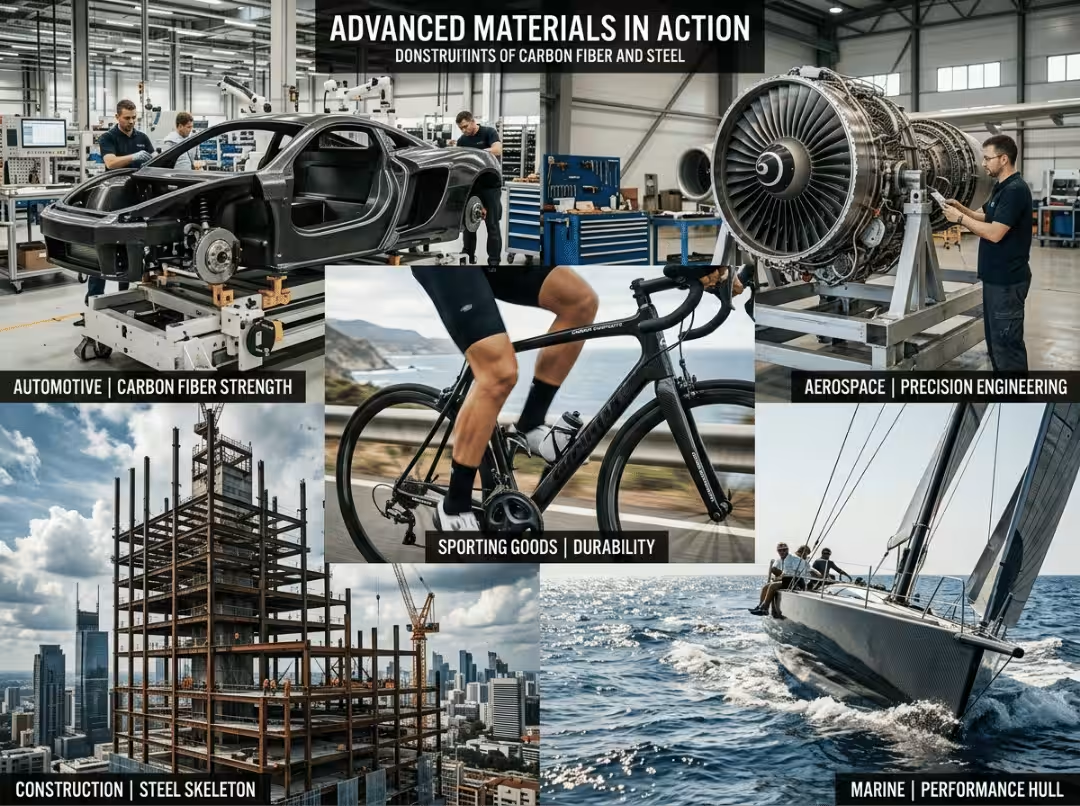
Automotive and motorsport. Steel frames the structural cage and crash structures because it absorbs impact energy and costs little. Carbon fiber shows up in hoods, roof panels, driveshafts, and wings, where cutting weight sharpens acceleration and braking.
Aerospace. Carbon fiber accounts for a large share of modern airframes, including the Boeing 787 and Airbus A350, because weight savings translate directly into fuel savings. Steel still holds the jobs that demand toughness and wear resistance: landing gear, engine mounts, and fasteners.
Construction and infrastructure. Structural steel frames buildings, bridges, and towers thanks to its strength, weldability, and fire resistance. For projects sourcing plate and sheet stock, structural steel sheet remains the backbone of load-bearing work. Carbon fiber plays a supporting role here as a retrofit material, with bonded wraps reinforcing aging concrete columns.
Marine. Steel hulls are heavy and need serious corrosion protection, but they’re tough and cheap. Carbon fiber owns the performance end: racing sailboat masts, hulls, and propellers where weight and stiffness decide who wins.
Sporting goods and consumer products. Carbon fiber dominates premium bike frames, tennis rackets, golf shafts, and tripods. Steel holds the budget and durability-focused end of the same categories, from workhorse bikes to hand tools.
A Decision Framework You Can Actually Use
Run your part through these six questions before you commit. The answers usually point clearly in one direction.
- How much does weight actually matter? If shaving grams is the whole point, carbon fiber earns its premium. If not, steel’s other advantages take over.
- What’s the load case? Steady, predictable, static loads suit carbon fiber. Impacts, vibration, and unpredictable overloads favor steel’s forgiving failure.
- What happens when it fails? If a sudden, catastrophic break is unacceptable, steel’s yield-before-fracture behavior is the safer bet.
- What’s your production volume? High volumes favor steel’s cheap, scalable tooling. Low volumes with extreme performance targets can justify carbon fiber.
- Who repairs it, and where? Field repairs by general staff mean steel. Controlled-shop composite repairs mean you can consider carbon fiber.
- What’s the lifecycle cost, not just the material cost? Add repair, maintenance, coating, and disposal. A cheap material that fails early is the most expensive choice you can make.
If your answers pull in two directions, prototype both. Build small samples, test them in the real environment, and let performance settle the argument before you commit to a full run.
Frequently Asked Questions
Is carbon fiber actually stronger than steel?
By weight, yes, dramatically so. Carbon fiber’s strength-to-weight ratio is 5 to 10 times that of structural steel. In terms of absolute strength, many steel grades match or exceed carbon fiber; they just weigh far more to do so. So the honest answer depends on whether you’re comparing per pound or per part.
Does carbon fiber rust or corrode?
Carbon fiber itself doesn’t rust or oxidize. But its resin matrix degrades over time under UV and moisture, creating a hidden problem in mixed assemblies: when carbon fiber touches steel or aluminum, it accelerates galvanic corrosion of the metal. You need an isolation barrier between the two. Steel avoids all of this once it’s properly coated or galvanized.
Can carbon fiber replace steel in car crash structures?
Not for the primary crash structure. Steel absorbs impact energy by deforming and crumpling in a controlled way, which is exactly what protects occupants in a collision. Carbon fiber shatters suddenly rather than absorbing energy progressively, so it’s used for body panels and performance parts rather than for the safety cage. Steel keeps the structural crash job.
Which is better for a custom bike frame?
It depends on your priority. Carbon fiber gives you a lighter, stiffer frame that improves performance, and it resists fatigue well. Steel gives you a more durable, repairable, and affordable frame that survives crashes and rough handling better. Racers lean carbon fiber; riders who want a frame that lasts decades and can be fixed anywhere lean steel.
Why does carbon fiber cost so much more than steel?
Two reasons stack up. The raw material costs 10 to 30 times as much as steel per pound, and manufacturing is slow and labor-intensive, with expensive tooling and processes like autoclave curing. Steel fabrication is mature, fast, and scales cheaply across high volumes. That combination keeps carbon fiber in premium, low-volume applications.
The Bottom Line
Carbon fiber and steel aren’t competitors so much as specialists. Carbon fiber offers unmatched weight savings and fatigue life, but it costs far more, fails suddenly, and resists field repair. Steel is heavier and needs corrosion protection, yet it stays tough, affordable, weldable, and recyclable.
The right pick comes down to your project’s real constraints. Choose steel when budget, durability, or repairability leads the decision, which covers most structural and general fabrication work. Choose carbon fiber when every gram matters and the part lives within controlled conditions that suit its strengths. Match the material to the job, verify with a prototype when you’re unsure, and you’ll avoid the expensive mistake of buying performance you don’t need or toughness you can’t do without.
