




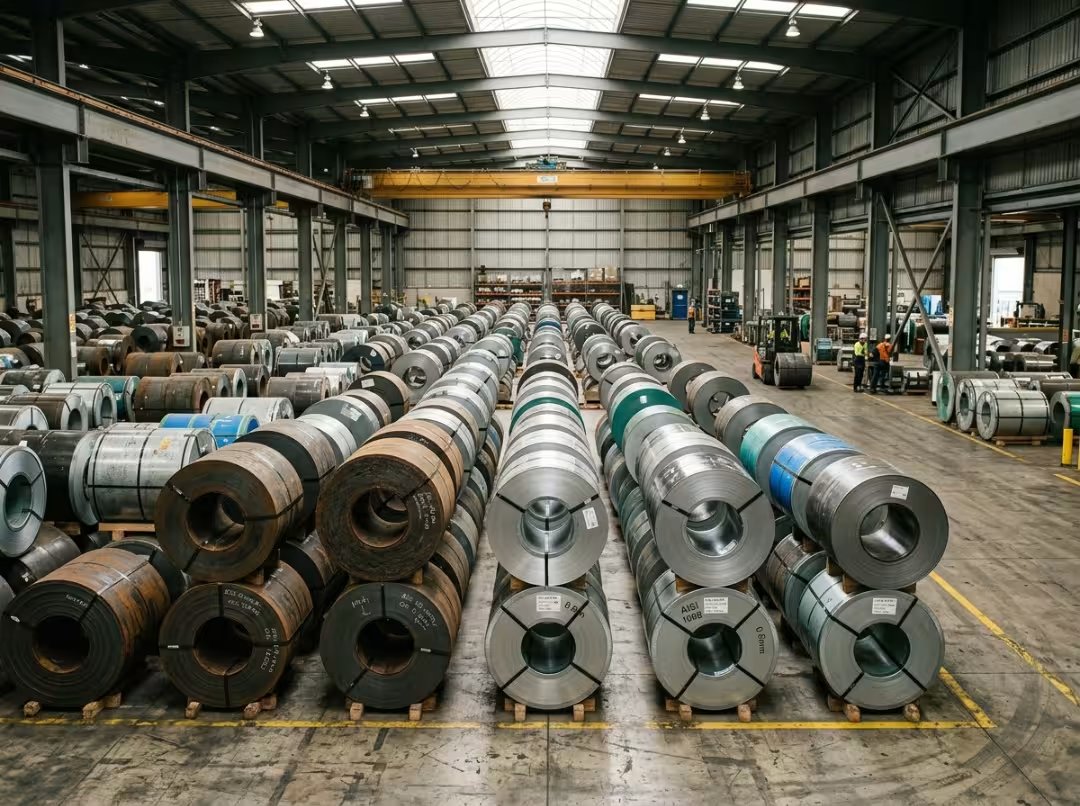
Two coils can look nearly identical on the loading dock and behave completely differently on your line. One forms cleanly and lasts decades outdoors. The other cracks at the bend or streaks with rust in a single season. That gap isn’t luck — it’s type.
Here’s the framework that cuts through it. Every steel coil is defined by three separate things: its manufacturing process, its surface treatment, and its material grade. Process sets the base properties and cost. Surface treatment drives corrosion resistance and lifespan. Grade fixes the chemistry — strength, hardness, weldability. Nail all three and the coil fits your part, your equipment, and your budget. Miss one and you pay for it later. Let’s work through each.
Why the Coil Type Decision Matters
Buyers get burned in predictable ways: a smooth cold-rolled coil ordered for an outdoor roof that rusts within a year, or a heavy galvanized coating that flakes off on a tight bend. These aren’t quality defects. They’re mismatches between the coil and the job.
Because the three categories work independently, you’re really making three decisions at once — not picking one label off a list. A coil is a carbon-grade, cold-rolled, electrogalvanized product, or a stainless, hot-rolled, bare one. Once you think in these three layers, every spec sheet starts to make sense.
Steel Coil Types by Manufacturing Process
The process route decides how the bare steel behaves — how smooth it is, how tightly it holds dimensions, and what it costs per ton.
Hot-Rolled Coils: Strong and Cheap
Steel is heated above its recrystallization temperature, rolled flat, then cooled. The result is affordable and strong, with a scaled, slightly rough surface and looser gauge tolerances.
Choose it when strength matters more than looks, and the surface will be ground, coated, or hidden anyway. Typical uses: structural sections, railroad components, heavy machinery, and welded parts. It’s the lowest price per ton — so don’t pay for a smoother product if nobody sees the surface.
Cold-Rolled Coils: Smooth and Precise
Cold rolling takes hot-rolled steel and passes it through rollers again at room temperature. You get a smoother surface, tighter tolerances, and extra strength from work hardening.
Choose it for parts that get painted, plated, or seen. Automotive body panels, appliances, furniture, and electrical enclosures all start here. The trade-offs: it costs more, and the process limits how thin you can go.
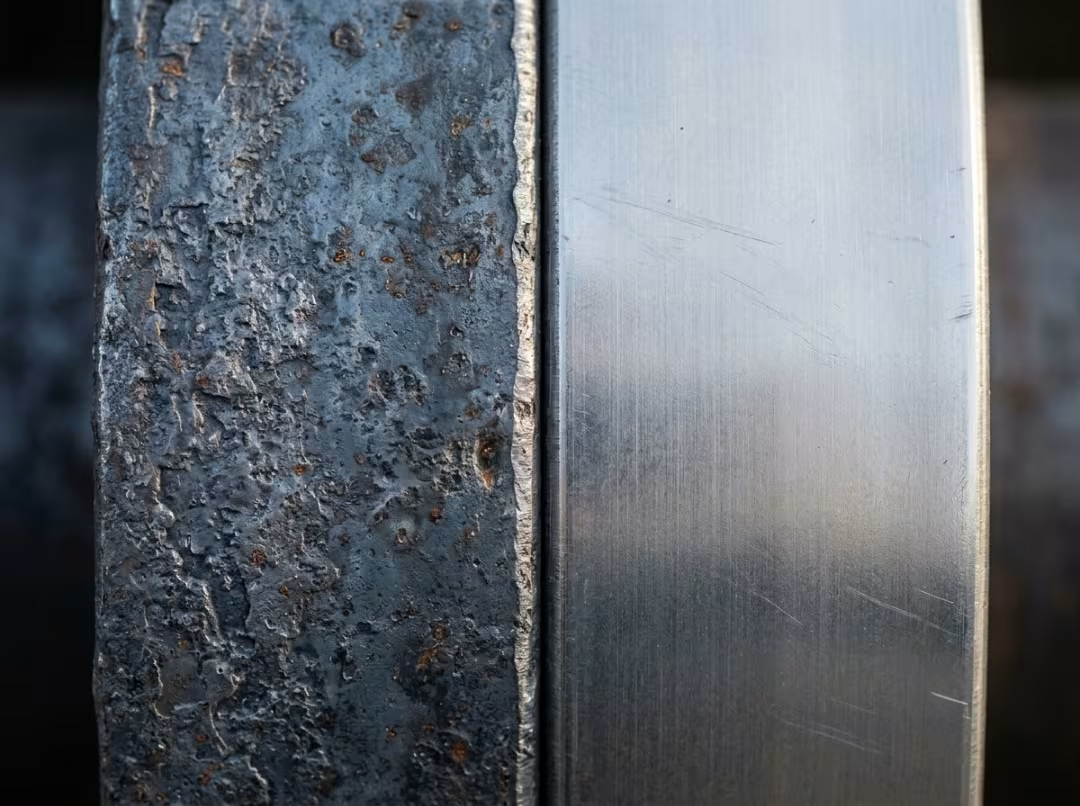
Pickled and Oiled Coils: Clean and Ready to Form
Pickling runs hot-rolled coils through an acid bath to strip off mill scale, then applies a thin oil film to prevent flash rust. The result is bare, clean steel ready for stamping, bending, or welding — a favorite starting point for fabricators who apply their own finish.
Choose it when you handle coating in-house. Common in automotive stampings, welded tube, and custom fabrication. One caution: that oil film is thin, so these coils store well only if kept dry.
Steel Coil Types by Surface Treatment
This is where corrosion resistance and lifespan are won or lost. The coating often matters more than the steel underneath it.
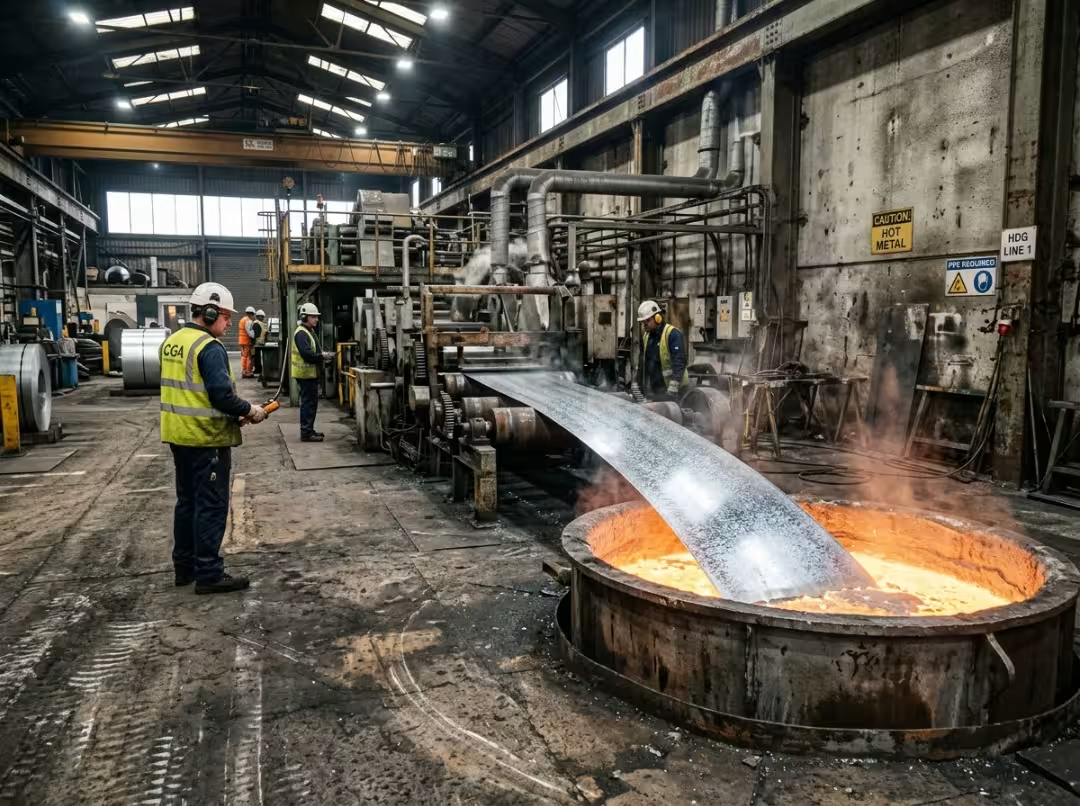
Galvanized Coils: Sacrificial Zinc Protection
The coil passes through molten zinc, which bonds to the steel and then corrodes sacrificially to protect it — even at a scratch. You’ll see spangled or matte finishes; appearance buyers sometimes specify one over the other.
Best for: roofing, siding, gutters, ductwork, automotive underbody parts, and fencing. Watch the forming trade-off: heavy zinc coatings can crack or flake on tight bends, so your forming requirements should shape the coating weight you order.
Galvalume Coils: Better Corrosion, Better Heat Reflection
Galvalume carries an aluminum-zinc alloy coating — roughly 55% aluminum, 43.4% zinc, and 1.6% silicon. It usually beats plain galvanized on corrosion resistance and reflects heat better.
Best for: roofing panels, wall cladding, HVAC equipment, and agricultural buildings. The weakness: cut edges are more exposed because the coating is less sacrificial than pure zinc, so edge protection matters on long-life installs.
Electrogalvanized Coils: Smooth Surface for Painting
Here, zinc is electroplated onto the steel with an electric current, producing a thinner, more uniform coating and a smoother surface that takes paint beautifully.
Best for: painted automotive panels, electronics enclosures, and appliances where surface quality is the priority. It trades some raw corrosion protection for a cleaner finish.
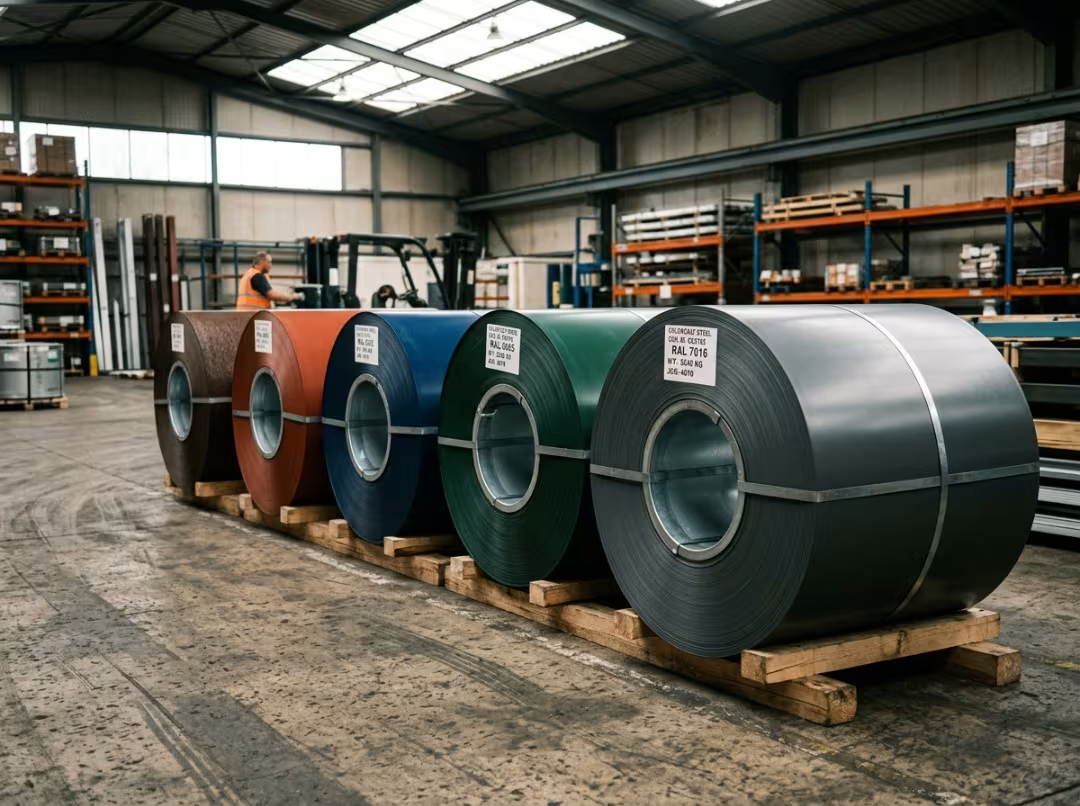
Color-Coated (Prepainted) Coils: Finish and Protection in One
A galvanized or galvalume base gets a primer and topcoat baked on at the mill. Coating chemistry drives weather performance: polyester is economical for interior and mild exposure, SMP enhances durability, and PVDF maintains color and gloss the longest outdoors.
Best for: building panels, roofing, refrigerators, washing machines, and office furniture. The big win is that prepainted steel eliminates the manufacturer’s secondary painting step, cutting finishing cost and time. Zinc-based versions like PPGI coil and sheet are a workhorse for appliance panels and construction alike.
Tin-Plated Coils: Food-Safe Packaging
Tin electroplating protects steel from corrosion and keeps food safe from contamination. This is the standard material for food and beverage cans.
Best for: food packaging, aerosol cans, and general packaging. A narrow niche, but non-negotiable where it applies.
Steel Coil Types by Material Grade
Grade sets the chemistry — and therefore the strength, hardness, weldability, and corrosion resistance. It works independently of process and coating.
Carbon Steel Coils
The largest group by far; most hot-rolled and cold-rolled coils live here. Carbon content sets the behavior:
- Low carbon forms easily — wire, fencing, panels.
- Medium carbon balances strength and workability — machinery parts.
- High carbon is hard and springy but tougher to form — springs, cutting tools.
Alloy Steel Coils
Adding chromium, nickel, or molybdenum lifts strength, hardness, and wear resistance. HSLA (high-strength low-alloy) grades are common in automotive and structural work, delivering more strength per kilogram.
Spec alloy over plain carbon for heavy loads, abrasive conditions, and high-stress components — anywhere plain carbon would need more mass to do the same job.
Stainless Steel Coils
Stainless contains at least 10.5% chromium, forming a passive layer that self-heals against corrosion. The common grades:
- 304 — general corrosive environments, the everyday choice.
- 316 — marine and chemical exposure; adds molybdenum.
- 430 — budget ferritic option for lighter duty.
Best for: food equipment, kitchenware, medical instruments, automotive trim, and chemical tanks. It carries a price premium, so justify it — coastal construction and food processing usually do.
Electrical (Silicon) Steel Coils
An iron-silicon alloy engineered for magnetic performance. Grain-oriented grades suit transformers; non-grain-oriented grades suit motors and generators. It’s a specialty most buyers never touch, so we’ll leave it there.
Coil Type Comparison at a Glance
|
Coil type |
Category |
Corrosion resistance |
Surface quality |
Relative cost |
Best-fit applications |
|---|---|---|---|---|---|
|
Hot-rolled |
Process |
Low (bare) |
Rough, scaled |
Lowest |
Structural, machinery, hidden parts |
|
Cold-rolled |
Process |
Low (bare) |
Smooth |
Medium |
Panels, appliances, painted parts |
|
Pickled & oiled |
Process |
Low (temporary) |
Clean, bare |
Low–medium |
Stampings, tube, in-house finishing |
|
Galvanized |
Coating |
Good |
Spangled/matte |
Medium |
Roofing, siding, ductwork, fencing |
|
Galvalume |
Coating |
Very good |
Smooth |
Medium |
Roofing, cladding, HVAC, agriculture |
|
Electrogalvanized |
Coating |
Moderate |
Very smooth |
Medium–high |
Painted auto, electronics, appliances |
|
Color-coated |
Coating |
Very good |
Finished color |
Medium–high |
Building panels, appliances, furniture |
|
Tin-plated |
Coating |
Good (food-safe) |
Bright |
Medium |
Cans, food and general packaging |
|
Stainless |
Grade |
Excellent |
Varies |
High |
Food, medical, marine, chemical |
Key Specs to Confirm Before You Buy
Type narrows the field. These physical specs confirm the coil actually fits your equipment and part.
Thickness and width. Gauge systems differ by region — gauge numbers, decimal inches, or millimeters — so convert carefully and confirm units. Tolerances run tighter on cold-rolled than hot-rolled, and width has to match what your roll former or press can feed.
Weight and dimensions. Confirm coil weight, inner diameter (commonly 508 or 610 mm), and any outer-diameter limit. Weight drives your handling gear, freight cost, and changeover time. Check the edge option too: mill edge, trimmed edge, or slit edge, depending on how clean you need the sides.
Mechanical properties. Tensile strength is the maximum pull before breaking; yield strength is where the steel deforms permanently; elongation is how far it stretches first. Deep-drawing and tight bends need the right combination, and those numbers come from grade plus process — so match them to how the part will actually be formed.
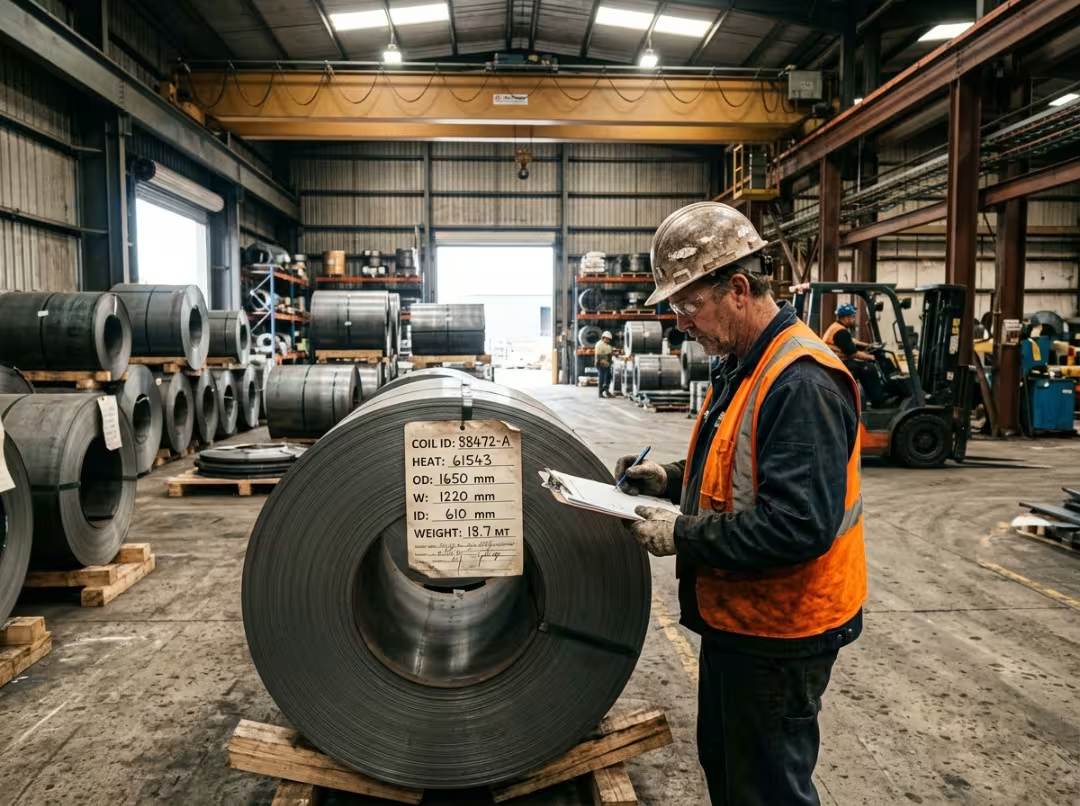
How to Choose the Right Steel Coil
Work through four questions in order, and the choice usually makes itself.
- Where will the part be used? Indoor, outdoor, hidden, or on display.
- How will it be formed? Deep draw, tight bend, stamp, or weld.
- What environment does it face? Dry, humid, coastal, chemical, or food contact.
- What’s the budget? Weigh it against the service life you actually need.
Then apply a quick matching rule:
- Corrosive environments → galvanized, galvalume, or stainless
- Cosmetic parts → cold-rolled or electrogalvanized
- Heavy structural work → hot-rolled
- Food contact → tin-plated or stainless
- Outdoor building panels → color-coated over a galvalume or zinc base
For roofing, cladding, and panel work, matching the coating to the exposure is everything — the material planning behind building and construction projects lives or dies on this step.
Two more habits that save money. First, confirm the coating weight (G90, Z275, and the like) so you’re buying the protection you actually need, not more or less. Second, request quality certificates and mill test reports. Before a large run, order a sample coil and put it through your real process. A short trial beats a warehouse full of the wrong steel.
Frequently Asked Questions
What’s the difference between hot-rolled and cold-rolled coils?
Hot-rolled is formed hot, so it’s cheaper with a rougher surface and looser tolerances. Cold-rolled is re-rolled cold for a smoother finish, tighter tolerances, and higher strength — at a higher price.
Is galvanized the same as galvalume?
No. Galvanized uses a pure zinc coating; galvalume uses an aluminum-zinc alloy. Galvalume resists corrosion better across most surfaces, but its cut edges are more vulnerable than zinc’s.
What does the “G” in G90 mean?
It’s a coating-weight rating. G90 specifies the amount of zinc per unit area on galvanized steel — higher numbers mean a thicker, longer-lasting coating. Z275 is the metric equivalent.
Can I weld galvanized coil without removing the zinc?
It’s better to remove it first. Welding through zinc produces toxic fumes and weakens the joint. Grind back the coating at the weld area, then re-protect it afterward.
What’s the best coil type for an outdoor roof?
Color-coated steel over a galvalume or heavy galvanized base. You get corrosion resistance plus a finished, weather-rated color in one product — no field painting required.
What’s the difference between narrow coil and slit coil?
Narrow coil is rolled to a smaller width at the mill. Slit coil is a wider master coil cut down to custom widths, giving you clean edges sized to a specific line.
How do I prevent rust on bare coils stored outdoors?
Keep them dry, off the floor, and out of temperature swings that cause condensation. Pickled and oiled coils have only a thin protective film, so a humid warehouse can flash-rust them fast.
The Bottom Line for Buyers
Every steel coil comes down to three choices: the manufacturing process, the surface treatment, and the material grade. Process sets the base and the cost, coating sets the lifespan, and grade sets the strength and chemistry. Match all three to how the part is formed and where it lives, and you’ll outperform anyone chasing the lowest price per ton.
Your next step is simple. Write down the part’s requirements — environment, forming method, finish, service life, and dimensions — hand that spec list to your supplier, and ask for a mill test report before you order. For panel and laminated applications, it’s worth reviewing options like laminated steel early, so the finish and the base are chosen together rather than patched later. Spec it right the first time, and the coil that arrives is the one your line was built to run.
