




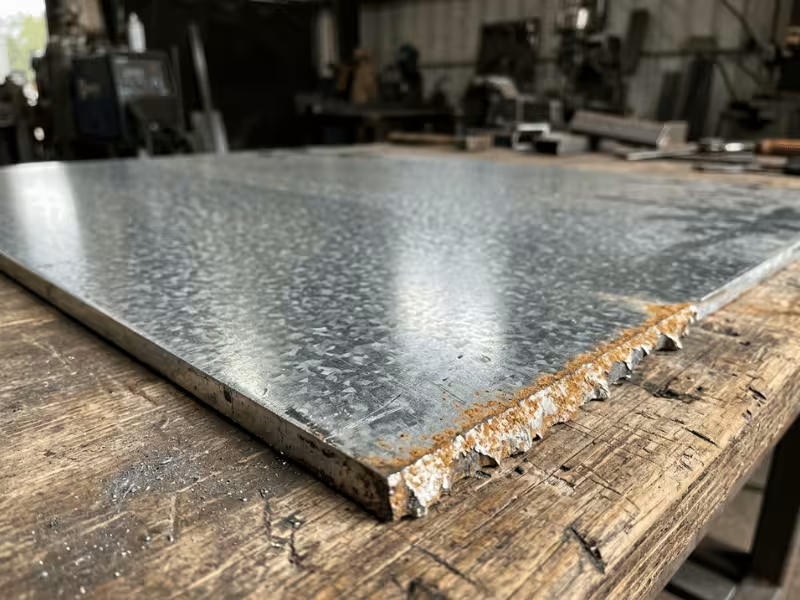
Yes, aluminized steel can rust — but usually only after the aluminum coating gets damaged, worn away, or exposed at edges and welds.
That difference matters more than it sounds. Most people don’t ask this out of curiosity. They ask because they have a real part in mind: an exhaust pipe, a roof panel, an oven liner, or an HVAC housing. The honest answer always depends on where the metal lives and how the coating holds up.
I’ve worked with coated steel across all these jobs, and the same three questions come up every time. So this guide tackles them head-on:
- Why aluminized steel resists rust far better than plain steel
- Which environments wear it down the fastest
- When you should pick it over galvanized, stainless, or Galvalume
Let’s start with the short, straight answer.
The Short Answer: When Aluminized Steel Rusts
Here’s the part most product pages skip: aluminized steel is still carbon steel underneath. Strip away the surface, and you have the same metal that rusts in any garage or backyard.
All the rust resistance comes from the aluminum coating. The base steel does nothing to protect itself. So the real question isn’t “does the steel rust?” It’s “is the coating still doing its job?”
As long as that coating stays whole, aluminized steel holds up well. The aluminum forms a tight oxide layer that keeps moisture and oxygen away from the steel. In dry heat or clean, mild conditions, parts last for years without a spot of rust.
Trouble starts when something breaks through. Rust risk climbs fast in these situations:
- Cut edges — shearing or sawing leaves bare steel along the cut
- Weld areas — the heat burns off the coating right where you joined the metal
- Scratches and abrasion — deep gouges peel the aluminum away
- Chloride or acidic exposure — road salt, coastal air, and acidic chemicals eat at the coating
- Trapped moisture or condensate — water that sits with no way to drain finds any weak spot
Notice the pattern. Aluminized steel rarely fails across a clean, flat surface. It fails where the coating gets interrupted. Grasp that, and you already understand most of what drives rust on this material.
What Aluminized Steel Is — and Why That Matters
Before we dig into rust, it helps to know exactly what you’re buying. A quick read on the makeup and grades saves you from costly guesses later.
What It Is
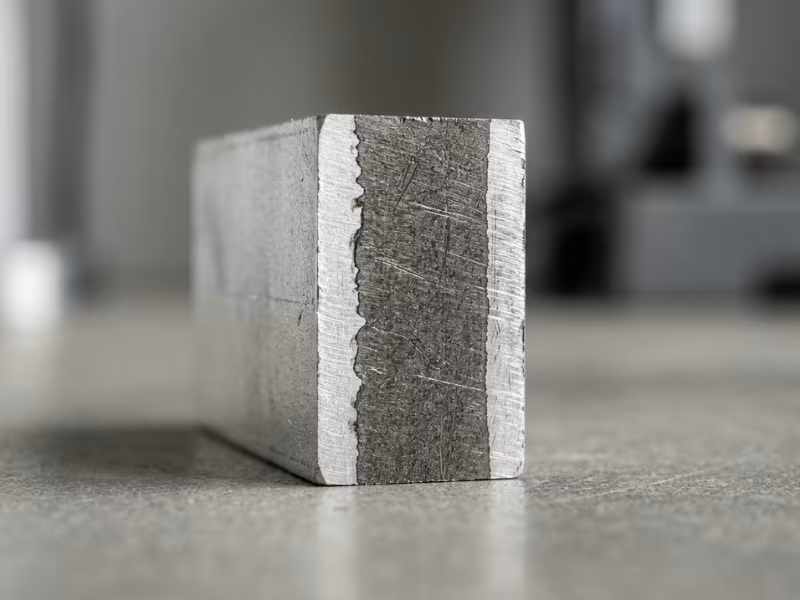
Aluminized steel starts as ordinary carbon steel. Nothing fancy about the base. Manufacturers then run it through a hot-dip bath of molten aluminum, or an aluminum-silicon blend, so the coating fuses right onto the surface.
That bond is the whole point. The aluminum bakes into the steel rather than sitting on top like paint. You get a tight, durable layer that shrugs off heat and slows corrosion far better than bare steel ever could.
If you’re buying by spec, ASTM A463 is the standard worth checking. It spells out the coating weights and types, so you know what you’re actually paying for instead of trusting a vague label.
Type 1 vs Type 2
Here’s where a lot of buyers trip up. “Aluminized steel” isn’t one thing. It comes in two types, and they don’t behave the same.
Type 1 carries an aluminum-silicon alloy coating. The silicon helps it hold up under high heat, which is why you’ll find it in exhaust parts, ovens, and heat exchangers.
Type 2 uses a coating of nearly pure aluminum. It trades some heat tolerance for stronger resistance to everyday atmospheric corrosion, so it fits outdoor and general-purpose jobs better.
My advice? Don’t stop at asking whether a part is “aluminized steel.” Ask which type it is, and match that to where the part will live. Get that one detail right, and you dodge most of the disappointment people run into down the road.
Why Aluminized Steel Resists Rust — and Its Biggest Limitation
To use this material well, you need to grasp one thing: how it protects the steel, and where that protection quietly runs out.
Aluminized steel fights rust the same way pure aluminum does. The moment the coating meets air, it forms a thin, stable film of aluminum oxide. That film acts like a shield. It blocks moisture and oxygen from reaching the carbon steel underneath, and it hangs on tight through heat and time.
But here’s the catch, and it’s a big one. This is barrier protection. The aluminum works by covering the steel, not by sacrificing itself for it.
How This Differs From Galvanized Steel
Galvanized steel plays a different game. Zinc gives you sacrificial protection. Scratch through the zinc, and it still shields the exposed steel by corroding first. The zinc gives itself up to save the metal beneath.
Aluminum doesn’t do that in any reliable way. Break through the coating, and the bare steel is largely on its own. No neighbor steps in to take the hit.
That single difference explains where aluminized steel struggles. The flat, untouched surface rarely fails. The interruptions bite you — cut edges, punched holes, welded joints, and deep scratches. Those spots leave bare steel with no backup.
So the rule is simple. If the surface stays intact, aluminized steel usually performs well. If the job creates many exposed edges or welded joints, rust risk rises much faster.
Keep that trade-off in mind, and you’ll know exactly where to watch your parts — and where to add protection before rust ever starts.
Where Aluminized Steel Usually Starts to Fail
If you want to spot rust before it spreads, you need to know where to look. In practice, aluminized steel fails first at interruptions in the coating, not on untouched flat surfaces.
Here are the four spots I check first.
Cut Edges and Punched Holes
Every cut exposes a fresh line of bare steel. Shearing, sawing, and punching all leave the raw core wide open along that edge.
The coating can’t wrap around a fresh cut. So water and salt attack the exposed steel directly, and rust often creeps out from the edge inward.
Weld Zones
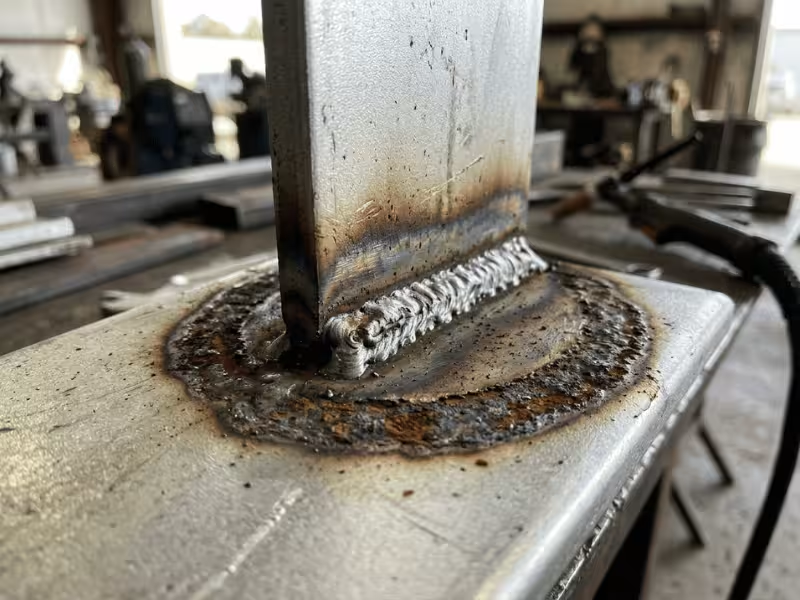
Welding brings intense heat, and that heat burns off the aluminum right where you join the metal. You end up with a bare, discolored ring around every weld.
I treat these areas as guaranteed weak points. Without a touch-up coating, they rust long before the rest of the part shows a spot.
Scratched or Abraded Surfaces
Handling, stacking, and dragging all take their toll. A deep scratch or worn patch strips the aluminum down to the steel.
Light surface marks usually heal, since the oxide film reforms. But gouges that reach the base metal open a clear path for corrosion.
Trapped Moisture or Internal Condensate
This one hides. Water that pools in a seam, a lap joint, or a closed cavity never fully dries out. It sits against the coating and slowly wears it thin.
Inside pipes and housings, condensate collects and works from the inside out. You often won’t see the rust until it breaks through to the surface.
Notice the pattern across all four. The clean, flat face of the sheet holds up fine. The trouble starts at the breaks, joints, and hidden pockets. Watch those spots, and you catch problems while they’re still small and cheap to fix.
What Conditions Make Aluminized Steel Rust Faster
Not every environment treats aluminized steel the same. Some conditions barely touch it, while others chew through the coating in a season. Here are the four that cause the most real damage in the field, ranked by how often they show up.
Salt, Chlorides, and Coastal or Road Environments
Salt is the number one enemy of this coating. Chloride ions break down the aluminum oxide film that protects the steel, and once that film goes, corrosion has a foothold.
Two scenarios cause most of the grief. Coastal air carries a constant fine mist of salt that settles on every surface. And winter road de-icing salt sprays straight up onto vehicle undersides and exhaust systems.
I’ve watched aluminized exhaust parts in snowy states show surface rust within a couple of winters. The road salt finds every cut edge and weld, then works inward. If your part lives near the ocean or under a car in a salt-belt region, plan for a shorter life.
Heat Cycling and Exhaust Condensate
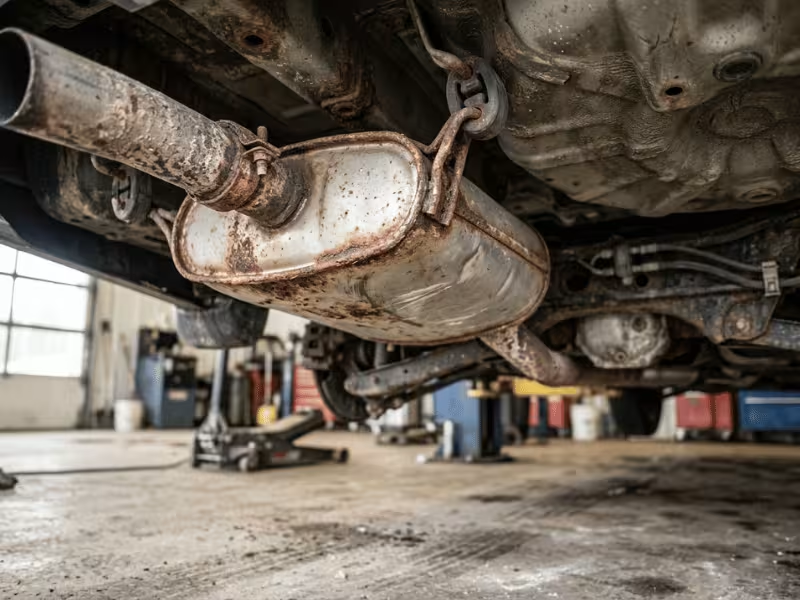
Here’s where most people get fooled. They assume that because aluminized steel handles high heat, it will handle exhaust systems with ease. The outside usually does fine. The inside tells a different story.
An exhaust system doesn’t just carry hot gas. When the engine cools, water vapor condenses inside the pipe, and that condensate turns acidic. Now you have a warm, wet, acidic pool sitting against the coating from the inside.
This is why so many exhaust parts corrode from the inside out. You inspect the outer surface, see clean metal, and assume the part is healthy. Meanwhile the interior is thinning toward a pinhole.
Heat cycling makes it worse. Every heat-up and cool-down expands and contracts the metal, and repeated cycling can crack or flake the coating in spots. Once that happens, the acidic condensate reaches bare steel and eats through fast.
So when someone asks me about aluminized steel for exhaust work, I tell them the same thing: external heat resistance is real, but it says nothing about what the condensate does inside.
Acidic, Alkaline, or Ammonia-Heavy Environments
The aluminum coating likes a neutral world. It performs best when the surrounding pH stays roughly between 4 and 9. Push past those limits in either direction, and the coating starts to dissolve.
Farm buildings are a classic problem. Barns and livestock housing generate ammonia, and that ammonia attacks aluminum directly. I’ve seen aluminized panels in poultry and dairy barns fade far faster than the same material in a clean shed down the road.
Acid rain in industrial zones does similar harm over time. So do strong cleaning chemicals. Scrub aluminized surfaces with acidic or caustic cleaners, and you strip the very layer keeping rust away. Match your environment and your cleaning products to that safe pH window, and the coating lasts much longer.
Dissimilar-Metal Contact in Wet Conditions
This one catches good builders off guard. When aluminized steel touches a more noble metal like copper, brass, or stainless steel, and water joins the party, you set up galvanic corrosion. The aluminum coating becomes the anode and gives itself up, corroding faster than it would alone.
You don’t need to master the full chemistry to avoid it. Just build a few habits.
- Keep copper and brass fittings out of direct contact with aluminized parts in wet spots
- Use isolating washers, gaskets, or a coating at any joint where dissimilar metals meet
- Watch stainless fasteners driven into aluminized panels outdoors, since rain keeps the joint wet
Get these contact points right, and you shut down a failure mode that quietly ruins otherwise solid installations.
Aluminized Steel vs Galvanized vs Stainless vs Galvalume
Aluminized steel is a strong choice, but it isn’t always the right one. The smart move is to match the material to the job, not to grab whatever’s cheapest or most familiar. Here’s how the four common options stack up.
|
Material |
Rust Resistance |
Heat Resistance |
Best For |
Watch-Outs |
|---|---|---|---|---|
|
Aluminized steel |
Good, coating-based |
Excellent (up to ~1,250°F) |
Exhaust, ovens, dry heat |
Weak at cut edges and welds |
|
Galvanized steel |
Very good, self-healing |
Poor (zinc melts ~787°F) |
Outdoor, salt-heavy, wet-dry |
Not for high heat |
|
Stainless steel |
Excellent, alloy-based |
Excellent |
Chlorides, food, long life |
Costs several times more |
|
Galvalume |
Excellent outdoors |
Moderate |
Roofing, siding, panels |
Weaker under sustained high heat |
vs Galvanized Steel
This is the comparison I field most often, and the answer splits cleanly by where the part lives.
Outdoors, in salt, and anywhere cut edges stay exposed, galvanized steel wins. The zinc protects bare steel at scratches and cuts by sacrificing itself. Aluminized steel can’t do that, so its exposed edges rust first.
But flip the situation to heat, and the winner flips too. Zinc melts around 787°F, so galvanized parts fail in hot service. Aluminized steel shrugs off temperatures that would ruin a galvanized part.
The rule: pick galvanized for wet, salty, edge-heavy outdoor work. Pick aluminized when heat is the main challenge.
vs Stainless Steel
Nobody argues that stainless resists rust better. Chromium runs through the entire alloy, not just the surface, so stainless keeps protecting itself even after a deep scratch. It handles chlorides, constant moisture, and food contact that would eat aluminized steel alive.
So why not always use it? Cost. Stainless runs several times more per pound, and that adds up fast on a big job.
The real question isn’t “which is better?” It’s “is stainless worth it here?” I say yes when the part faces salt water, food contact, or a service life measured in decades. For a mid-range muffler or an oven liner, that premium is money you don’t need to spend. Aluminized steel does the job for a fraction of the price.
vs Galvalume and Zinc-Aluminum Coated Steel
Galvalume is the clever hybrid of the group. Its zinc-aluminum coating gives you barrier protection from the aluminum and some sacrificial protection from the zinc. You get the best of both worlds for outdoor sheet metal.
That’s why Galvalume dominates roofing and siding. It holds up on exposed panels far better than aluminized steel, especially at cut edges and around fasteners where plain aluminized coating gives out.
But Galvalume gives ground on heat. Push it into sustained high-temperature service, and it can’t match aluminized steel. So the split is simple: Galvalume for roofs, walls, and outdoor panels; aluminized steel when the part runs hot.
Line up these four against your actual conditions, and the right choice usually picks itself.
Best Uses for Aluminized Steel
Now that you know how this material behaves, let’s put it where it belongs. Aluminized steel shines in a handful of jobs and struggles in others, so here are the three places I see it used most — and where it still has limits.
Automotive Exhaust Components
Aluminized steel is the standard for mufflers, tailpipes, and resonators on budget and mid-range vehicles. The reason is simple: it takes serious heat at a low price. The aluminum-silicon coating handles the temperatures an exhaust system throws at it, and it costs a fraction of stainless.
The outside usually looks fine for years. The problem hides inside.
When the engine cools, water vapor condenses in the pipe and turns acidic. That warm, wet, acidic pool sits against the coating and eats through from the inside out. You’ll often find a healthy-looking exterior over a pipe that’s already thinning toward a pinhole. That’s the classic inside-out failure I warn every buyer about.
Ovens, Furnaces, and Heat Exchangers
This is where aluminized steel truly earns its keep. Oven liners, furnace heat exchangers, and dryer drums all run hot and dry — the ideal home for this material.
Dry heat does no harm to the coating. There’s no salt, no acid, and no standing water to break down the oxide film, so parts last the life of the appliance without a spot of rust.
The risk shows up when moisture sneaks in. A leaking seal, a condensing flue, or a humid process stream changes the game. Once water meets the coating in a heat exchanger, corrosion starts, usually at seams and welds first.
Roofing, Panels, and Agricultural Buildings
Outdoor use is where people make the most mistakes. Aluminized steel roofing performs well in clean rural and industrial air without chlorides. In those spots, it gives you solid, affordable service.
But not all outdoor sites are equal.
Barns are a trap. The ammonia from livestock attacks aluminum directly, so panels fade fast. Coastal installs face the same problem with salt air. In both cases, I steer clients toward Galvalume for the panels and stainless fasteners for the joints. Match the site to the metal, and you avoid a callback.
How to Make Aluminized Steel Last Longer
The coating does its job well, but only if you help it. A few simple habits at the fabrication bench and on the job site add years to a part. Here’s what actually moves the needle.
Protect Cut Edges After Fabrication
Every cut leaves a line of bare steel with no coating to shield it. That raw edge rusts first, then the corrosion creeps inward along the sheet.
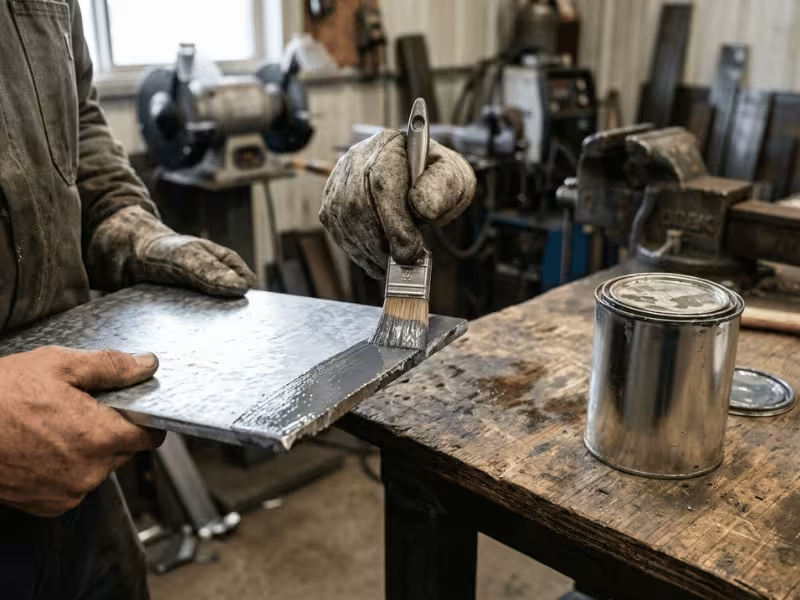
Seal it. Brush a zinc-rich or aluminum-rich touch-up coating onto every sheared, sawn, or punched edge, ideally within a few hours of cutting. Deburr the edge first, since sharp burrs hold coating poorly and leave gaps.
Treat Weld Zones Properly
Welding burns off the aluminum right where you join the metal. You’re left with a discolored ring of bare steel that rusts long before the rest of the part.
Don’t skip the touch-up. Clean the weld area, let it cool, then coat it with an aluminum-rich or zinc-rich product. Treat every weld as a known weak point, not an afterthought.
Design for Drainage and Airflow
Water that can’t escape sits against the coating and slowly wears it thin. Closed cavities and flat pockets are the usual culprits.
Build in escape routes. Add drain holes at low points, slope surfaces so water runs off, and use standoff fasteners to keep panels from trapping moisture behind them. Avoid sealed boxes where condensate collects with no way to dry out.
Avoid Harsh Cleaners and Trapped Moisture
The aluminum coating likes a neutral world. Acidic or caustic cleaners strip the very layer keeping rust away, and abrasive pads scratch straight through it.
Keep it mild. Mild soap and water clean aluminized surfaces just fine. Skip strong acids, ammonia-based products, and scouring pads. After cleaning, let surfaces dry fully so water doesn’t linger in seams.
Rinse Off Salt When Possible
Salt is the fastest way to kill this coating. Coastal air and winter road spray leave chloride behind, and those ions break down the protective film.
Wash it away. Rinse exterior parts with fresh water after salt exposure, and pay attention to the undersides and joints where spray hides. For vehicles in salt-belt regions, a routine rinse through winter makes a real difference in how long the metal holds up.
Do these five things consistently, and you get the full life aluminized steel can deliver.
When You Should Choose a Different Material
Aluminized steel fits a lot of jobs, but not every one. When a project lands on my bench, I run it against a few quick rules before I commit. Here’s how I decide.
Choose galvanized steel when the part lives outdoors, sees road salt, or cycles between wet and dry. The zinc protects bare steel at cuts and scratches by sacrificing itself, so exposed edges hold up far better. If your design leaves lots of raw edges in a damp, salty spot, galvanized is the safer bet.
Choose stainless steel when the part faces chlorides, food contact, or a service life you measure in decades. Chromium runs through the whole alloy, not just the surface, so it keeps protecting itself even after a deep scratch. Yes, it costs several times more. But for salt water, sanitary work, or a part you never want to replace, that premium pays for itself.
Choose Galvalume or a similar zinc-aluminum coating when you’re building roofs, siding, or outdoor panels. The blend gives you barrier protection from the aluminum plus some sacrificial help from the zinc. It beats plain aluminized steel on exposed sheet, especially around cut edges and fasteners.
Choose aluminized steel when heat is the main challenge and moisture stays low. Exhaust parts, oven liners, and heat exchangers all play to its strengths. It takes serious temperatures at a fraction of the stainless price, and in dry heat it lasts for years.
Match the metal to the environment, not to the sticker price. That one habit saves more failed parts than any coating spec ever will.
FAQs
Does aluminized steel rust at cut edges?
Yes, and this is where it rusts first. Every cut exposes a strip of bare steel that the coating can’t wrap around. Water and salt attack that raw edge directly, then rust creeps inward along the sheet. I always brush a zinc-rich or aluminum-rich touch-up coating onto sheared, sawn, or punched edges soon after cutting. Deburr first, since sharp burrs hold coating poorly. Seal those edges, and you shut down the most common failure point on the whole part.
How long does aluminized steel last outdoors?
It depends entirely on the environment. In clean rural or industrial air with no chlorides, aluminized steel can last 20 years or more. Move it near the coast or into a salt-belt region, and that number drops fast — sometimes to just a few years. Ammonia-heavy barns cut the life short too. The condition of the coating drives everything. Keep cut edges sealed, rinse off salt, and design for drainage, and you’ll pull the longer end of that range.
Is aluminized steel better than galvanized steel?
Neither one wins outright. It comes down to the job. Galvanized steel handles wet, salty, edge-heavy outdoor work better, because the zinc sacrifices itself to protect bare steel at cuts and scratches. Aluminized steel can’t do that. But flip to high heat, and aluminized wins easily — zinc melts around 787°F, so galvanized parts fail in hot service. Pick galvanized for damp, salty outdoor jobs. Pick aluminized when heat is the main challenge.
Can aluminized steel be welded without rusting?
You can weld it, but the weld zone won’t stay rust-free on its own. Welding heat burns off the aluminum right where you join the metal, leaving a bare, discolored ring that rusts long before the rest of the part. Never skip the touch-up. Clean the weld, let it cool, then coat it with an aluminum-rich or zinc-rich product. Treat every weld as a known weak point, and it holds up fine.
Does aluminized steel rust in salt water or coastal air?
Yes, and salt is its worst enemy. Chloride ions break down the protective aluminum oxide film, and once that film goes, corrosion gets a foothold. Coastal air carries a constant fine salt mist that settles on every surface. In salt water directly, it fares even worse. For these settings, I usually steer clients toward stainless or Galvalume instead. If you must use aluminized steel near salt, rinse it with fresh water often and seal every edge.
Can you paint aluminized steel for extra protection?
Yes, and paint adds a solid second barrier — especially at edges and welds where the coating is weakest. The trick is prep. Clean the surface, remove any oil, and use a primer made for aluminum or coated steel, since paint struggles to grip the smooth oxide film otherwise. Skip that step, and the paint peels within a season. Done right, a painted finish extends life and lets you match color, which helps on panels and outdoor builds.
The Bottom Line
Aluminized steel is not rust-proof. It’s rust-resistant, and only as long as the coating stays intact. Break through that aluminum layer at an edge, a weld, or a deep scratch, and the steel underneath rusts like any other bare metal.
So stop asking “Does it rust?” Ask the better question instead: how will this part behave in this environment, at these edges, joints, and temperatures? That framing points you to the right choice every time.
Before you order, do three things:
- Confirm the type. Type 1 for heat, Type 2 for atmospheric corrosion.
- Check ASTM A463 if you’re buying by spec, so you know the coating weight you’re paying for.
- Match the material to the exposure, not just the price tag.
Get those right, and the metal rewards you with years of quiet service.
