




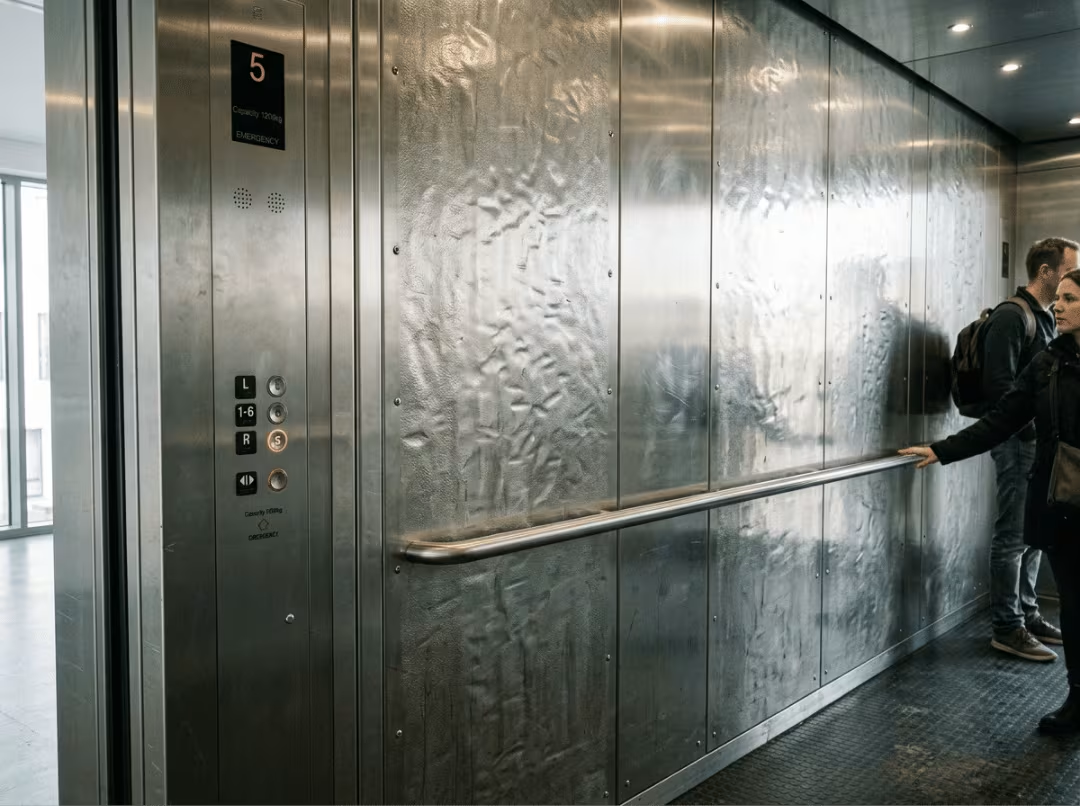
A designer specs a “brushed stainless panel” for a lobby wall, then watches it show every fingerprint and scuff within a week. A fabricator quotes flat sheet for a truck floor, only to have the driver slip on the first wet morning. Both problems have the same fix: embossed steel. It adds texture, hides marks, stiffens thin gauges, and grips underfoot, usually for a modest premium over plain sheet.
This guide is built for the people who actually buy and specify it: procurement teams, design engineers, and fabricators. By the end, you’ll know how the process works, which method fits your job, what can and can’t be embossed, how pricing really breaks down, and how to vet a supplier before you commit to tooling.
Quick takeaways:
- Embossing shapes texture into steel without removing material, so finishes can go on afterward.
- Roll embossing wins in volume and speed; flat-bed pressing wins in precision and for large one-off parts.
- Most work runs 0.4–3.0 mm thick across stainless steel, cold-rolled carbon steel, and coated steel.
- The two costs that matter are die/setup fees and per-kg run charges. Volume spreads the setup cost thin.
What Embossed Steel Actually Is
Embossing presses a repeating pattern into a steel sheet under controlled pressure. The metal gets displaced, not cut. You end up with raised and recessed areas, but the sheet stays whole and its total surface stays intact. That’s the key detail: because nothing is removed, you can still paint, plate, or coat the steel after embossing.
This is where buyers often get confused, so here’s the clean line between embossing and its cousins:
- Stamping cuts or forms parts to shape, often piercing or blanking the metal.
- Coining compresses metal in a closed die to hit tight dimensional tolerances, usually on small features.
- Etching removes material chemically to create a pattern, so the sheet actually loses mass.
Embossing sits apart from all three. It reshapes the surface without cutting or dissolving anything. That single trait, texture without material loss, is why it shows up across architecture, appliances, transport, and industrial flooring.
How Embossing Is Made: Two Methods, One Decision
Flat, coiled, or precut steel feeds into a press or a rolling station at a steady speed. Matched tooling, either two engraved rolls or a paired die set, squeezes the pattern into the metal. From there, the process splits into two paths, and picking the right one saves real money.
Roll Embossing vs Flat-Bed Pressing
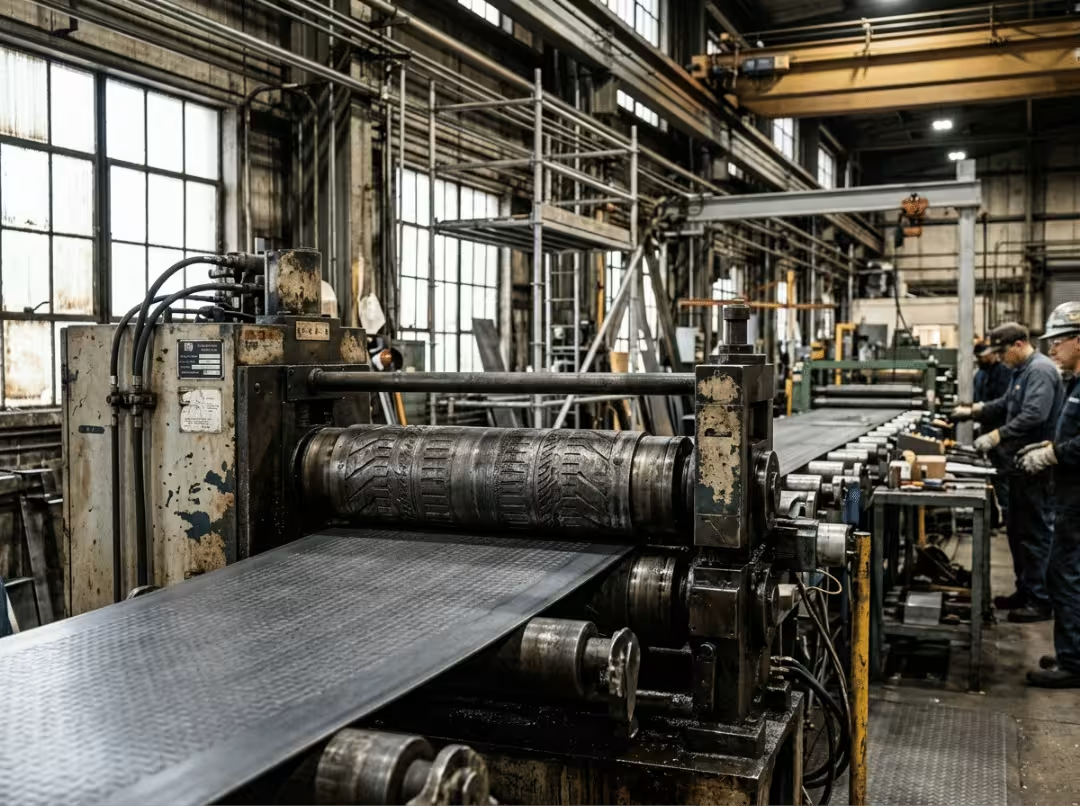
Roll embossing runs the sheet continuously between a male and female engraved roll at high line speed. It’s the workhorse for long coils and high volumes. Once the rolls are set, the line produces meter after meter with consistent depth.
Flat-bed pressing works sheet by sheet. It handles larger piece sizes, custom patterns, and lower-volume runs better than rolls, because each press cycle can be controlled precisely and the tooling suits complex geometry.
The rule of thumb: choose rolls for volume and speed; choose presses for precision and part geometry. If you’re ordering coil-length runs of a standard texture, roll embossing almost always costs less per meter. If you need a large custom panel in small quantities, flat-bed pressing is usually the smarter call.
Custom Tooling and Die Work
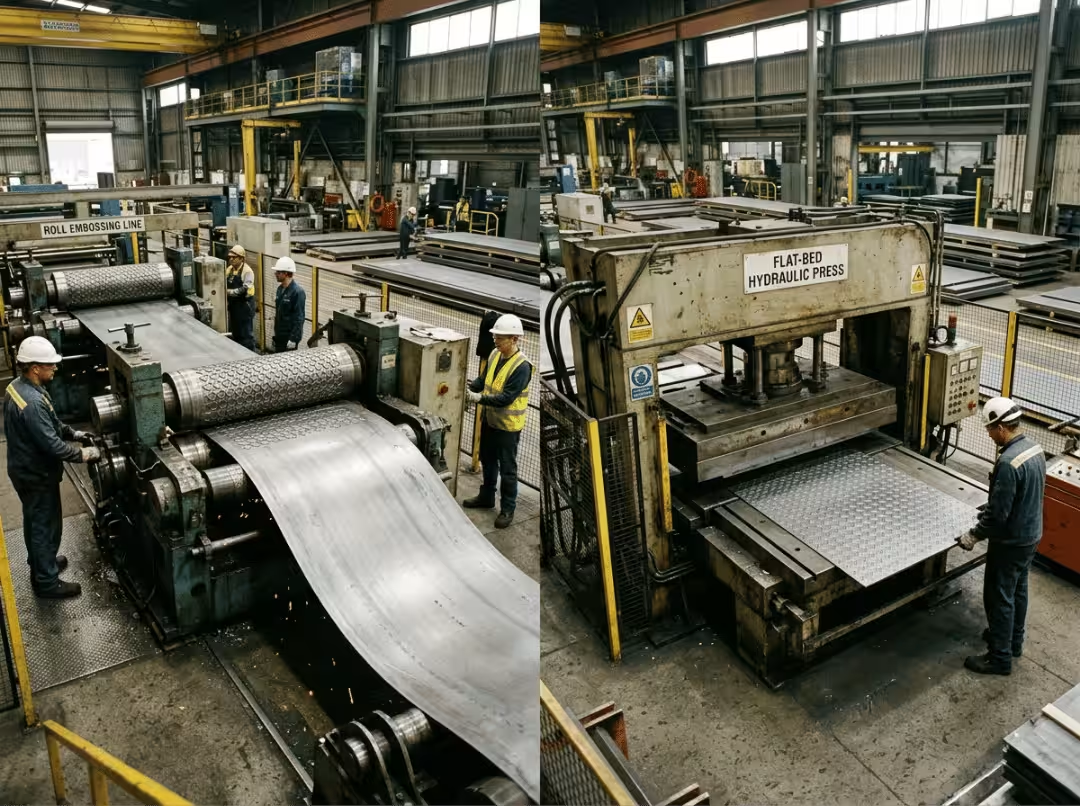
Custom tools are machined to match the exact pattern, texture depth, and edge profile you want. Pattern freedom is wide: geometric grids, diamond, linen, and leatherette structures are common, but the real limit is the tooling budget, not the imagination.
Two trade-offs come with custom work. New tooling adds lead time and upfront setup cost. But once the die exists, it delivers repeatability, run after run; the pattern lands the same. That’s why custom tooling pays off on repeat orders and hurts on one-time small jobs.
Secondary Operations That Finish the Job
Embossing is rarely the last step. A properly run line usually includes:
- Leveling and flattening to correct any waviness introduced by the pattern, especially if the coil is sold as cut-to-length sheet.
- Surface cleaning and oiling to prevent rust in transit and storage, particularly on carbon steel.
- Edge trimming and recoiling so the finished coil leaves the line dimensionally clean and ready to process.
Ask any supplier which of these they include. A quote that skips leveling or oiling can turn into a headache when the material arrives.
What Can Be Embossed: Materials and Limits
Not every steel takes every pattern to every depth. Matching the design to the base metal is where good suppliers earn their fee.
Best Grades for Embossing
- Stainless (304, 316, 430): Austenitic grades like 304 and 316 have the spring and formability to hold crisp patterns and look excellent doing it. Ferritic 430 offers a lower-cost stainless option for less demanding environments. For architectural and appliance work, stainless steel sheet is the default choice.
- Cold-rolled and hot-rolled carbon steel: The economical pick for architectural trim and light industrial parts. Cold rolling provides a cleaner surface for a crisp texture.
- Galvanized and coated base metals: When you need corrosion resistance at a lower cost than stainless steel, galvanized steel embosses well, as long as the coating remains flexible enough not to crack over the pattern.
Thickness and Hardness Limits
The practical window runs roughly 0.4 mm to 3.0 mm. Go thinner, and the texture starts to undermine the sheet’s strength. Go thicker, and press forces climb steeply, which raises cost and stresses the tooling.
Hardness matters too. Harder steel produces a crisper, sharper pattern but resists forming and wears tooling faster. Softer, brighter grades form with less equipment stress but may not hold fine detail as sharply. The takeaway: match your pattern depth to the base alloy’s tensile strength. Don’t assume any steel will take any depth.
Surface Finish Considerations
The same texture reads differently on mirror-polished, brushed, or pre-painted steel, because the finish changes how light and shadow fall across the pattern. Pre-coated colored steel can be embossed successfully when the coating is flexible. For outdoor service, match both the base alloy and the coating to the site’s humidity, chemical, and abrasion demands.
Why Buyers Actually Choose Embossed Steel
Three reasons drive most orders. Knowing which one is your reason helps you spec the right pattern.
Visual Appeal That Hides Wear
Texture reads as warmth and depth, which is why designers reach for it in façades, ceilings, wall paneling, interior trim, and signage. Just as important, an embossed surface hides fingerprints, minor scratches, and small dents that would stand out on flat sheet. In high-traffic public spaces, that alone justifies the upgrade.
Stiffness Without Extra Weight
This is the engineering argument, and it’s a strong one. A pattern works like a shallow corrugation: even a 0.3–0.6 mm rib texture increases rigidity and reduces the tendency to oil-can or flex. That means you can often hit the same stiffness with a thinner gauge, cutting weight and cost per square meter. It’s why embossed sheet shows up in tool housings, cabinet faces, and rail car panels where material spend matters.
Slip Resistance and Grip
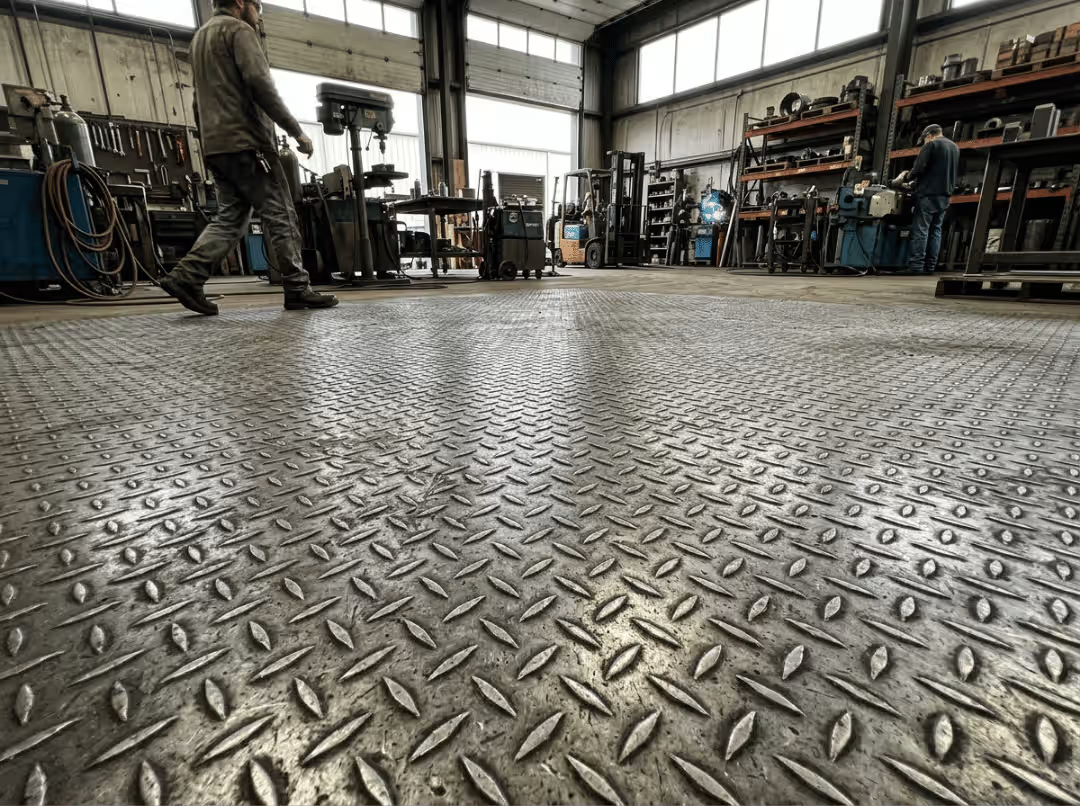
Where oil, water, or debris collect, texture becomes a safety feature. Stair treads, decking, truck floors, pallet surfaces, and tool grips all use embossed patterns to cut slip risk. Anti-skid textures earn their place in battery rooms, food-service walkways, and any wet or greasy work zone.
Common Patterns You’ll See Quoted
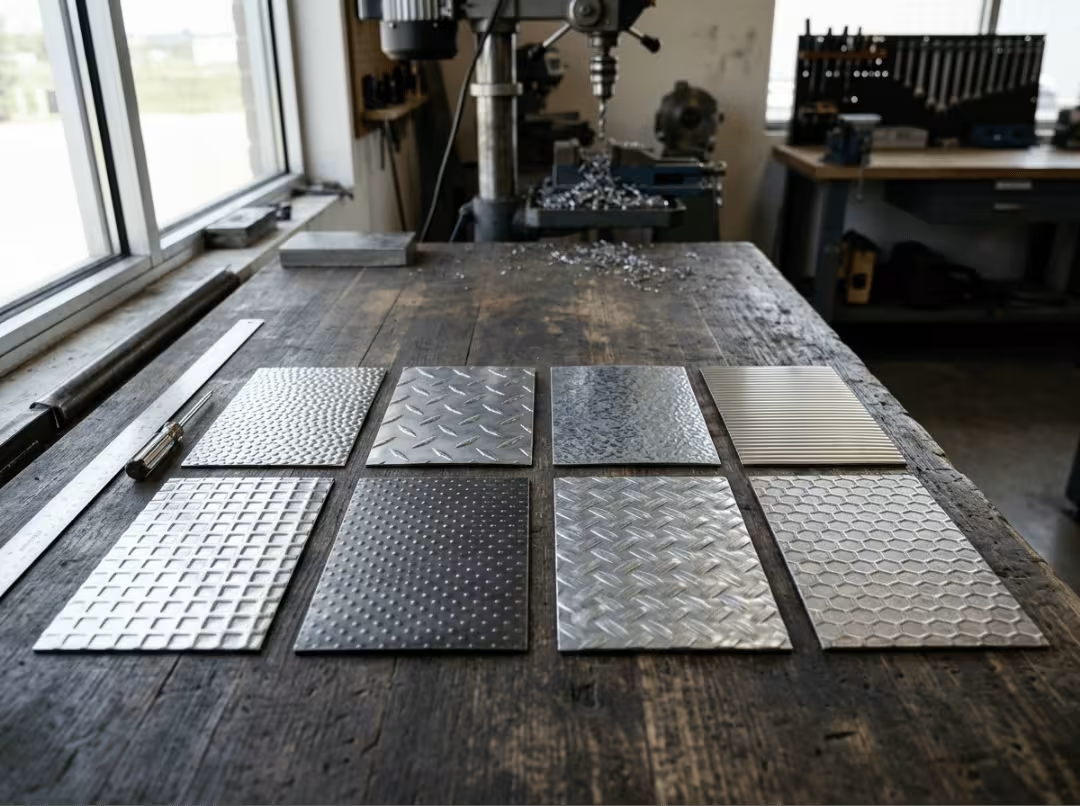
Most suppliers keep a library of standard textures, which cost less than custom tooling. The common ones include:
- Diamond: classic anti-slip look, strong grip.
- Linen: fine, fabric-like texture for architectural surfaces.
- Leather grain: organic, warm appearance for interiors and appliances.
- Pearl: subtle, low-relief texture that softens reflections.
- Stipple: irregular fine dots that hide marks well.
- Ribbed: directional lines that add stiffness along one axis.
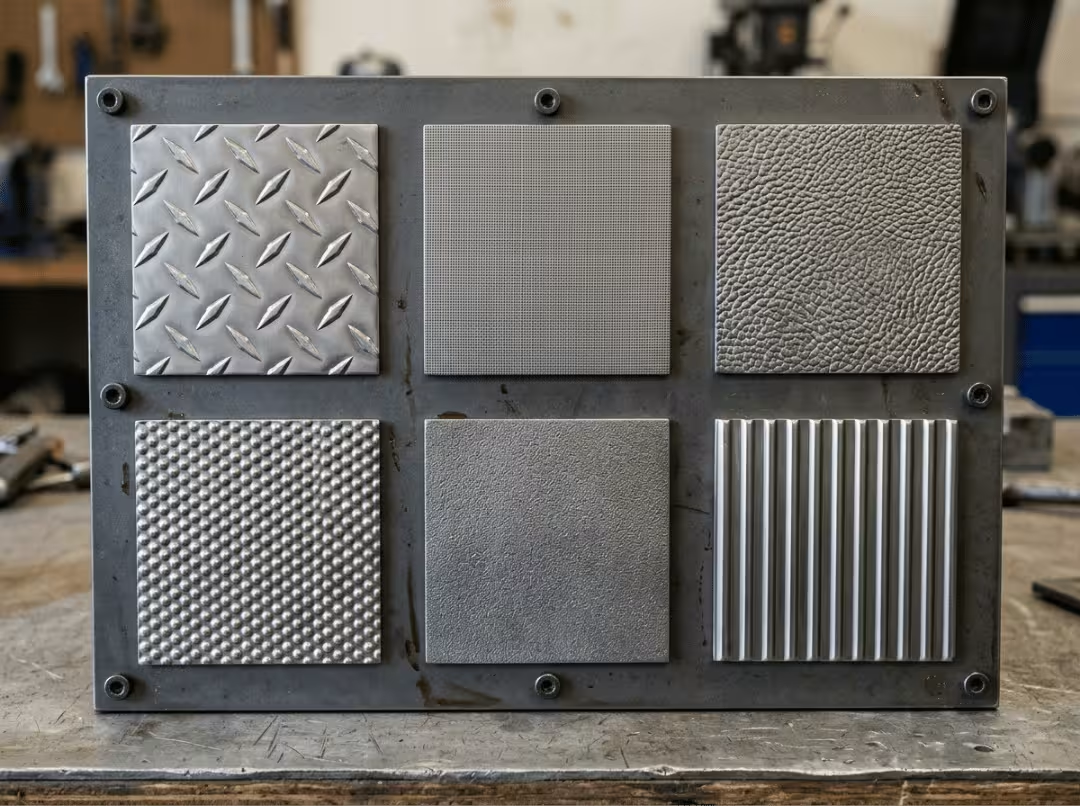
One practical note: pattern depth reads differently at different viewing angles, and roll wear can shift how crisp the texture lands over a long run. Ask to see a physical sample under the same lighting your project will use.
What It Costs, and Where the Money Goes
Embossing pricing breaks into two parts. Once you understand them, quotes stop feeling like a black box.
1. Setup and die fees. This covers machine time, die mounting, and getting the line running. On a first run of a custom pattern, tooling and setup can be a large share of the total bill. Standard patterns skip most of this because the tooling already exists.
2. Run-time charge. This is billed per kilogram or per meter of material processed. It scales directly with the amount of steel you run.
The math tells you how to buy. Setup is a fixed cost spread across your order, so:
- Small runs carry a high effective cost per part, because the setup dominates.
- Large runs spread the setup cost across more material, sharply reducing the cost per unit.
That’s why volume thresholds matter. If you’re near a quantity break, it can be cheaper per piece to order slightly more. Ask your supplier where their price tiers sit before you finalize quantities.
Lead times: expect roughly two to four weeks for samples on a new pattern, covering die design and a short trial run. Production throughput then depends on line capacity. For time-sensitive projects, ask about reserved line time or expedited scheduling early, not after you’ve placed the order.
How to Evaluate an Embossing Supplier
Not every shop that says “yes, we emboss” runs it as a core capability. Use this checklist before you send a purchase order:
- Equipment width and capacity. Confirm the max sheet width, thickness range, and press or roll force match your part. A line that can’t handle your width forces awkward workarounds.
- Embossing as a core line, not a referral. Shops that emboss daily control the metallurgy and pattern consistency far better than those who subcontract it.
- Certifications and documentation. Ask for material certificates (MTRs) and quality standards like ISO. These aren’t paperwork for its own sake; they tell you the supplier controls their process.
- In-house secondary operations. Leveling, cutting, coating, and recoiling under one roof mean fewer handoffs, faster turnaround, and clearer accountability.
- Sample and QC discipline. A supplier who provides a physical sample, documents thickness reduction, and checks flatness is one who’ll catch problems before they ship.
If a supplier hesitates on any of these, treat it as a signal. Consistency across a long run is exactly what separates a specialist from a generalist.
Frequently Asked Questions
Does embossing change the strength of the steel sheet?
It changes the sheet’s behavior more than its material strength. The steel itself isn’t weakened at the alloy level, but a shallow pattern noticeably increases rigidity, much like corrugation. There is a small, localized thinning where the metal stretches into the pattern, which is why extreme depth on thin gauge is avoided. For most applications, the net effect is a stiffer panel, not a weaker one.
Will embossing affect the coating over time?
Not if it’s done right. Because embossing displaces rather than cuts the metal, the surface remains continuous, allowing paint, plating, or galvanizing to be applied afterward. The one caution is pre-coated steel: the coating has to be flexible enough to follow the pattern without cracking. Match the coating to the pattern depth and the service environment, and the coating performance holds up well.
Is there a minimum order quantity?
Most suppliers set a practical minimum because setup and die costs need enough volume to make sense. Standard patterns usually carry a lower minimum since the tooling already exists. Custom patterns often require a larger commitment to justify the tooling investment. Ask for both the MOQ and the volume price tiers so you can see where your order lands.
Can I get a custom pattern, and how long does it take?
Yes. Custom tooling can reproduce almost any texture, from geometric grids to organic grains. Expect roughly two to four weeks to design the die and produce a sample, then production time based on your quantity. Once the die is in place, repeat orders run faster and more cheaply.
The Bottom Line
Embossed steel earns its place when you need one of three things: a surface that looks good and hides wear, added stiffness without added weight, or reliable grip underfoot. Choose roll embossing for volume and flat-bed pressing for precision, match your pattern depth to the base alloy, and read every quote as setup cost plus run cost so volume works in your favor.
The last piece is your supplier. A shop that runs embossing as a core line, backs it with certifications, and provides real samples will save you far more than the cheapest per-kilo quote ever could.
Ready to spec your next run? Contact our team with your grade, gauge, pattern, and quantity, and we’ll help you match the right method and material to your project.
