




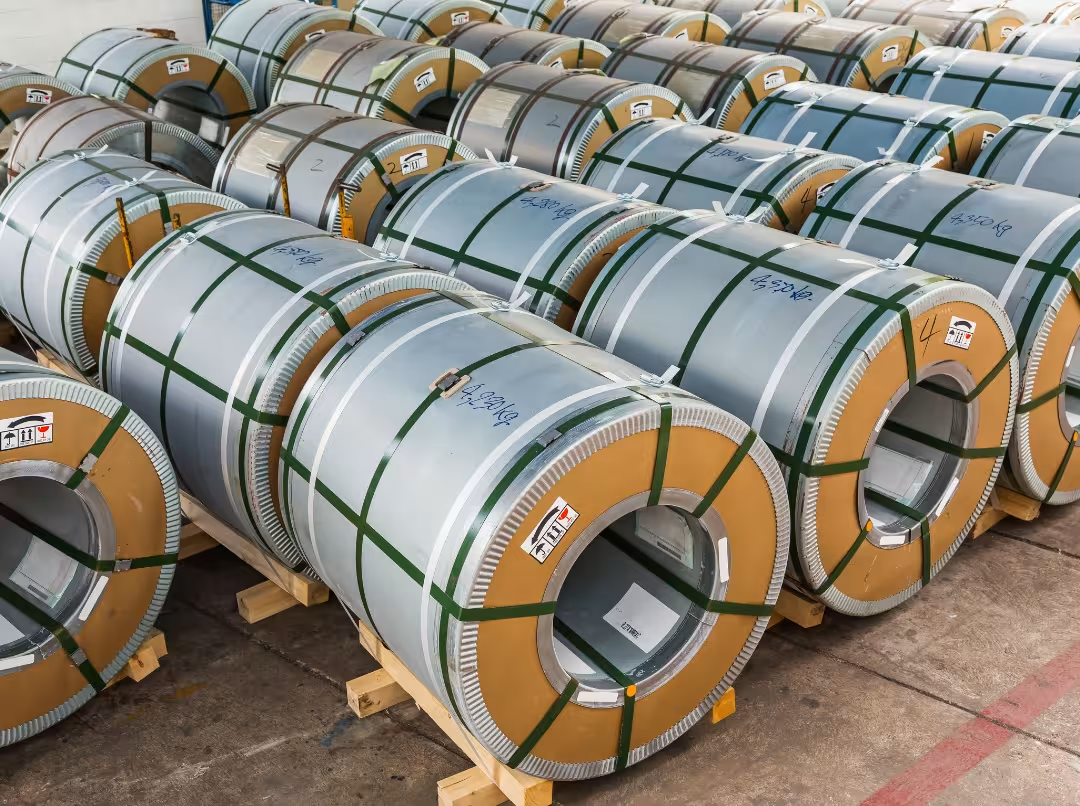
Prepainted steel looks simple from the outside: a colored coil that arrives ready to form. But the color is the smallest part of the story. What decides whether a panel lasts 30 years on a roof or chalks and peels in five is everything you can’t see — the substrate underneath, the pretreatment layer, the cure quality, and how the coil was handled after coating.
This guide walks through the decisions that actually move the needle. We’ll cover how to pick the right substrate, what happens on the coating line and why each step matters, how the main paint chemistries compare, what to protect during fabrication, the defects that trip people up, and how to judge a processor before you commit. One thread runs through all of it: define the service environment first, then choose everything else backward from there.
What Prepainted Steel Actually Is
Prepainted steel — also called color-coated or coil-coated steel — is metal that’s cleaned, pretreated, primed, and topcoated in one continuous line before any forming happens. The finished coil has a layered structure: base steel, a metallic coating (zinc or aluminum-zinc), a chemical pretreatment, a primer, a topcoat on the face, and a backer coat on the reverse.
Why prepaint instead of forming first and painting later? Control. A coil coating line applies a uniform film of consistent thickness and cures it across every meter of strip. Paint a formed part afterward, and you get thin edges, uneven coverage in tight corners, and adhesion that depends on how well someone prepped the surface that day.
Here’s the concrete difference. Run a prepainted coil through a roll former and the coating holds its thickness right through the bends. Field-paint the same panel, and you’ll see thin, vulnerable edges exactly where corrosion likes to start. Modern paint systems have also closed the old gap — a well-matched prepainted system now matches or beats post-painted durability while staying far more consistent batch to batch. That’s why prepainted steel has become the default for high-volume panel and appliance work.
Choosing the Right Substrate
Everything starts here. The substrate — base steel plus metallic coating — sets the ceiling for corrosion performance. No topcoat can fully rescue the wrong choice underneath.
Base Steel Grade
Cold-rolled steel is the standard base for most prepainted products. Its clean, smooth surface gives paint something reliable to grip. Higher-strength grades are suitable for structural panels, but they require a more flexible paint system that withstands forming without cracking. The rule: the stronger and harder the steel, the more you have to think about how the coating bends with it.
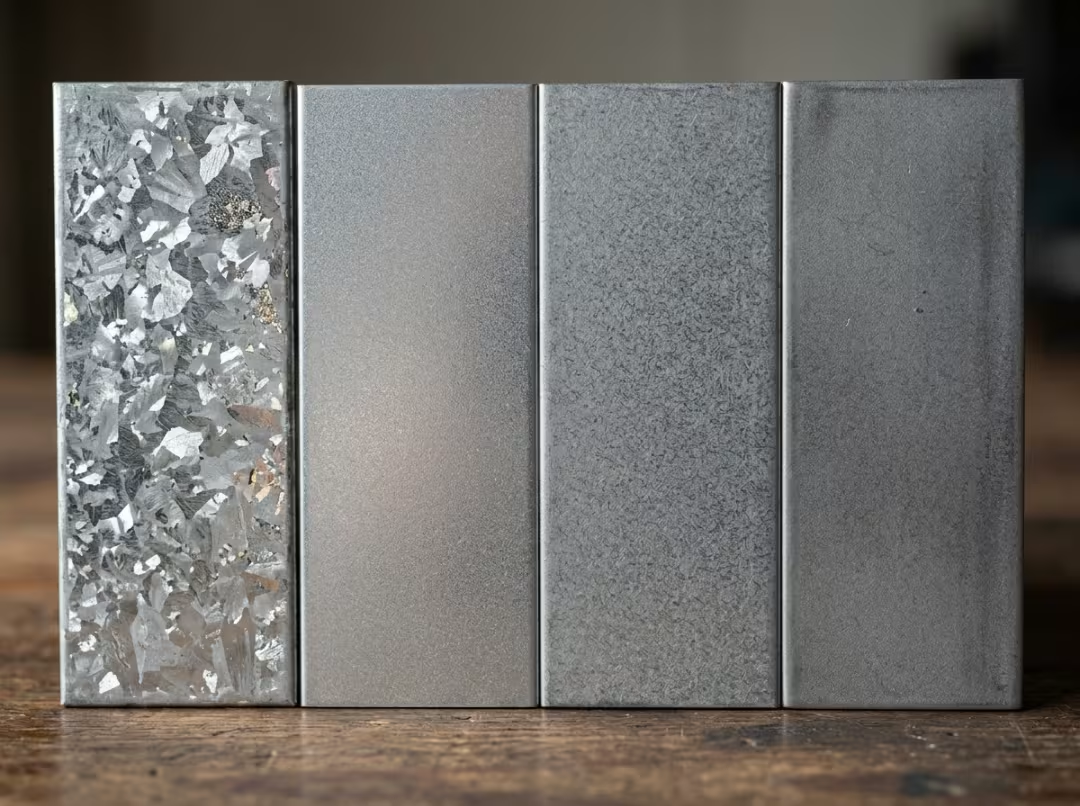
Metallic Coating: GI vs Galvalume vs GA vs ZAM
This is the decision that defines corrosion life. The four you’ll meet most often:
- Hot-dip galvanized (GI). Pure zinc, sacrificial protection, and the best balance of cost and performance. It’s the default for a wide range of building products. Zinc-based PPGI coil and sheet is the workhorse of both construction and appliance panels.
- Galvalume (55% aluminum-zinc). Better corrosion resistance than GI across broad surfaces, plus strong heat reflectivity — which is why it dominates roofing and agricultural buildings. Its weakness is cut edges, which are less sacrificially protected than pure zinc.
- Galvanneal (GA). A zinc-iron alloy with a dull, slightly rough surface that welds cleanly and holds paint well. That combination is exactly what automotive parts need.
- Zinc-aluminum-magnesium (ZAM). The premium option for cut-edge protection. The magnesium migrates to protect sheared and drilled edges, a major advantage in coastal and marine environments.
Matching Substrate to Application
The service environment picks the coating for you. Indoor products — appliances, shelving, interior panels — face humidity at worst, so GI usually suffices. Outdoor products — roofing, cladding, gutters — face UV, rain, and salt, which push you toward Galvalume or ZAM.
Two specs deserve attention beyond the coating type. Coating weight (grams per square meter) sets how much protection you actually get — a heavier zinc layer buys years. And spangle size matters whenever the finished surface must look uniform, since large spangles can telegraph through a thin topcoat.
Do this first: run a corrosion performance review against the real environment before you lock in a substrate. It’s far cheaper to overspec the coating than to replace a rusted roof.
The Coating Line, Step by Step
Understanding the line tells you where quality is won or lost. Each stage feeds into the next, and an early shortcut shows up as a defect later.
- Uncoil and join. The line feeds a continuous strip from incoming coils. As one runs out, its tail is stitched or welded to the next head so the line never stops — critical, because a stationary strip sitting in a hot oven is a ruined strip.
- Clean. Alkaline cleaning strips remove oils, iron fines, and dirt. Brushing and rinsing follow, leaving a uniformly wettable surface. Skip this, and nothing above it adheres properly.
- Pretreat. This is the adhesion bridge between bare metal and paint. Traditional phosphate (iron or zinc) conversion coatings are giving way to chrome-free alternatives that meet tighter environmental regulations. Whether applied by roller or spray, it demands precise control of solution strength, temperature, and dwell time.
- Prime and backer coat. The primer carries most of the corrosion resistance and anchors the topcoat to the metal. On the reverse, a backer coat protects the strip from storage stains and in-service corrosion.
- Topcoat. Reverse roll coaters are the workhorse — they lay down a uniform film at high line speed. Operators control the wet film thickness, and on-line gauges confirm the dry film weight in real time.
- Cure and quench. The strip has to reach its peak metal temperature (PMT) for the resin to fully cross-link. Too low and the film stays soft and under-cured; too high and it embrittles. After the oven zones, a water quench locks in the final properties.
- Inspect and recoil. A final inspection station checks the coil before it’s recoiled, slit to customer width, and packaged for shipment.
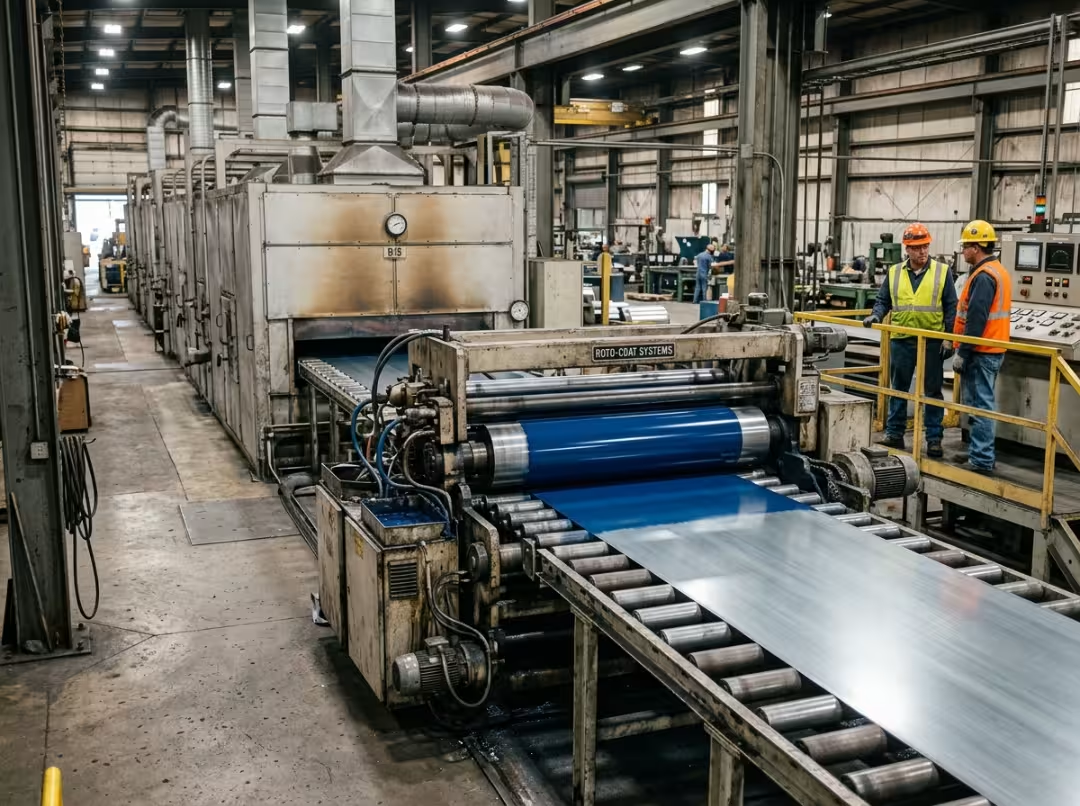
The short version: uncoil → clean → pretreat → prime → topcoat → cure → quench → inspect → recoil. Every one of those steps is a place where a small process drift becomes a field failure. Under-cure, and you get soft film that scratches on the line. Skimp on cleaning, and adhesion fails months later. This is why cure records and coating-weight data on a mill certificate matter more than the color on the coil.
Paint Systems: How the Chemistries Compare
The topcoat resin decides how long the color and gloss survive outdoors — and how much you pay.
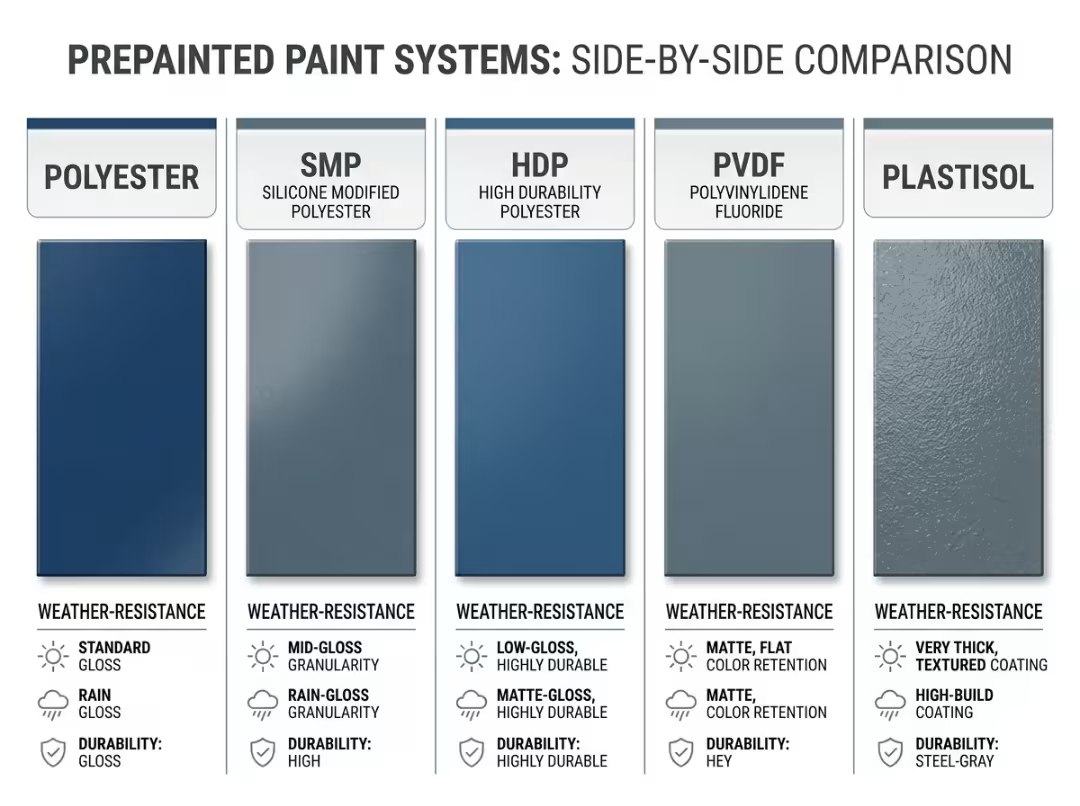
Polyester (PE) is the most common and cost-effective. It forms well, takes a good gloss, and suits interior trim, light industrial parts, and low-exposure exterior products.
Silicone-modified polyester (SMP) adds silicone groups to improve chalking and weather resistance compared to plain PE, while keeping costs reasonable. It’s a solid fit for roofing, gutters, and farm buildings where budget still matters.
High-durability polyester (HDP) sits between SMP and PVDF, with markedly better UV and color retention. Reach for it on exterior panels that need to keep their appearance for decades without the top-tier price.
PVDF (polyvinylidene fluoride) is the top tier for weather resistance and color retention — the standard on monumental buildings and coastal projects. The trade-offs: it costs more and is a harder, less flexible film that needs careful forming to avoid cracking at tight radii.
Beyond these, plastisol gives thick, highly flexible films for deeply profiled panels, and polyurethane and specialty topcoats deliver abrasion resistance and functional finishes like anti-fingerprint, anti-bacterial, and heat-reflective.
|
Paint system |
Relative cost |
Formability |
Weather resistance |
Typical uses |
|---|---|---|---|---|
|
Polyester (PE) |
Low |
Very good |
Fair |
Interior trim, light industrial, low-exposure exterior |
|
SMP |
Low–medium |
Good |
Good |
Roofing, gutters, agricultural buildings |
|
HDP |
Medium |
Good |
Very good |
Long-life exterior panels |
|
PVDF |
High |
Fair (form with care) |
Excellent |
Monumental, coastal, premium architecture |
|
Plastisol |
Medium |
Excellent |
Good |
Deeply profiled panels |
One point that’s easy to miss: a coating is a system, not a single layer. The primer and backer have to match the topcoat and substrate. A premium PVDF topcoat over a weak primer is a mismatched system that won’t deliver its rated life.
Post-Processing: Forming Without Wrecking the Coating
A perfect coil can still fail on your line. Because prepainted steel is coated before forming, every fabrication step has to respect the paint.
Slitting and shearing. Tight width tolerances and burr control keep the cut edge clean, since a rough burr can crack the coating and invite corrosion. Edge wraps and protective stripping cut down scratches in transit.
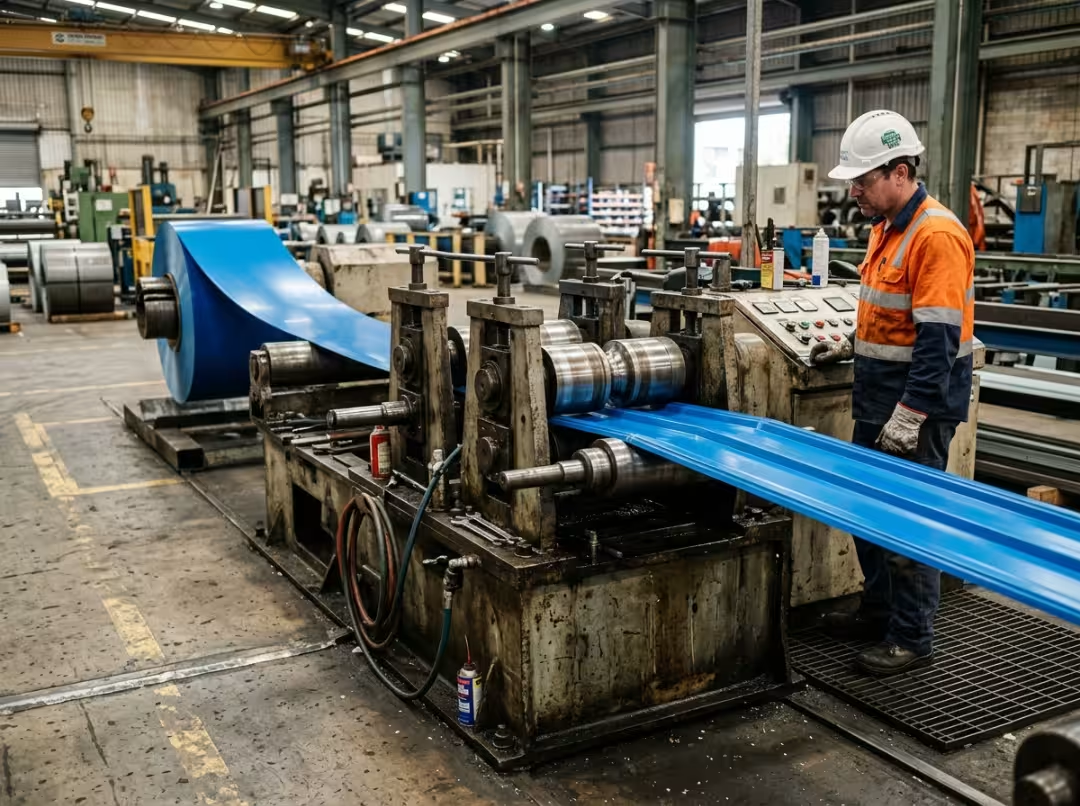
Roll forming is the preferred method for prepainted material, because it bends the strip progressively without sliding a tool across the painted face. Pay attention to tooling clearances, roll material, and light lubrication to protect the finish.
Stamping and bending demand respect for the bend radius. PVDF and hard polyesters crack at tighter radii than flexible PE — so the paint system you chose upstream constrains what you can form downstream. Watch for pick-off, where the coating sticks to the die and lifts away; a good die surface finish and proper lubrication prevent it.
Embossing adds rigidity and hides minor surface imperfections, but the texture depth must stay well below the total film thickness, or the coating breaks over the peaks.
Handling and storage cause more damage than people expect. The risks: coil telescoping, moisture staining, and scratches from slings or hard edges. Store coils in a dry, well-ventilated area, away from temperature swings that cause condensation — and train warehouse staff in proper lifting, chocking, and banding. Most “coating defects” that arrive on a job site are actually handling defects.
Common Defects and How to Prevent Them
Most problems trace back to a known cause. Here’s a quick-reference map.
|
Defect |
Common cause |
Fix |
|---|---|---|
|
Orange peel, pinholes, craters |
Contamination, coating, or oven conditions |
Tighten cleaning, filter paint, check oven airflow |
|
Dirt inclusions |
Poor line hygiene |
Improve filtration and clean-room discipline |
|
Color / gloss drift |
Raw material variation, cure or film-thickness differences |
Monitor with spectrophotometer, hold delta E limits |
|
Cracking, flaking, pick-off |
Wrong film thickness, under-cure, tight bend radius |
Match radius to paint system, verify cure |
|
Cut-edge creep, white rust |
Exposed sheared or drilled edges |
Edge sealing, dry storage, ZAM substrate |
Two of these deserve a note. Color and gloss variation is the complaint buyers raise most often, and the spectrophotometer is the tool that keeps it in check — it measures how far a coil deviates from the approved reference (the delta E value). Cut-edge corrosion is the one that causes roofs to fail early; the strongest defense is a ZAM substrate plus good edge sealing, especially near the coast.
Quality Control and Testing
A few standard tests tell you whether a coil will perform.
- T-bend test. Grades how tightly a coated panel bends before the film cracks. A lower number (0T or 1T) indicates more flexibility. Match the requirement to your tightest fabrication bend.
- Impact, pencil hardness, and crosshatch adhesion. Standard checks for film integrity and adhesion.
- Salt spray, humidity cabinet, and QUV weathering. Accelerated corrosion and UV tests. They rank systems well but don’t fully replace real-time exposure data — treat them as comparative rather than absolute.
- Gloss and color measurement. Gloss meters and spectrophotometers verify a production coil matches the approved standard.
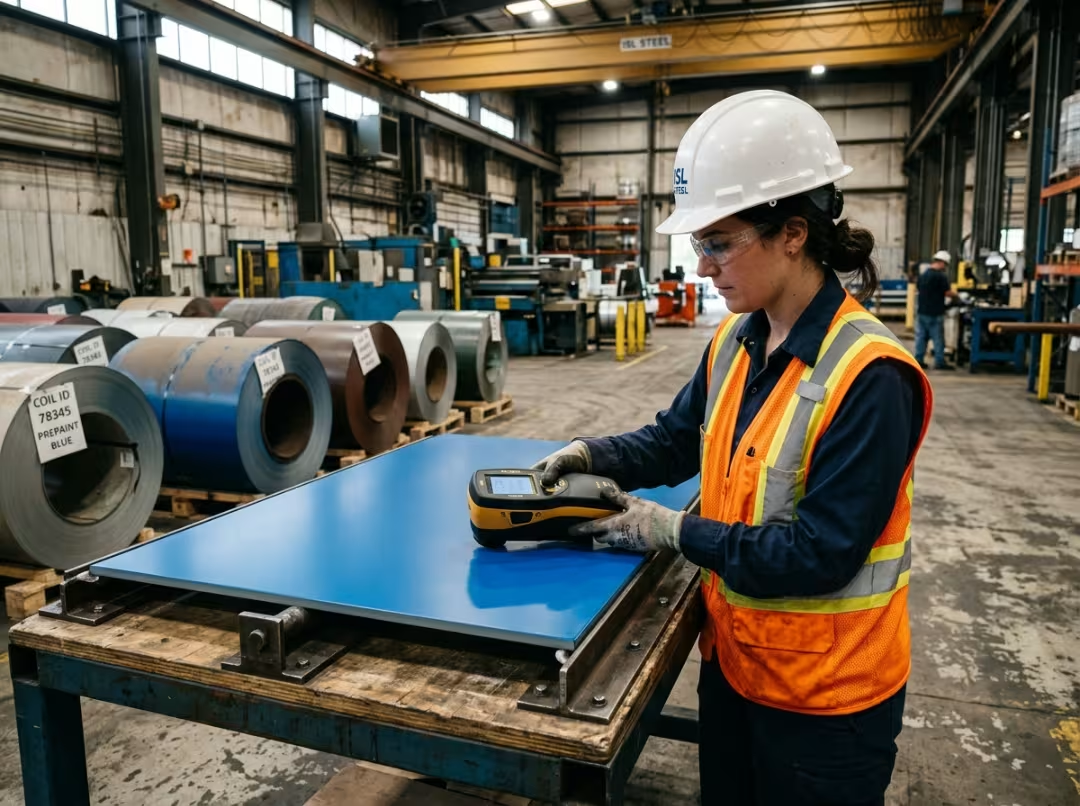
On standards: EN 10169 and ASTM A755 are the common product specifications for prepainted steel, and the National Coil Coating Association (NCCA) publishes widely used guidelines. The practical move is to build an incoming-inspection checklist covering film thickness, gloss, color, and T-bend — and actually run it on every delivery.
Where Prepainted Steel Gets Used
The material spans industries, but the reasoning behind each choice is what’s useful.
Building and construction is the biggest arena: roofing, wall cladding, gutters, downspouts, and structural panels. PVDF and HDP dominate premium exterior work, while SMP covers value-oriented buildings. For roofing specifically, matching the paint system to sun and salt exposure is the whole game — the planning behind building and construction projects lives or dies on it.
Appliances and white goods — refrigerators, washing machines, HVAC housings — lean on prepainted coil for clean, consistent visible surfaces. Anti-fingerprint and anti-bacterial topcoats keep those surfaces presentable, which is why home appliances manufacturers specify them so often.
Automotive and transportation use prepainted coil for brackets, underbody shields, and interior parts. Galvanneal and weldable primers show up here because spot welding is part of the assembly.
Furniture and storage cover shelving, cabinets, lockers, and frames, often with decorative finishes that mimic wood, stone, or brushed metal for indoor products.
Choosing a Coil Coater or Building In-House
Make or buy? A full coating line is a major capital investment that only pays off at high, consistent volume with tight technical control. For most manufacturers, outsourcing to a toll coater delivers the flexibility without the fixed cost.
What to look for in a partner: demonstrated control of coating weight, cure temperature, and color matching; an in-house testing lab; relevant certifications; and real experience in your industry.
Questions worth asking any processor:
- What cure temperature control do you have, and how do you verify PMT on every coil?
- Can you match a specific color and gloss standard for both the first article and full production runs?
- How do you prevent edge damage and moisture staining in transit?
- Will you provide test reports for T-bend, salt spray, pencil hardness, and color delta E?
- What chrome-free pretreatment options can you run?
Turn those into a simple scorecard that weighs price, lead time, testing capability, and quality history. The cheapest quote rarely wins once you account for the cost of a failed batch in the field.
Frequently Asked Questions
What is prepainted steel?
It’s steel coated in a continuous line — cleaned, pretreated, primed, and topcoated — before any forming. The result is a colored coil with uniform, tested coating properties ready to slit, roll form, or stamp.
How is prepainted steel different from galvanized steel?
Galvanized steel has a bare zinc coating. Prepainted steel usually starts as galvanized (or Galvalume) and then adds pretreatment, primer, and a colored topcoat, giving it both corrosion protection and a finished appearance.
Which is better for exterior roofing, SMP or PVDF?
PVDF wins on long-term color and gloss retention, making it the choice for premium and coastal roofs. SMP costs less and performs well for value-oriented buildings. Pick based on the service life and appearance you actually need.
Can prepainted steel be welded without damaging the coating?
Not cleanly — welding burns the coating around the joint and creates fumes. Where welding is required, galvanneal substrates and weldable primers are used, and the affected area is re-protected afterward.
What causes cut-edge corrosion, and how can it be slowed?
Shearing and drilling expose bare metal at the edge, where corrosion starts. Slow it with edge sealing, dry storage, and a ZAM substrate that sacrificially protects cut edges.
What does a T-bend number like 0T or 2T mean?
It’s how tightly the panel bends before the coating cracks. 0T is the tightest bend (the most flexible film); higher numbers require a wider radius. Match it to your tightest forming operation.
How long will the coating last on a prepainted steel roof?
It depends on the paint system and environment. A high-quality PVDF or HDP system on the right substrate can last for decades, while a basic polyester in harsh sun and salt air fades far sooner.
Is prepainted steel recyclable?
Yes. It flows back into the standard steel recycling stream with no special handling, and coil coating uses less energy per square meter than spray-painting the same parts after fabrication.
What’s the biggest cause of prepainted steel failing early?
Usually a mismatch — the wrong substrate or paint system for the environment, or damage during forming and handling. Get the spec right and protect the coating downstream, and most early failures disappear.
The Bottom Line
The performance of prepainted steel is a chain: substrate, pretreatment, coating chemistry, cure, post-forming, and quality verification. Each link determines the final result, and the weakest one sets the service life — which is exactly why this material isn’t a commodity. A small drift in cure temperature or coating weight quietly changes how long the product lasts.
The decision rule that keeps you out of trouble is simple: define the service environment first, then choose the substrate, paint system, and fabrication method to match it. Overspec where failure is expensive, and don’t pay for PVDF where a polyester will do.
Your next step is practical. Audit your current substrate and coating spec against the environment the product actually faces, then put every incoming coil through a short inspection checklist — film thickness, gloss, color, and T-bend. Spec it right the first time, and the coil that arrives is the one your line was built to run.
