




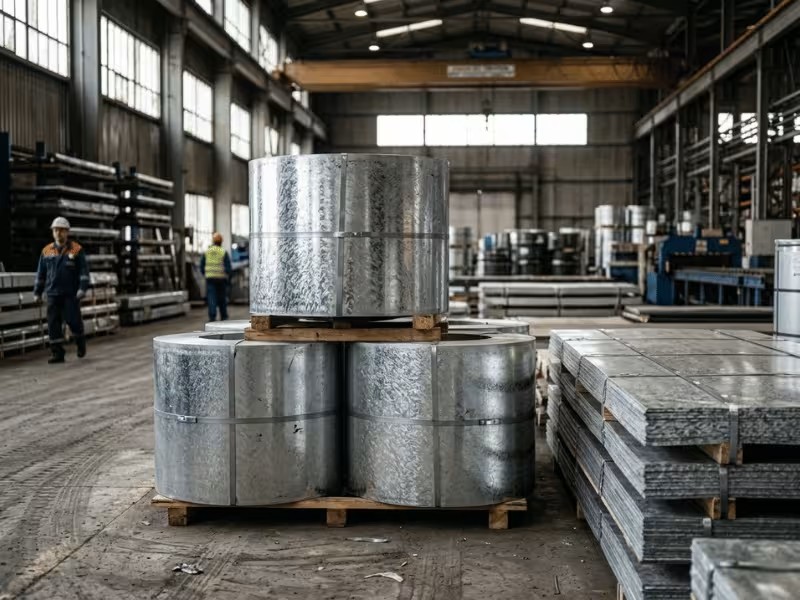
Galvanized steel stays popular for a simple reason. It gives buyers a practical balance of cost, corrosion resistance, and workability. But many people choose it for the wrong reason. They assume it does not rust. That is not the full story.
What matters more is how long it lasts in a real environment, which coating weight fits the job, and whether standard galvanized steel is even the best option. In many cases, buyers also need to compare it with galvannealed steel, Galvalume, or stainless steel before making a sound decision.
This guide focuses on those real questions. I won’t repeat textbook definitions or long background history. Instead, I’ll cover how galvanized steel performs, where it works well, where it falls short, and how to choose the right grade with fewer mistakes.
Get these right, and you avoid early corrosion and wasted budget. Get them wrong, and even good steel fails sooner than it should. Let’s break it down.
What Galvanized Steel Is—and Why the Coating Matters More Than Most Buyers Think
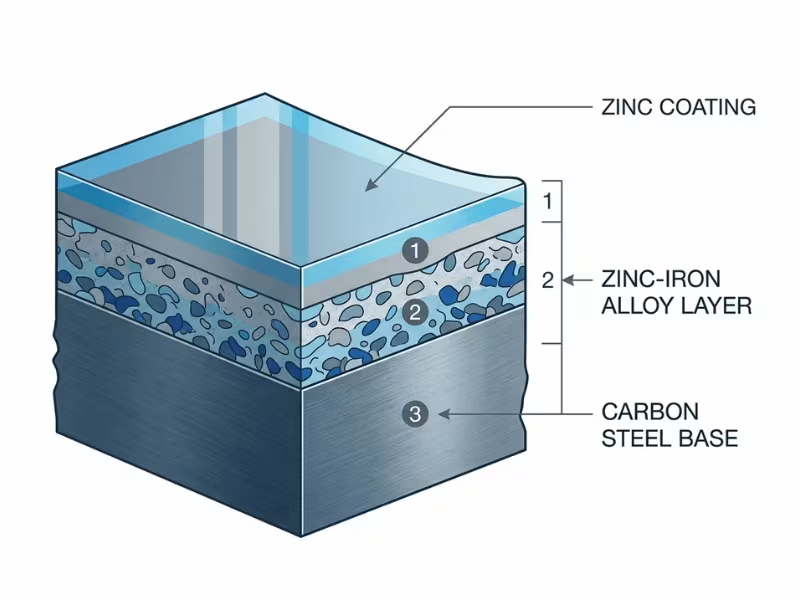
At its core, galvanized steel is simply carbon steel with a zinc coating that shields it from corrosion.
That definition sounds basic, but the zinc layer does more clever work than most buyers realize. It protects the steel in two separate ways.
First comes barrier protection. The zinc sits on top of the steel like a raincoat, keeping moisture and oxygen away from the metal underneath.
Second comes sacrificial protection. This is the part I wish more people understood. When the coating gets scratched, chipped, or drilled, the exposed steel doesn’t rust right away. The zinc around the scratch corrodes first, giving itself up to protect the steel. That’s why a small nick on galvanized steel won’t spread rust the way it would on bare metal.
Why the Coating Beats the Grade Name
Here’s where I see buyers trip up most often, so let me be direct about it.
The words “galvanized steel” tell you almost nothing about how long a part will last. I’ve watched two products carry the exact same label and still perform years apart in the same location.
Three things drive that gap:
- Coating weight — how much zinc actually sits on the surface. More zinc usually means more years of service.
- Coating type — hot-dip, galvannealed, or electrogalvanized all behave differently.
- Environment — a coating that lasts 40 years inland might fade in 8 near the coast.
So when someone asks me to compare two “galvanized” options, I don’t look at the name. I look at the coating spec and where the part will live. Get those details right, and the steel underneath does its job for decades. Ignore them, and you’re gambling on a word.
Not All “Galvanized Steel” Means the Same Thing
When a supplier says “galvanized,” ask which kind. That single word covers a whole family of zinc-based coatings, and each one behaves differently in the field. Picking the wrong member of that family costs you either money or years of service life.
Four Coatings, Four Personalities
Let me walk you through the four you’ll meet most often. They all use zinc, but the recipe changes everything.
|
Material Type |
Coating Composition |
Strengths |
Weaknesses |
Typical Uses |
|---|---|---|---|---|
|
Standard galvanized (GI) |
Pure zinc, hot-dipped |
Strong all-round corrosion resistance; well-proven; wide availability |
Rough spangle can look uneven; needs prep before painting |
Roofing, framing, ducting, outdoor structures |
|
Galvannealed (GA) |
Zinc-iron alloy (heat-treated after dipping) |
Excellent paint grip; welds cleanly; matte, smooth surface |
Less bare-metal corrosion resistance; alloy layer can flake at tight bends |
Auto body panels, painted appliances, enclosures |
|
Galvalume |
~55% aluminum, ~43% zinc, ~2% silicon |
Outstanding barrier life in heat and mild coastal air; lasts longer than plain zinc |
Weaker sacrificial protection at cut edges; scratches need care |
Metal roofing, wall panels, agricultural buildings |
|
Galfan |
~95% zinc, ~5% aluminum |
Better formability than standard GI; good cut-edge protection; bends without cracking |
Less common; fewer suppliers stock it |
Wire products, tubing, formed parts |
Read that table with your project in mind, not the label. Standard galvanized suits general outdoor work. Galvannealed wins when paint has to stick. Galvalume shines under sun and heat. Galfan bends where others crack.
The Spec Terms You’ll Actually See
Once you order, the paperwork throws a few terms at you. Here’s what each one really means so you don’t nod along and hope for the best.
- Coating designation. This is the code that tells you how much zinc you’re buying. In the US you’ll see G-numbers like G60 or G90. Europe uses Z-numbers like Z275. Higher numbers mean more zinc and, usually, more years of protection.
- Coating weight. This is the actual mass of zinc per square foot or square meter, spread across both sides of the sheet. The designation and the weight go hand in hand. When corrosion life matters, I check the measured weight, not just the code stamped on the coil.
- Spangle. These are the crystal patterns you see on the surface. A big, shiny spangle looks striking on a barn roof but reads as noise on a painted panel. If appearance or paint finish counts, ask for a minimized or regular spangle.
- Temper and finish. Temper describes how hard or soft the steel is, which decides how far you can bend or stamp it before it cracks. Finish covers surface texture — smooth, matte, or skin-passed. Both shape how the part forms and how paint or adhesive holds.
Nail down these four terms and you speak the same language as your mill. That’s the difference between getting the material you pictured and getting a costly surprise on delivery day.
What Actually Determines Performance
So why do two coils stamped “galvanized” behave so differently once they’re in service? The answer sits in three places: the steel underneath, the zinc on top, and the surface finish you can see. Get a handle on these, and you stop buying by name and start buying by result.
The Steel Underneath Still Counts
The base steel decides how the part holds up under load and how it takes a bend. Zinc handles corrosion; the steel handles everything else.
Three traits matter here:
- Strength — how much load the part carries before it deforms or fails.
- Formability — how well the sheet stretches into deep or complex shapes.
- Bendability — how tight a corner you can fold without cracking the metal or the coating.
A high-strength grade resists denting but fights you at the press brake. A soft, formable grade bends into tight radii but won’t carry the same load. I match the grade to the toughest job the part faces, whether that’s holding weight or surviving a sharp bend.
But here’s the trap I see all the time: the base steel says nothing about how long the part resists rust. A strong grade with thin zinc still corrodes early. Strength and corrosion life are two separate conversations.
Coating Weight: The Number That Drives Service Life
This is where most of the real performance gap lives. Coating weight tells you how much zinc sits on the surface, and more zinc almost always means more years before red rust shows up.
In the US, you’ll see G-codes. In metric specs, Z-numbers. Here’s how they line up:
- G40 ≈ Z120 — light coating, indoor or short-life work
- G60 ≈ Z180 — mild outdoor or protected use
- G90 ≈ Z275 — the workhorse for general outdoor service
- G115 ≈ Z350 — heavier duty, longer exposure
- G185 ≈ Z600 — harsh conditions, long service life
The number counts zinc across both sides of the sheet. Jump from G60 to G90 and you can add years of life in the same spot.
Still, heavier isn’t automatically smarter. A thick coating costs more, and it fights you when you need tight bends. Thick zinc can flake or crack at a sharp fold. So I pick the lightest coating that clears the service life target, not the heaviest one on the price list.
Surface Condition: The Detail That Trips Up Painters and Welders
The finish you see does more than look nice. It shapes how paint sticks, how the part welds, and how well adhesives grab.
A few finishes worth knowing:
- Spangle — the crystal pattern from hot-dip zinc. A bold spangle suits a bare barn roof but shows through paint. For painted work, ask for minimized spangle.
- Skin-passed — rolled after coating for a flatter, tighter surface. It bends cleaner and takes paint better.
- Matte — the dull, even look of galvannealed. Paint and adhesives grip it easily.
- Smooth — typical of electrogalvanized sheet. Tight, uniform, and friendly to fine finishes.
If you plan to paint, a matte or skin-passed surface saves you grief. If you weld, a smoother, thinner coating burns cleaner and cuts down on porosity. This detail matters a lot for precision sheet-metal work like a server chassis, where clean welds and even paint decide whether the finished enclosure looks and performs right.
Reading the Three Factors Together
Here’s the quick view I keep in mind when a spec lands on my desk:
|
Factor |
What it affects |
Why buyers should care |
|---|---|---|
|
Base steel grade |
Strength, formability, bend radius |
Sets whether the part carries load and survives forming — but not how long it resists rust |
|
Coating weight (G/Z) |
Corrosion life, cost, formability |
The main lever on service life; too little rusts early, too much wastes money and cracks at bends |
|
Surface condition |
Paint grip, weld quality, adhesive bonding |
Decides whether finishing steps succeed or fail on delivery |
Line these three up against your job and the “same” galvanized steel stops being a mystery. One factor sets strength, one sets lifespan, one sets how the part finishes. Match all three to the work, and you know exactly what you’re buying before it ships.
How Galvanized Steel Resists Corrosion—and Where It Reaches Its Limits
Zinc is a patient protector, but it isn’t invincible. Understanding how it defends the steel, and where that defense breaks down, is the single best way to avoid a coating that fails before its time.
How the Zinc Layer Buys You Time
Zinc guards the steel in two ways, and they take turns.
At first, the coating acts as a barrier. It seals the steel away from moisture and oxygen. As long as that layer stays intact, rust has no way in.
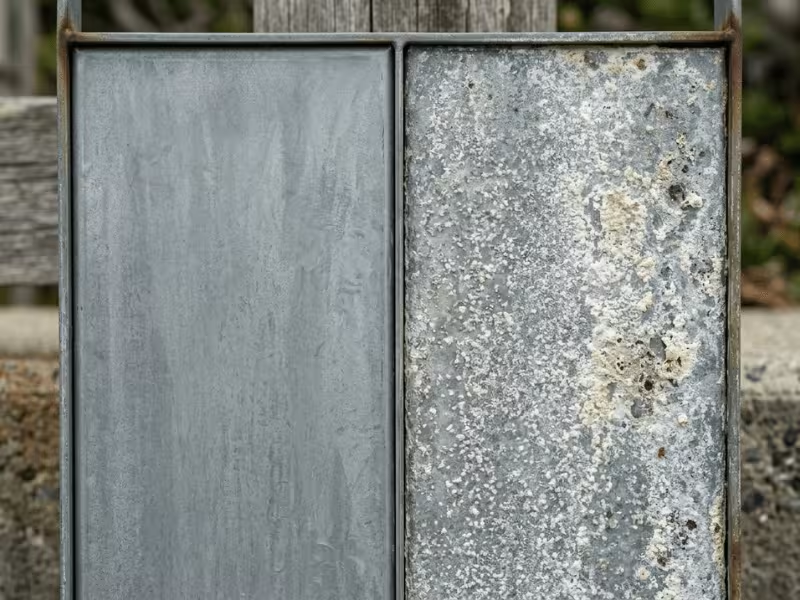
Then comes the clever part. As the surface weathers, zinc reacts with air and moisture to form a patina, a tight film of zinc carbonate. This grey layer isn’t damage. It’s a shield. It slows the zinc from wasting away and stretches the coating’s life for years.
And when the coating finally gets nicked or drilled, sacrificial action kicks in. The zinc around the scratch corrodes first and protects the bare steel. That’s why a small gouge on galvanized steel won’t bloom into spreading rust the way it does on bare metal.
Put simply: barrier protection guards the flat surface, patina slows the clock, and sacrificial action covers the wounds.
What Actually Shortens Service Life
Here’s where I spend most of my time with buyers, because the environment decides everything.
Zinc corrodes at wildly different speeds depending on where a part lives:
- Marine and chloride-rich air. Salt is zinc’s worst enemy. Coastal spray strips the coating fast, sometimes four to five times quicker than clean inland air.
- Industrial pollution. Sulfur dioxide and acidic fallout eat into the patina before it can settle and protect.
- Standing water and trapped moisture. Water that sits in a crevice or a poorly drained joint keeps the zinc wet and working overtime.
- Cut edges and drilled holes. These lean entirely on sacrificial action. On thick sections, a heavy exposed edge can outrun the zinc’s ability to protect it.
Then there’s a failure that happens before the part ever leaves the yard: white rust. Stack fresh coils or sheets in a humid, poorly ventilated space and moisture gets trapped between the surfaces. The zinc reacts and forms a chalky white powder. I’ve seen brand-new material arrive already compromised because it sat wrapped and damp on a shop floor. Store galvanized steel dry, ventilated, and off the ground, or you pay for corrosion you never used.
Why Lab Numbers Lie
Suppliers love to quote salt spray hours from ASTM B117. Treat that figure with caution.
The test blasts a part with a constant salt fog in a sealed chamber. Real weather doesn’t work that way. Outdoors, surfaces wet and dry in cycles, and it’s those dry spells that let the protective patina form. The lab never gives zinc that chance.
So B117 is useful for comparing two coatings against each other. It’s a lousy predictor of actual years in the field. A part rated for 500 salt spray hours might last decades in a dry climate, or a handful of years by the sea. I use the test to rank options, never to promise a lifespan.
Where Galvanized Steel Is the Wrong Choice
Good engineering means knowing when to walk away. Galvanized steel struggles, or fails outright, in a few conditions:
- Strong acids and bases. Zinc dissolves quickly outside a roughly pH 6 to 12 range. Chemical plants and processing lines usually need a different material.
- Continuous immersion. A part sitting permanently underwater never dries, so the patina never forms and the zinc keeps corroding.
- High heat. Above about 390°F (200°C), the zinc-iron bond starts to weaken and the coating can peel over time.
- Severe marine exposure. Direct, constant salt contact can burn through even a heavy coating faster than the budget expects.
In these cases, don’t force galvanized steel to do a job it can’t. Reach for stainless, Galvalume, or a purpose-built coating instead.
Matching the Coating to the Environment
This table sums up how I read a site before I recommend anything:
|
Environment |
Relative corrosion risk |
Typical suitability |
Notes / caution |
|---|---|---|---|
|
Indoor, dry |
Very low |
Excellent |
Light coatings (G40–G60) do the job |
|
Rural / inland outdoor |
Low |
Excellent |
G90 delivers long life; the classic use case |
|
Urban |
Moderate |
Good |
Mild pollution shortens life; lean toward G90+ |
|
Industrial |
High |
Fair |
Acidic fallout attacks zinc; specify G115–G185 |
|
Coastal / marine |
Very high |
Poor to fair |
Chlorides strip coatings fast; consider Galvalume or stainless |
|
Continuous immersion |
Severe |
Not recommended |
Never dries; patina can’t form |
|
High heat (>390°F) |
Severe |
Not recommended |
Coating bond weakens and peels |
Read the environment first, then pick the coating. Do it in that order and galvanized steel rewards you. Do it backwards and you’ll replace the part long before you planned to.
Where Galvanized Steel Makes Sense—and Where It Doesn’t
By now you know galvanized steel isn’t one material but a family of coatings. So the real question isn’t “is it good?” It’s “is it right for my job?” Let me help you answer that fast.
When Galvanized Steel Earns Its Keep
For most work that stays dry and clean between exposures, galvanized steel is hard to beat on value. Here’s where I reach for it without hesitation:
- General outdoor structures. Fences, posts, framing, guardrails, and utility hardware live outside for years on a G90 coating. Inland air lets the patina form, and the zinc rewards you with long service.
- Roofing and wall panels. Barns, sheds, and industrial buildings shrug off weather at a fraction of stainless cost. For sun-baked or hotter climates, I lean toward Galvalume, which holds up better under heat.
- Enclosures and housings. Cabinets, equipment housings, and indoor chassis deal with condensation and mild moisture, not standing water. Standard galvanized handles this all day, which is why so much rackmount case hardware uses zinc-coated sheet for its structure.
- Agricultural and utility hardware. Feed bins, trailers, brackets, and support poles take knocks and stay outdoors. The sacrificial zinc protects the scratches those parts collect.
The common thread? These parts get wet, then dry. That dry spell is what keeps zinc working for decades. If your project fits this pattern, galvanized steel is usually the smart, cost-effective call.
When You Should Pause—or Pick Something Else
Some jobs punish galvanized steel, and I’d rather warn you now than watch a part fail early.
- Coastal and marine projects. Salt is zinc’s worst enemy. Near the sea, even a heavy coating burns through years ahead of schedule. Step up to Galvalume for better heat and mild coastal life, or move to stainless when the spray is constant.
- Highly chemical environments. Zinc dissolves fast outside a roughly pH 6 to 12 range. Processing plants, wash-down lines, and acid exposure call for stainless or a purpose-built coating instead.
- Permanent wet service. A part sitting underwater never dries, so the protective patina never forms. This is not the job for galvanized steel.
- Appearance-critical painted surfaces. A bold spangle bleeds through paint and reads as noise on a finished panel. When looks matter, specify galvannealed or a minimized-spangle finish that grips paint cleanly.
- Aggressive cutting, drilling, or welding. Every cut edge and drilled hole leans on sacrificial zinc. Do a lot of this on thick sections, and you expose more bare steel than the coating can cover. Plan for edge treatment, or lean toward galvannealed, which welds cleaner with less porosity.
The pattern here mirrors the good-fit list, just flipped. Constant wetness, harsh chemicals, salt, or heavy fabrication all outpace what zinc can defend.
A Quick Way to Judge Your Project
When a job lands on my desk, I run it through three fast questions:
- Does the part dry out between exposures? If yes, galvanized steel likely fits. If it stays wet, look elsewhere.
- Is salt or chemistry in the picture? Coastal air points to Galvalume or stainless. Acids and bases rule zinc out.
- Does the finished look or heavy fabrication matter? Painted, precise surfaces favor galvannealed. Lots of cutting favors edge planning or an alloy coating.
Answer those three honestly, and you’ll know within a minute whether standard galvanized works, whether you need Galvalume or galvannealed, or whether it’s time to spend on stainless.
How to Choose the Right Grade: A Practical Selection Framework
Picking galvanized steel isn’t about grabbing the toughest-sounding grade on the list. It’s about running your project through a short, honest checklist. Here’s the exact order I work through when a spec lands on my desk.
Step 1: Start With Where the Part Will Live
Everything begins with the environment. Before I look at a single number, I ask where the part will spend its life.
- Indoor and dry — condensation is your only worry. A light coating covers it.
- Outdoor, inland — clean air lets zinc form its protective patina. This is the sweet spot.
- Industrial — acidic fallout attacks the coating, so you need more zinc than you’d think.
- Coastal or marine — salt strips zinc fast. Standard galvanized often loses here.
- Buried or continuously wet — the part never dries, so the patina never forms. Tread carefully.
Get this step wrong and no coating weight will save you. The environment sets the ceiling on everything that follows.
Step 2: Match Coating Weight to the Years You Need
Once you know the site, you match the zinc to the lifespan you’re after. More zinc buys more years, plain and simple.
Light coatings like G40 and G60 fit indoor or short-life jobs where corrosion barely registers. For general outdoor work, G90 is my go-to workhorse. When the air turns industrial or the part must last decades, I step up to G115 or G185.
Here’s the balance to strike: heavier isn’t always smarter. Thick zinc costs more, and it can crack or flake at tight bends. So I pick the lightest coating that still clears the service-life target. That’s how you avoid paying for protection you’ll never use, or skimping and replacing the part in five years.
Step 3: Check How the Part Gets Made
The coating has to survive your shop, not just the weather. So I always ask what happens to the steel before it ships.
Deep drawing and tight bends punish heavy coatings. Thick zinc cracks at sharp radii, so a lighter coating or a more formable grade like Galfan works better. If you spot-weld, galvannealed is my pick because its zinc-iron alloy welds cleaner with far less porosity.
Painting brings its own rules. A bold spangle bleeds through paint and ruins the look, so specify a matte, skin-passed, or galvannealed surface when the finish matters. Test your paint system on the actual coating first, because pretreatment chemistry changes from mill to mill.
Step 4: Confirm the Standard, Not Just the Product Name
“Galvanized” on an invoice means nothing without a standard behind it. The standard tells you how the coating was applied and how it was tested. Match it to your product form:
- ASTM A653 — continuous hot-dip coated sheet and coil
- ASTM A123 — batch hot-dip galvanizing for structural shapes and fabrications
- ASTM A153 — hot-dip coatings on hardware, bolts, and small parts
- ASTM A792 — Galvalume (zinc-aluminum) coated sheet
- EN 10346 — European continuous hot-dip coated sheet
- ISO 1461 — international batch hot-dip galvanizing
Ask your supplier for the exact standard and revision they certify against. Two coils that both say “galvanized” can answer to entirely different specs, and that gap shows up in the field.
Step 5: Check the Paperwork Before You Buy
Trust, then verify. The last thing I do before signing off is read the documents that prove what I’m actually getting.
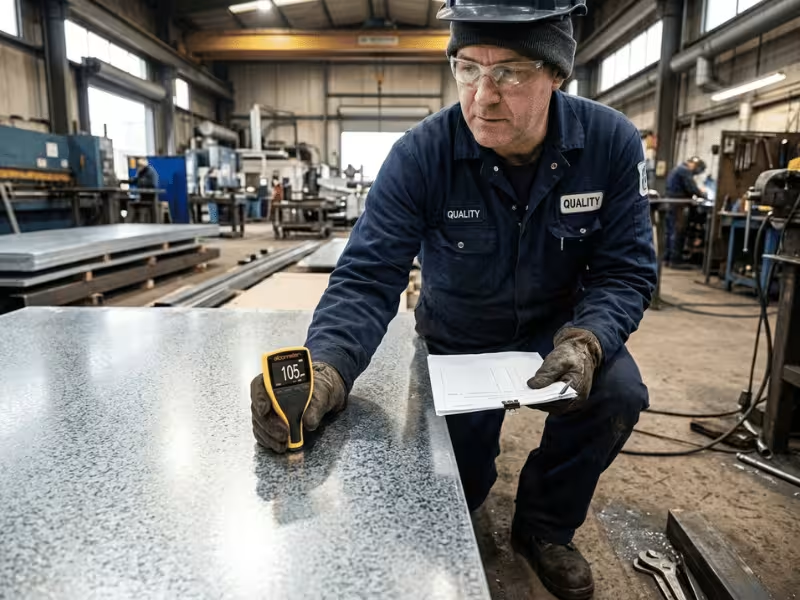
Request the mill test report. It should show the measured coating weight, the steel chemistry, and the mechanical properties. I care most about the measured coating weight, not just the code stamped on the coil, because that number decides real service life. On critical jobs, I confirm traceability too, tracing the material back to its coil or heat number.
A supplier who hesitates to share an MTR is telling you something. Walk away.
The Framework at a Glance
Here’s how these five steps come together for the conditions I see most often:
|
Project condition |
Recommended coating / material direction |
What to verify |
Common mistake |
|---|---|---|---|
|
Indoor, dry |
G40–G60 standard galvanized |
Coating weight; surface finish for painting |
Overspending on heavy zinc that adds no value |
|
Outdoor, inland |
G90 standard galvanized |
MTR coating weight; ASTM A653 or A123 |
Assuming G60 lasts as long as G90 |
|
Industrial |
G115–G185, or Galvalume |
Measured coating weight; standard revision |
Specifying light coatings that acid fallout eats |
|
Coastal / marine |
Galvalume or stainless steel |
Salt spray data; edge protection plan |
Trusting standard galvanized near salt air |
|
Buried / continuously wet |
Stainless or purpose-built coating |
Suitability for immersion; drainage design |
Forcing zinc into a job where patina can’t form |
|
Heavy forming / bending |
Lighter coating or Galfan |
Bend radius vs coating thickness; temper |
Cracking thick zinc at tight radii |
|
Spot welding |
Galvannealed |
Weld parameters; coating type |
Mixing coating types and getting porosity |
|
Painted, appearance-critical |
Galvannealed or minimized spangle |
Spangle spec; paint adhesion test |
Ordering bold spangle that bleeds through paint |
Run every project through these five questions in order, and the grade almost picks itself. Environment sets the direction, coating weight sets the lifespan, fabrication sets the finish, and the standard plus the paperwork keep the whole thing honest.
Galvanized Steel vs. Other Corrosion-Resistant Options
Galvanized steel isn’t the only way to fight rust, and it isn’t always the smartest one. The trick is knowing when it delivers the most protection per dollar, and when you’re better off spending more.
How the Options Compare
Here’s the honest picture I keep in mind when a client asks, “Should I just use galvanized?”
|
Material |
Corrosion Resistance |
Cost Level |
Formability |
Best Use Case |
|---|---|---|---|---|
|
Standard galvanized |
Good in dry, inland air; fades near salt |
Low |
Good |
General outdoor structures, framing, ducting |
|
Galvannealed |
Moderate; needs paint for full protection |
Low–medium |
Fair (alloy cracks at tight bends) |
Painted panels, spot-welded parts, enclosures |
|
Galvalume / Galfan |
Very good under heat and mild coastal air |
Medium |
Good (Galfan bends better) |
Roofing, wall panels, formed parts |
|
Stainless steel |
Excellent, including salt and chemicals |
High |
Fair to good (grade-dependent) |
Marine, food, chemical, wet service |
|
Aluminum |
Very good; won’t rust, resists salt well |
Medium–high |
Excellent |
Lightweight coastal or transport parts |
|
Painted carbon steel |
Poor once the paint chips |
Low |
Good |
Indoor or short-life cosmetic parts |
When Galvanized Steel Wins on Value
For parts that get wet and then dry out, galvanized steel is tough to beat. That drying spell lets zinc build its patina, so a G90 coating carries a fence, a frame, or a duct run for decades at a fraction of stainless cost.
I reach for it when the budget matters and the environment stays clean and inland. Nothing else gives you this much corrosion life for the price. Paint chips and needs touch-ups. Stainless costs three to five times more. Galvanized steel just quietly does the job.
When It’s Not the Right Call
Salt changes the math. Near the coast, zinc burns through years ahead of schedule, and the money you saved upfront gets spent twice on early replacement. That’s where I stop recommending standard galvanized.
Painted carbon steel is another trap. It looks fine on day one, but the moment the coating chips, rust creeps under the paint and spreads. I only use it indoors or on parts nobody expects to last.
When to Spend More
Step up to Galvalume or Galfan when heat and mild coastal air enter the picture. Their aluminum content holds up under sun and salt spray far better than plain zinc, which is why so much metal roofing uses it. Galfan bends without cracking, so it earns its place on formed parts too.
Move to stainless steel when the exposure turns severe: constant salt, harsh chemicals, permanent immersion, or food contact. Yes, it costs more upfront. But over a structure’s full life, replacing a failed galvanized part twice often costs more than buying stainless once.
Choose aluminum when weight drives the decision. It won’t rust at all, shrugs off salt, and forms easily. The tradeoff is a higher price and trickier welding, so I save it for coastal or transport work where every pound counts.
The Way I Frame the Choice
Don’t compare these materials on sticker price alone. Compare cost per year of service in your environment.
Galvanized steel usually wins that math inland. Aluminum and stainless win it by the sea. Galvalume splits the difference under heat. Run the numbers over the life of the part, not the day of purchase, and the right material tends to make itself obvious.
Common Buying Mistakes That Lead to Early Corrosion or Higher Cost
Most galvanized steel failures don’t start in the field. They start on the order form. I’ve traced early rust and blown budgets back to the same handful of buying errors, over and over. Here are the ones that cost people the most.
Under-Coating a Harsh Environment
The mistake I see most is spec’ing G60 or lighter for coastal or industrial sites. Light coatings suit dry, inland work. Put them near salt air or acidic fallout and the zinc burns through in a few years. Match the harsh site to G115 or G185, or you’ll pay for the part twice.
Trusting the Word “Galvanized” Alone
“Galvanized” on an invoice tells you almost nothing. It doesn’t say how much zinc is on the steel, and zinc is what buys you years of service.
Always check the coating designation — the G-number or Z-number. Two coils with the same label can carry wildly different amounts of zinc. One lasts decades. One rusts early. The word is the same; the performance isn’t.
Reading Salt Spray Hours as a Lifespan
Suppliers love quoting salt spray hours from ASTM B117. Don’t read that number as years in the field.
The test runs constant salt fog with no dry spells. Real weather wets and dries in cycles, and those dry spells are exactly what let the protective patina form. B117 is fine for ranking two coatings against each other. It’s a poor predictor of actual service life. I use it to compare, never to promise.
Forgetting Cut Edges, Holes, and Welds
Every cut, drilled hole, and weld exposes bare steel. Those spots lean entirely on the zinc nearby to protect them through sacrificial action.
On thin sheet, the zinc covers them fine. On thick sections or heavily fabricated parts — like the kind of sheet-metal work that goes into a wallmount chassis — you can expose more raw steel than the coating can defend. Plan for edge treatment on those jobs, and if you weld a lot, lean toward galvannealed, which burns cleaner with less porosity. Skip this and rust starts right where you cut.
Letting White Rust Ruin New Material
I’ve watched brand-new steel arrive already compromised because someone stored it wrong. Stack fresh coils or sheets in a humid, poorly ventilated space and moisture gets trapped between the surfaces. The zinc reacts and forms a chalky white powder before the part ever gets installed.
Keep galvanized steel dry, ventilated, and off the ground. Break the bundles if they’ll sit a while. It’s a cheap habit that saves expensive material.
Buying on Price Without the Paperwork
The last trap is the most tempting: chasing the lowest quote and skipping the documents.
Always request the mill test report. It should show the measured coating weight, the steel chemistry, and the mechanical properties. Confirm the exact standard and revision too — ASTM A653, A123, A153, or the EN and ISO equivalents. A supplier who dodges the MTR is telling you something. Listen, and walk away.
The thread running through all six mistakes is the same: buying by name and price instead of by spec and site. The fix is simple. Know where the part will live, match the coating weight to it, protect the cuts, store the material dry, and read the paperwork before you sign. Do that, and galvanized steel does exactly what you paid for.
Frequently Asked Questions About Galvanized Steel
A few questions come up on nearly every project. Here are the ones I answer most often, with straight advice you can act on.
What is the difference between galvanized and galvannealed steel?
Both start with a zinc coating, but galvannealed goes one step further. After the dip, it gets a heat treatment that fuses the zinc into a zinc-iron alloy. That gives it a dull, matte surface that grips paint and welds cleanly. Standard galvanized keeps a pure zinc layer, which resists bare-metal corrosion better but shows a spangle and needs prep before painting. Pick galvanized for outdoor life, galvannealed for painted or spot-welded parts.
How long does galvanized steel last outdoors?
It depends almost entirely on the environment. Inland, in clean, dry air, a G90 coating can protect steel for 40 years or more. In an urban or lightly polluted area, expect fewer years. Near the coast, salt can cut that life to under 10 years. The coating weight matters too: more zinc means more time before red rust appears. So don’t quote a single number. Match the coating to the site and the years you need.
Can galvanized steel be welded?
Yes, but the zinc changes the job. The coating burns off around the weld, releasing fumes you must ventilate, and it can cause porosity if you rush. Weld in a well-ventilated space, slow your travel speed, and let the zinc vaporize ahead of the puddle. For repeated spot welding, galvannealed handles it far better than standard galvanized. After welding, treat the bare zone with a zinc-rich paint to restore protection where the coating burned away.
Can you paint galvanized steel?
You can, but preparation decides whether the paint sticks. Fresh, smooth zinc sheds paint easily. Clean the surface, remove any white rust or oils, and use a primer made for galvanized metal. A matte, skin-passed, or galvannealed finish grips paint far better than a bold spangle, which can bleed through. Always test your paint system on the actual coating first, since pretreatment chemistry varies from mill to mill.
What does G90 mean?
G90 is a coating designation. It tells you the amount of zinc on the sheet, measured across both sides, in ounces per square foot. G90 carries about 0.90 ounces total, which makes it the workhorse for general outdoor use. Higher numbers like G115 and G185 mean more zinc and longer life. Lighter ones like G40 and G60 suit indoor or short-life work. Always check the measured coating weight, not just the code.
Does galvanized steel rust at cut edges?
Yes, but slowly, and that’s by design. When you cut or drill, you expose bare steel. The zinc around that edge corrodes first and protects the raw metal through sacrificial action. On thin sheet, the nearby zinc covers the gap easily. On thick sections, the exposed edge can outrun the coating’s reach, so plan for edge treatment or a zinc-rich touch-up on heavy work.
Is galvanized steel suitable for coastal environments?
Usually not for standard galvanized. Salt is zinc’s worst enemy and strips the coating years ahead of schedule. Near the sea, I move to Galvalume, whose aluminum content holds up better against salt and heat. When the spray is constant and direct, stainless steel is the safer call. The upfront savings on standard galvanized rarely survive the cost of early replacement by the coast.
When should stainless steel be considered instead?
Reach for stainless when the exposure turns severe: constant salt, harsh chemicals, permanent immersion, or food and water contact. Zinc dissolves outside a roughly pH 6 to 12 range and keeps corroding where a part never dries. Stainless costs three to five times more upfront, but over the full life of the part, replacing failed galvanized steel twice often costs more than buying stainless once.
The Bottom Line on Picking Galvanized Steel
If you take one idea from all this, let it be this: “galvanized steel” is a shorthand, not a spec. What you’re really buying is a coating system, and the zinc type, the coating weight, and the environment decide how the part performs.
That’s why the name on the invoice matters far less than three choices you control.
Match the coating weight to where the part will live. A G90 that thrives inland can fail fast by the sea, so let the site set the number.
Check how the part gets made. Tight bends, welds, and paint all change which coating and grade actually work.
Confirm the standard behind the order, whether it’s an ASTM or EN spec, and ask for the mill test report that proves it.
Handle those three well, and the steel rewards you. Skip them, and no grade name will save the job.
