




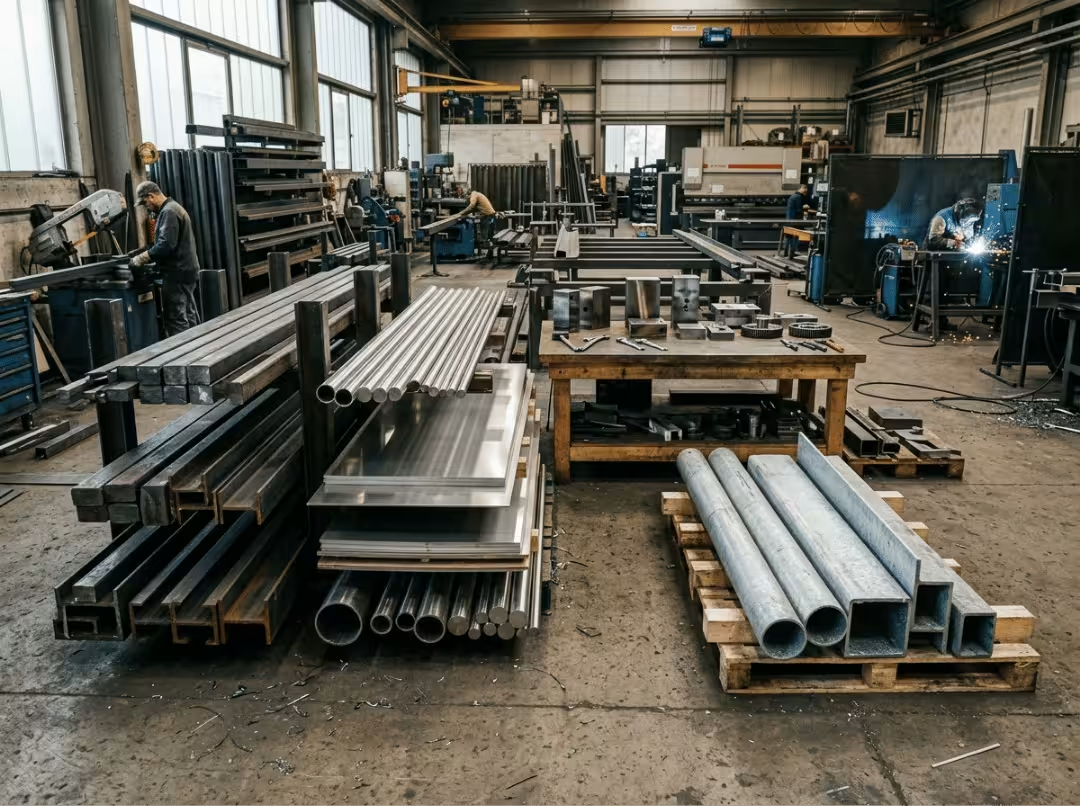
A fabricator once ordered plain carbon steel for a coastal handrail because it was quoted as the cheapest. Six months later, rust streaks ran down the entire installation, and the replacement job cost triple the original cost. The steel wasn’t defective. It was simply the wrong type for salt air. That mistake captures why steel selection matters: the “best” steel doesn’t exist, only the right steel for the job.
Steel comes in thousands of grades because no single formula wins everywhere. At its core, steel is just iron alloyed with carbon (up to 2%), plus other elements that shape its behavior. Change the recipe, and you change everything: hardness, corrosion resistance, weldability, and price.
What you’ll learn:
- What actually drives steel’s properties
- The four main families and where each wins
- How to read a steel grade number
- A practical 4-step framework to choose the right steel
What Actually Determines a Steel’s Properties
Before comparing types, understand the two levers that control almost everything.
Carbon Content: The Primary Driver
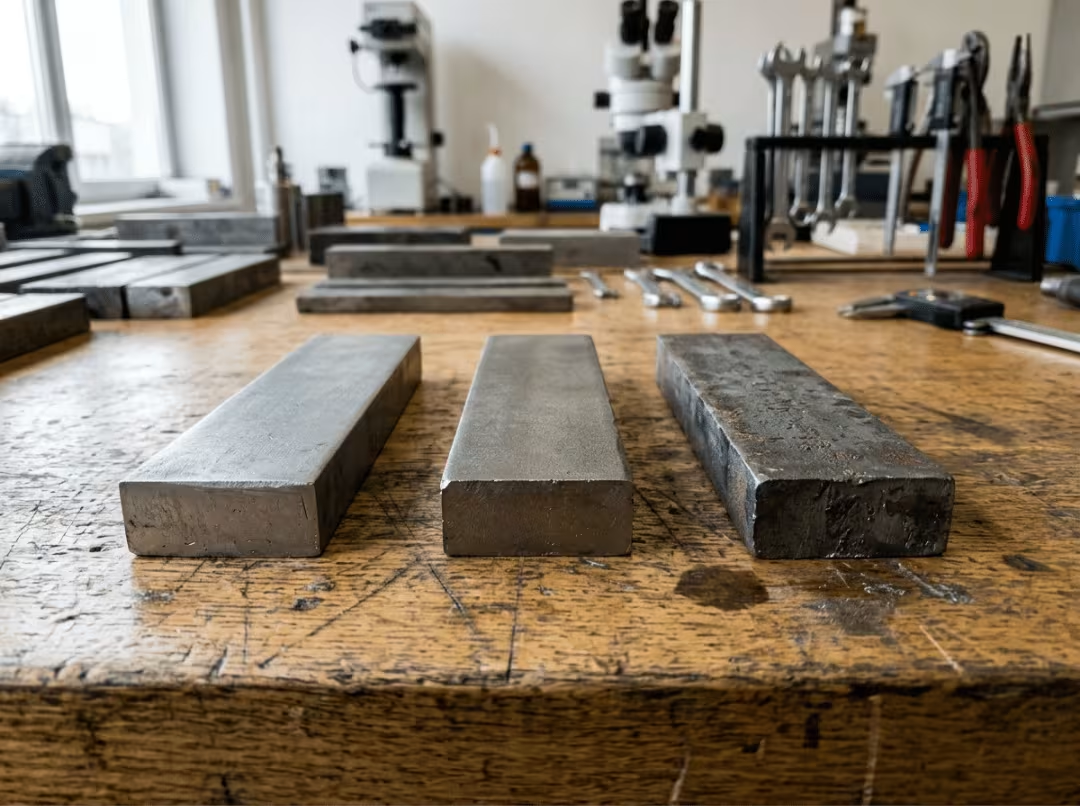
Carbon is the single biggest factor in how steel behaves. The more you add, the harder and stronger the steel gets, but the more brittle and harder to weld it becomes.
- Low carbon (under 0.3%): Soft, ductile, easy to weld and form. The workhorse of general fabrication.
- Medium carbon (0.3%–0.6%): Stronger, responds well to heat treatment, harder to weld.
- High carbon (over 0.6%): Very hard, holds an edge, but brittle and demanding to work with.
The tradeoff is unavoidable: gaining hardness costs you ductility. Keep that in mind every time someone says a steel is “stronger.”
Key Alloying Elements
Adding other elements fine-tunes performance. The four that matter most:
- Chromium (Cr): Corrosion resistance and hardness. Above about 10.5%, it makes steel “stainless.”
- Nickel (Ni): Toughness and impact resistance, especially in cold conditions.
- Manganese (Mn): Strength and hardenability; helps steel respond to heat treatment.
- Molybdenum (Mo): High-temperature strength and pitting resistance in aggressive environments.
If you remember only one thing, remember that carbon sets the baseline, and alloying elements solve specific problems like corrosion or heat resistance.
The Four Main Families of Steel
Most real-world decisions fall into four families. Here’s where each earns its place.
Carbon Steel: The Workhorse
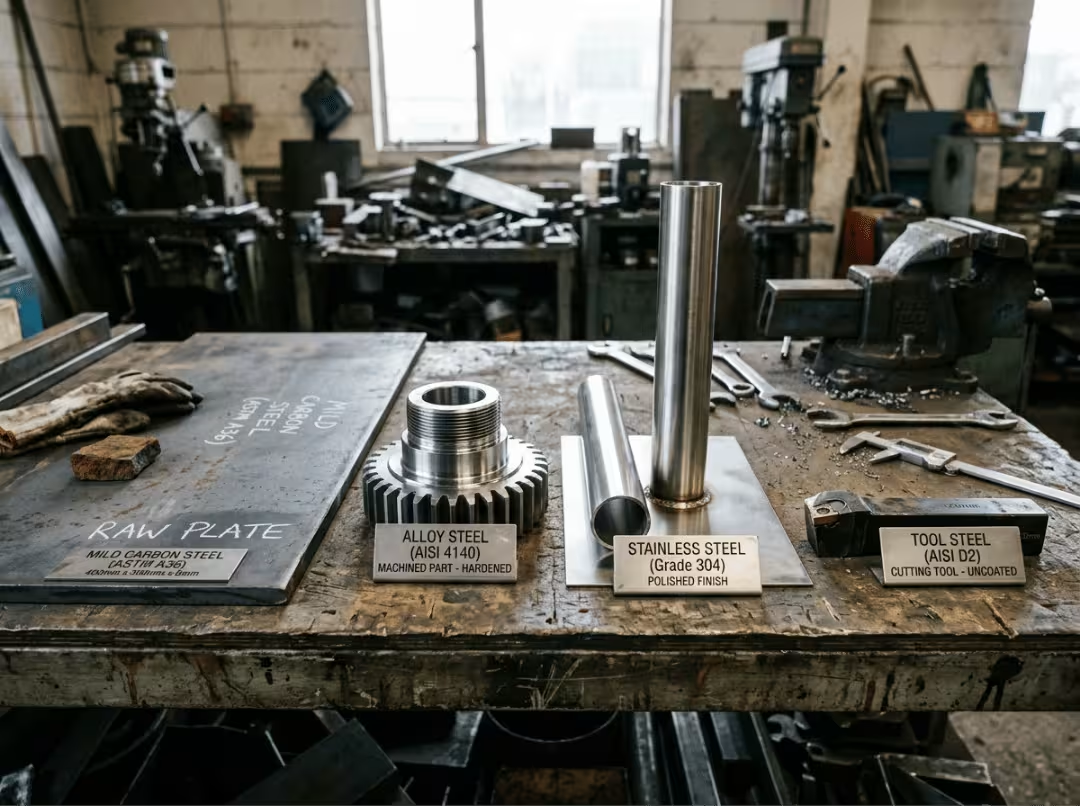
Carbon steel is iron plus carbon, with no significant alloying elements. It’s cheap, abundant, and covers most everyday fabrication.
Low-carbon (mild) steel (with carbon content under 0.3%) is the default for structural beams, car body panels, wire, and fasteners. It forms easily, welds cleanly, and costs little. Its one weakness: no corrosion resistance on its own, so it needs a coating for outdoor use. For that reason, many buyers opt for a coated option, such as galvanized steel coil, when moisture is in play.
Medium-carbon steel (0.3%–0.6%) trades some ductility for strength. It’s the choice for axles, gears, crankshafts, and railway wheels, where heat treatment tunes the strength-to-toughness balance. Surface hardening is common here to give a tough core with a wear-resistant skin.
High-carbon steel (over 0.6%) is all about hardness. Think cutting tools, springs, wire rope, and knife blades. The catch: it demands careful heat treatment and turns brittle if you push it too far.
Alloy Steel: Engineered for a Job
Alloy steel adds elements beyond carbon to hit targets plain carbon steel can’t reach. The most relevant subgroup for most projects is high-strength low-alloy (HSLA) steel.
HSLA uses small amounts of alloying to deliver a better strength-to-weight ratio at moderate cost. That’s why it dominates modern automotive structures and demanding construction work: you get more strength per pound without jumping to expensive grades. If you need to shed weight without paying stainless prices, HSLA is usually the first place to look.
Stainless Steel: When Corrosion Is the Enemy
Stainless steel is where selection gets nuanced, so it deserves the most attention. The defining ingredient is chromium (10.5% or more), which forms a self-healing passive layer that resists rust. But “stainless” isn’t one material; it’s four distinct groups.
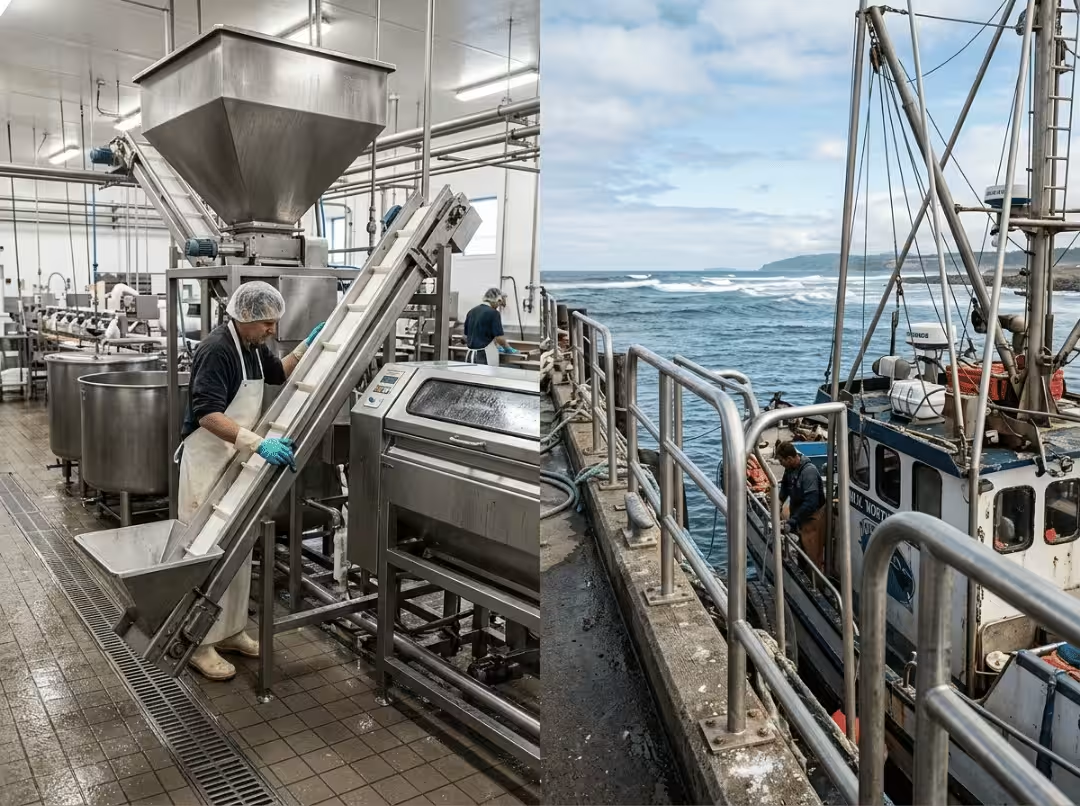
Austenitic (304 and 316) is by far the most common. With roughly 18% chromium and 8% nickel, it’s non-magnetic, highly formable, and easy to clean.
- 304 is the everyday choice for kitchen equipment, food processing, architectural cladding, and indoor use.
- 316 adds molybdenum for far better resistance to salt and chemicals, making it the go-to for marine and chemical environments.
For most architectural and food applications, 304 stainless steel sheet does the job, with 316 reserved for harsher exposure.
Ferritic (like 430) contains chromium but little nickel, which keeps cost down. It’s magnetic, offers moderate corrosion resistance, and welds poorly. You’ll find it in automotive exhausts, washing machine drums, and indoor trim.
Martensitic (like 410 and 420) is heat-treatable and hardenable, trading some corrosion resistance for high hardness. It suits cutlery, surgical tools, valves, and shafts.
Duplex blends austenitic and ferritic structures to deliver roughly double the strength of standard austenitic grades, plus strong corrosion resistance. It earns its premium in chemical processing, oil and gas pipelines, and desalination plants.
Start with 304 for general corrosion needs, step up to 316 near salt or chemicals, and consider duplex only when you need both high strength and aggressive corrosion resistance.
Tool Steel: Built to Cut and Shape
Tool steel is specialized, high-hardness, wear-resistant steel made to form other materials. It’s classified by working environment: cold work, hot work, high-speed, and shock-resisting.
Common designations you’ll see quoted include D2 and A2 (cold-work dies), H13 (hot-work tooling), O1 (oil-hardening general tooling), and M2 (high-speed cutting tools). Applications range from punches, dies, and molds to drill bits and lathe tools. Unless you’re making tooling, you rarely need it, but it’s worth recognizing on a spec sheet.
How to Read a Steel Grade Number
Grade numbers look cryptic until you know the pattern. The most common system is the AISI/SAE four-digit code.
- The first two digits identify the alloy family.
- The last two digits indicate carbon content in hundredths of a percent.
Examples make it click:
- 1018: Plain carbon steel (10xx family) with 0.18% carbon. Classic mild steel.
- 4140: Chromium-molybdenum alloy steel (41xx) with 0.40% carbon. A strong, heat-treatable favorite.
- 52100: High-carbon chromium steel with about 1.0% carbon, used for bearings.
AISI and SAE designations overlap heavily and are treated as interchangeable in practice.
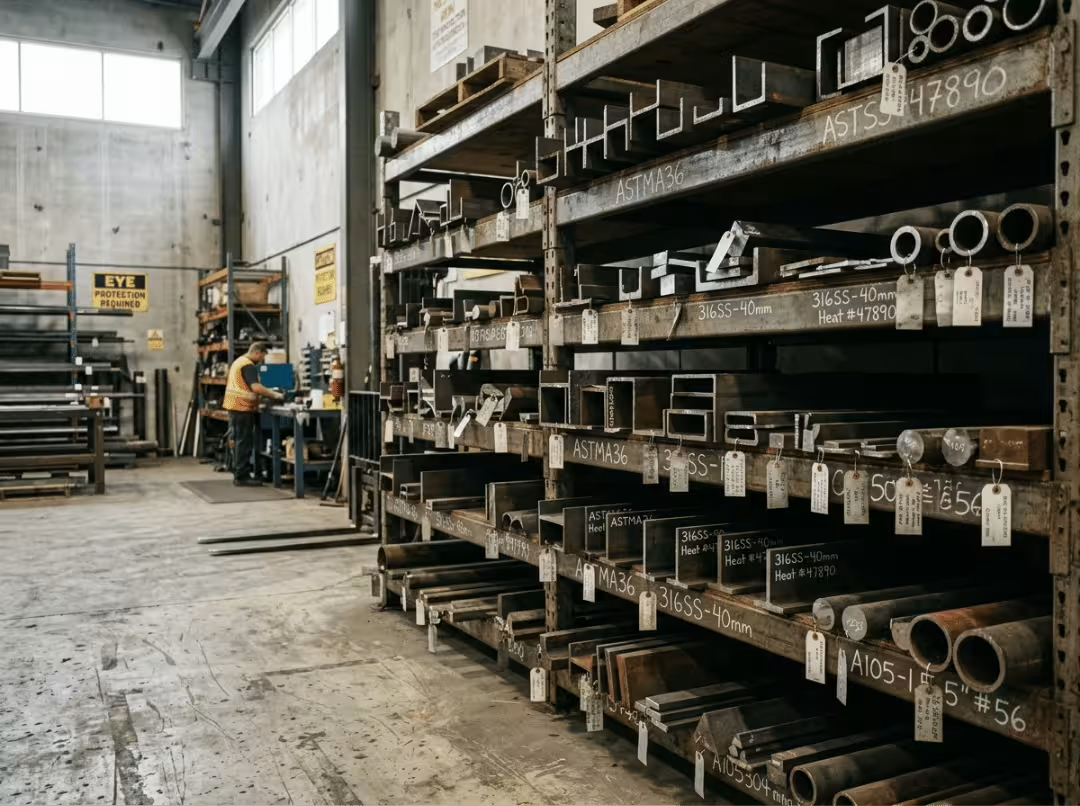
You’ll also run into ASTM standards, which organize steel by application rather than pure chemistry. A36 covers structural steel; A516 covers pressure-vessel plate. When your project must meet a code or certification, the ASTM spec often matters more than the chemistry grade, because it guarantees tested performance for that use.
A Practical 4-Step Selection Framework
Skip the guesswork. Run any project through these four steps in order.
Step 1: Define the Service Environment
Ask what the part will face:
- Corrosion: moisture, chemicals, or saltwater? Push toward stainless or coated steel.
- Temperature: cryogenic, ambient, or high heat? This favors specific alloy or stainless grades.
- Wear and loading: abrasion, impact, or repeated fatigue cycles?
The environment usually eliminates most options immediately.
Step 2: Identify Fabrication Requirements
How the part gets made matters as much as where it lives:
- Weldability: low-carbon steels win in most cases.
- Machinability: free-machining grades like 12L14 or 303 stainless cut faster.
- Formability: deep drawing and tight bends favor austenitic stainless and low-carbon grades.
Step 3: Weigh Cost Over the Full Lifespan
Carbon steel is cheapest per pound; stainless and tool steel cost more. But per-pound price is a trap. A pricier corrosion-resistant grade that lasts 20 years often beats a cheap grade you replace three times. Calculate cost per part over its service life, not the sticker price of the raw material.
Step 4: Verify Supply and Standards
Even the perfect grade is useless if you can’t get it:
- Confirm the grade is available in your region and in the form you need (sheet, plate, bar, or tube).
- Check whether your application demands a specific ASTM certification or AISI chemistry.
Environment narrows the field, fabrication refines it, lifecycle cost justifies it, and supply confirms it.
Quick Reference: Which Steel for Which Job
|
Job or Requirement |
Recommended Steel |
|---|---|
|
Structural frames, general fabrication |
Mild (low-carbon) steel |
|
Shafts, gears, high-strength parts |
Medium-carbon or alloy steel (e.g., 4140) |
|
Outdoor exposure on a budget |
Galvanized carbon steel |
|
Food equipment, indoor corrosion |
304 stainless |
|
Marine and chemical exposure |
316 stainless |
|
High strength plus tough corrosion |
Duplex stainless |
|
Cutting and stamping tools |
D2 or M2 tool steel |
|
Hot-work tooling |
H13 tool steel |
Frequently Asked Questions
What is the difference between 304 and 316 stainless steel?
Both are austenitic stainless grades with excellent formability and cleanability. The key difference is molybdenum: 316 contains it, 304 doesn’t. That molybdenum gives 316 much better resistance to salt, chlorides, and chemicals. Use 304 for kitchens and indoor architecture, and step up to 316 for marine, coastal, or chemical exposure.
Is galvanized steel the same as stainless steel?
No. Galvanized steel is ordinary carbon steel coated with zinc to resist corrosion. Stainless steel resists corrosion throughout its entire structure thanks to chromium. Galvanized steel is cheaper and works well until the coating is scratched or wears through. Stainless steel costs more but continues to resist corrosion even when the surface is damaged.
Does higher carbon content always mean better steel?
No, and this is a common trap. More carbon means greater hardness and strength, but also greater brittleness and poorer weldability. High-carbon steel is excellent for blades and springs, but a terrible choice for a welded structural frame. The right carbon level depends entirely on the job.
What is the most common steel used in construction?
Low-carbon structural steel, often to the ASTM A36 standard, dominates construction. It’s affordable, weldable, and strong enough for beams, columns, and frames. Outdoors or in damp conditions, it’s typically coated or galvanized to fight rust.
How do you prevent rust on carbon steel?
Carbon steel needs a barrier between the metal and moisture. Common options include galvanizing (a zinc coating), painting, and powder coating. For long-term outdoor use, galvanizing is the most durable and low-maintenance choice. If corrosion resistance is critical and coatings aren’t practical, switching to stainless may be the better call.
What is the best steel for a knife blade?
High-carbon steel or martensitic stainless (like 420) are the usual picks. High-carbon steel holds an extremely sharp edge but can rust without proper care. Martensitic stainless trades a little edge retention for corrosion resistance and easier maintenance. The best choice depends on whether you prioritize edge sharpness or low upkeep.
The Bottom Line
Steel selection isn’t about finding one “best” grade; it’s about matching carbon content, alloying elements, and processing to your specific job. Work through the environment, fabrication needs, lifecycle cost, and supply, in that order, and the right grade usually reveals itself.
When you’re unsure, three defaults will serve you well: mild steel for structural and general fabrication, 304 stainless for corrosion exposure (316 for near-salt or chemical exposure), and a medium-carbon alloy like 4140 for high-strength parts. Start there, verify with a sample or test when the stakes are high, and lean on a trusted supplier or metallurgist when a project demands an unusual mix of properties. Get the match right the first time, and you avoid the expensive rust-streaked lesson that costs so many projects.
