




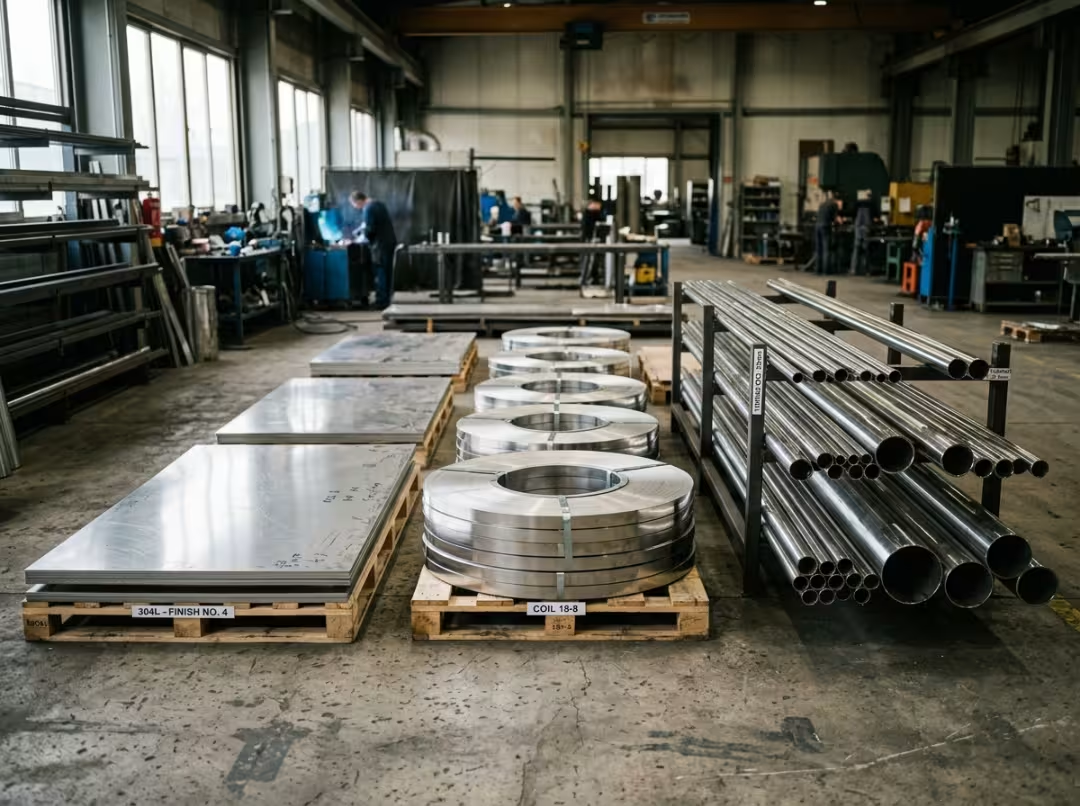
A “stainless” sink that rusts in a month. A coastal railing pitted with brown freckles by the end of summer. A structural bolt that quietly fails years after installation. These aren’t bad luck — they’re the predictable result of buying the wrong steel for the job, then trusting a label that never told you what you were actually getting.
Here’s the truth the word “stainless” hides: it’s not one material, and it’s not a promise. Quality stainless steel is a specific alloy, matched to a specific environment, backed by paperwork that proves what’s in it. Get any of those three wrong, and the steel underperforms — sometimes fast, sometimes slow, always expensive.
This guide gives you a decision thread you can actually use: define the environment first, pick the grade that fits, then verify what you bought. Follow it, and you’ll stop relying on a seller’s word and start buying steel that lasts.
Start With the Environment, Not the Price
The most expensive mistake buyers make is choosing a grade before they understand where the part will be used. “Good quality” isn’t absolute — it’s relative to the job. The best steel for a kitchen sink will fail on a boat, and marine-grade steel is money wasted on an indoor trim piece.
So work out the environment first. What will the part face — food acids, salt air, chemicals, constant scrubbing, or just ordinary weather? The answer picks the grade for you.
Food and Kitchen
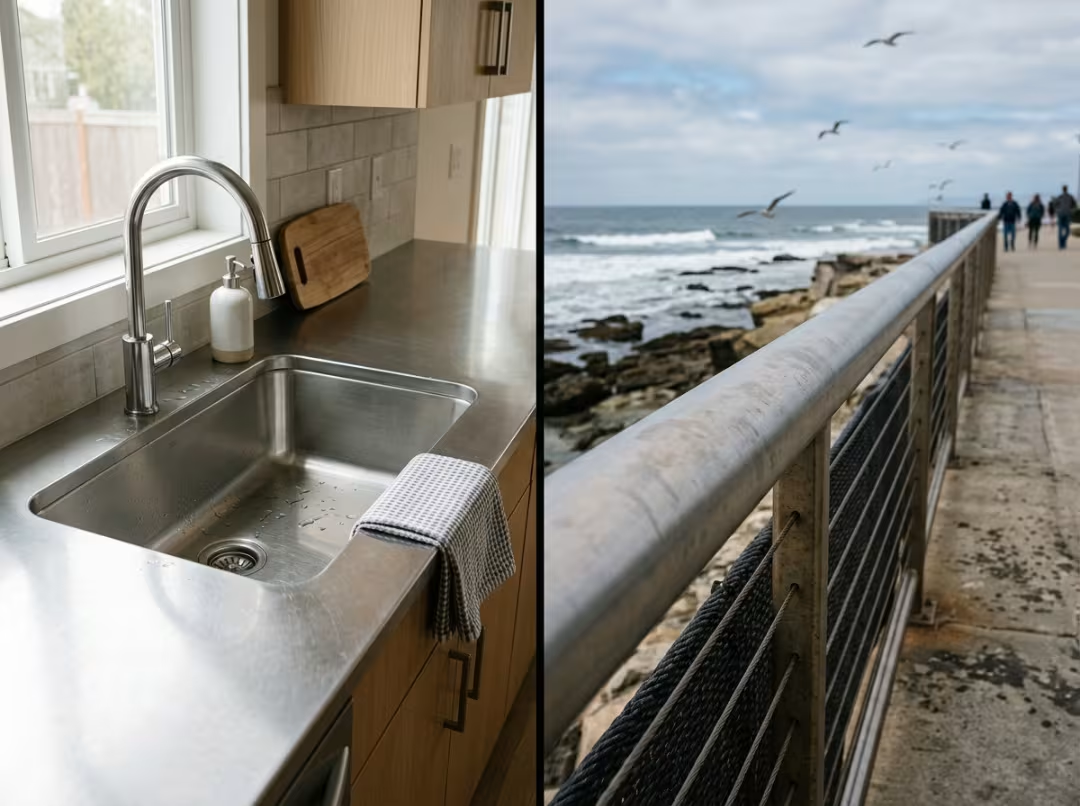
Sinks, cookware, countertops, and commercial food gear are exposed to acids, salt, and constant cleaning. Grade 304 is the standard — it resists food acids and wipes clean without staining. Go cheaper and you risk metal leaching into acidic food and rust blooming where citrus or tomato sits against the surface.
Marine and Coastal
Saltwater and airborne chloride destroy ordinary stainless. This is 316 territory — its 2–3% molybdenum fights the chloride attack that eats lesser grades alive. Boats, docks, coastal railings, seaside facades: all need it. Try to save with 304 near salt, and you’ll watch pitting appear within months.
Medical, Pharma, and Lab
Instruments, implants, and lab equipment need more than corrosion resistance. Low-carbon 316L avoids carbide precipitation during welding, which otherwise leaves weak, corrosion-prone seams. Smooth, well-finished surfaces matter too — they deny bacteria the microscopic pockets they need.
Industrial and Structural
Beams, tanks, fasteners, and processing equipment require strength, weldability, and corrosion resistance. Often 304 or 316 handles it. For heavy loads, duplex grades deliver roughly twice the strength of standard austenitic steel — letting you spec thinner sections without losing corrosion performance.
Architectural and Decorative
Railings, cladding, and exterior features carry an extra demand: they have to look right for years. Surface finish becomes part of the quality equation, not a nicety. Poorly passivated surfaces go blotchy and streaky over time. Matching grade to local weather and pollution is what separates durable building and construction work from warranty callbacks.
Grade-to-Environment Quick Match
|
Environment |
Recommended grade |
Why it works |
|---|---|---|
|
Kitchen, food contact |
304 |
Resists food acids, cleans easily, no leaching |
|
Marine, coastal, high chloride |
316 / 316L |
Molybdenum fights salt and chloride pitting |
|
Medical, welded assemblies |
316L |
Low carbon protects weld zones from corrosion |
|
Heavy structural, high stress |
Duplex |
High strength plus strong corrosion resistance |
|
Indoor decorative trim |
430 |
Low cost where corrosion risk is minimal |
|
General outdoor, non-coastal |
304 |
Reliable all-rounder away from salt |
Find your row. Everything from here is about confirming you actually get that grade.
Decode the Grades: What the Number Really Costs You
A grade number isn’t marketing — it’s the alloy recipe, and that recipe decides how the steel behaves in the real world. Read the number, and you stop buying blind. Here’s what each common grade means once it’s installed.
304: The Workhorse
Roughly 18% chromium and 8% nickel — hence the nickname 18/8. It shrugs off most indoor and general outdoor conditions, forms well, and cleans easily. It’s the default for good reason.
Its one hard limit: salt. Put 304 near the coast, and it pits. Everywhere else, it’s the reliable, cost-effective choice.
316: The Marine and Chemical Grade
Add 2–3% molybdenum and 304 becomes 316. That single change is what lets it survive salt, chlorides, and aggressive chemicals. It costs more, and the premium pays for itself anywhere corrosion would otherwise win. For welded marine or chemical work, spec 316L — the low-carbon version that keeps weld seams from corroding.
430: The Budget Ferritic
Lower chromium, almost no nickel — cheaper, and magnetic. The trade-off is weaker corrosion resistance and surface rust in damp or acidic conditions. Fine for indoor decorative trim and some high-heat uses. A poor bet for kitchens, bathrooms, or anything coastal. Know which side of that line your project sits on before you order.
201: The One That Fools People
Grade 201 swaps costly nickel for manganese and nitrogen to cut price. It passes a casual glance — brushed 201 looks a lot like brushed 304 — but it corrodes faster and can go brittle in the cold. This is the grade hiding in cheap imported cookware, discount fasteners, and bargain hardware. When “stainless” feels suspiciously cheap, 201 is usually why.
The Suffixes: L, H, and N
Those letters carry real consequences:
- L (low carbon) — as in 304L, 316L. Prevents carbide precipitation during welding, protecting corrosion resistance at the seams. Spec it whenever welding is involved.
- H (high carbon) — higher strength at elevated temperatures; also for cutting tools.
- N (nitrogen) — nitrogen-strengthened for heavy-duty structural loads.
The takeaway is blunt: specify the full grade in writing, including the suffix — don’t just ask for “stainless.” A supplier dealing in real material will quote to an exact grade without blinking. When you’re sourcing coil, sheet, or finished stainless steel products, put the complete designation on the order and hold them to it.
Verify What You’re Actually Buying
Field tests won’t match a lab test, but a few quick checks can tell you a lot in minutes. The strongest combo for spotting a fake is simple: the magnet test plus a chemical spot test. One flags a mismatch; the other confirms it.
Magnet + Spot Test: The Core Combo
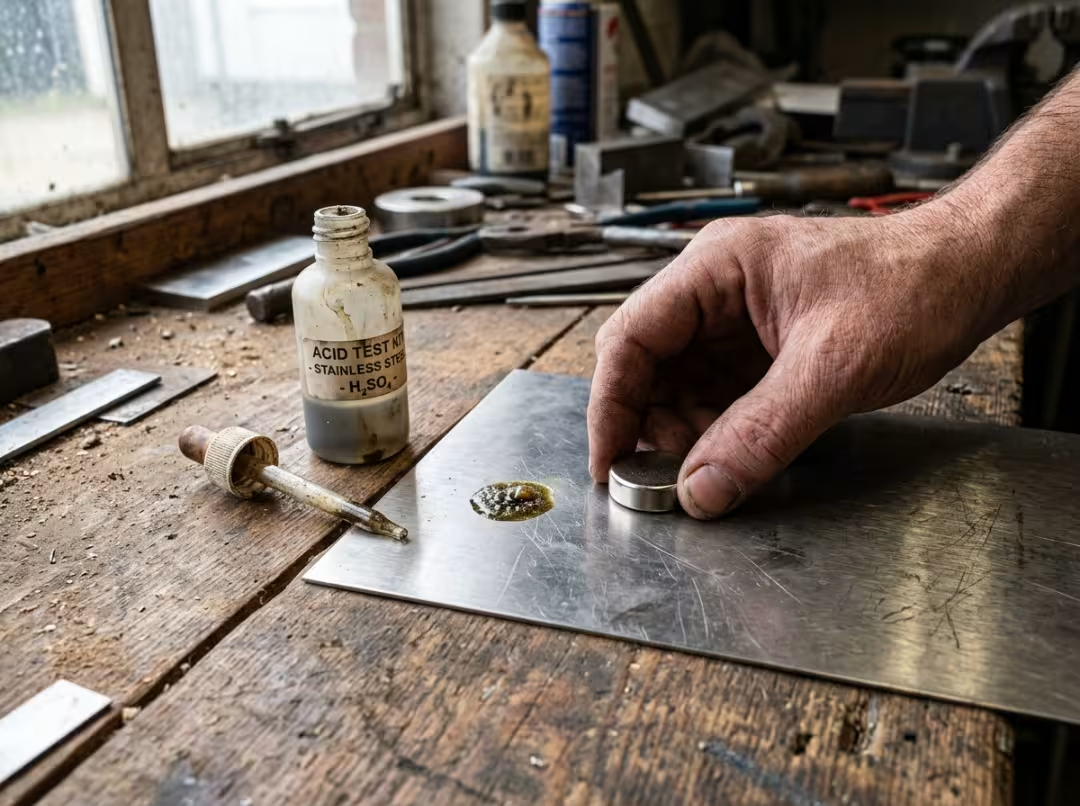
Most austenitic grades (304 and 316) are non-magnetic, while ferritic grades like 430 are magnetic. So if a piece sold to you as 304 or 316 pulls hard on a magnet, be suspicious — it may be a cheaper ferritic grade or heavily cold-worked material.
But ignore the myth that “magnetic equals bad.” Plenty of quality grades are magnetic by design. The magnet only narrows things down — it never delivers a verdict alone.
That’s where the chemical spot test earns its place. Acid spot-test kits react differently to nickel and molybdenum, giving you a fast read on whether you truly got 304 versus 316. The kits are cheap and available online. Use them together: the magnet raises the flag, the spot test settles it. And never skip the molybdenum check when you’re paying for 316 — it’s the whole reason you’re paying extra. For professional buyers, an XRF analyzer reads exact composition in seconds and is the gold standard.
Scratch and Spark Tests, Briefly
Scratch a hidden spot to reveal the color beneath a brushed surface — a quick way to expose cheap plating over a lesser base metal. The spark test (reading the spark color off a grinder) can identify steel families, but it takes real experience to interpret it. Leave it to someone who’s done it before.
Inspect the Finish
Finish quality reflects manufacturer care. Check that the surface matches what you ordered, and look for:
- Smudges or uneven texture
- Bluish tints, a sign of overheating during processing
- Unpolished weld discoloration
Then confirm passivation — the finishing step that strips off free iron from the surface and restores the protective chromium oxide layer. Skip it and even good steel rusts. A properly passivated surface looks clean and uniform, never blotchy.
Check Thickness and Weight
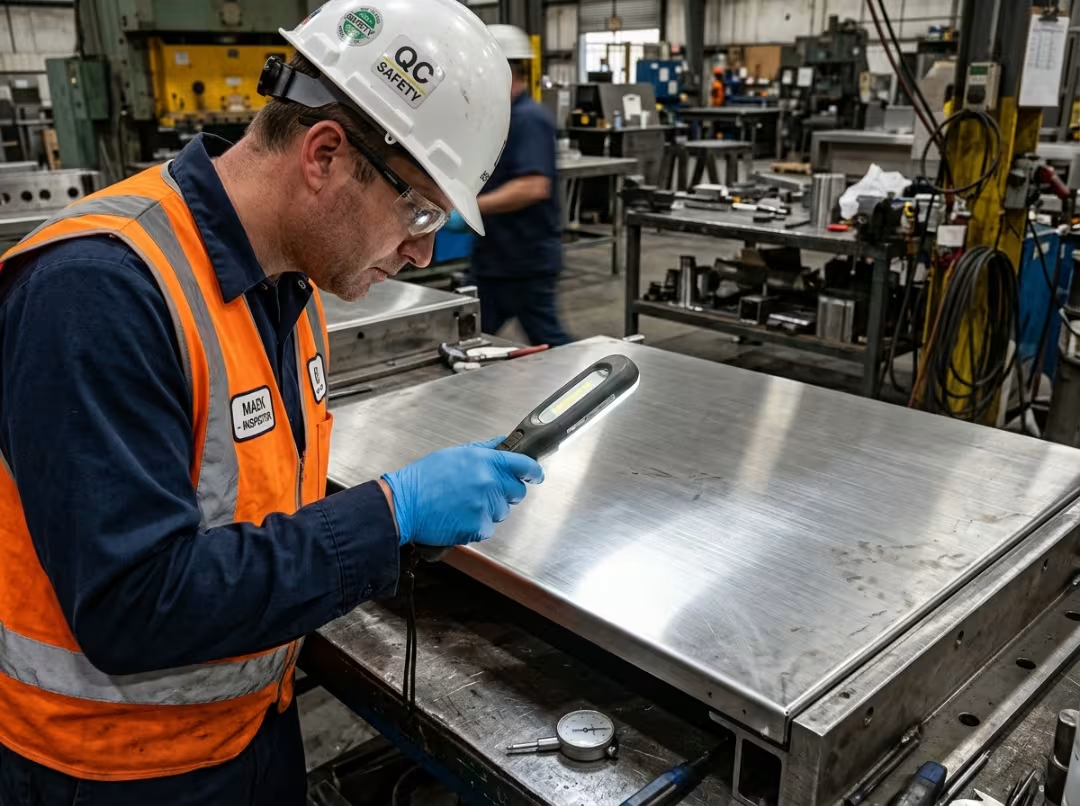
A thin gauge inside a chunky-looking product is a classic corner cut. Measure with calipers against spec. If a part feels noticeably lighter than it should, treat that as a warning — undersized pipe walls and thin sheet are common in budget material, and less steel means a shorter life.
These checks take a few minutes and can save you years of regret.
Check the Paperwork: Where Real Quality Proves Itself
Genuine stainless steel comes with a documented story — where it was made, what’s in it, and which standard it meets. A reputable supplier hands it over on request. Hesitation is itself the warning sign.
Mill Test Certificates (MTC)
The MTC is the document that matters most. It lists:
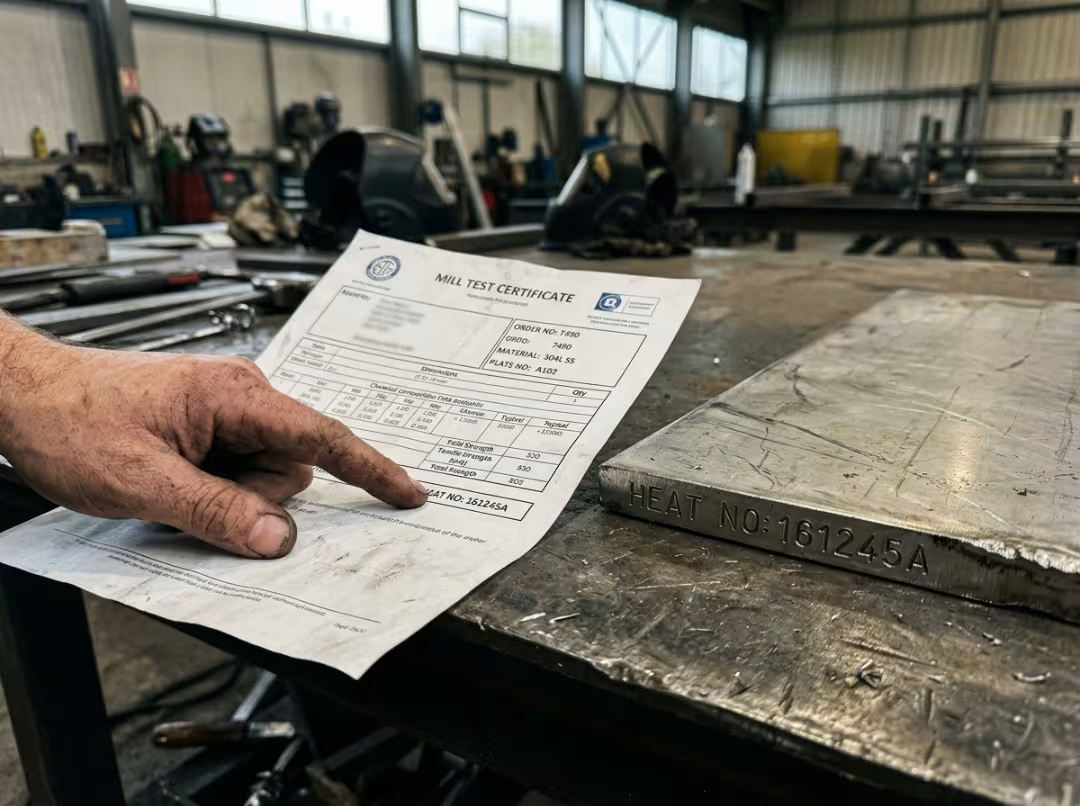
- The heat number — a batch fingerprint
- Full chemical composition
- Mechanical properties — strength, hardness, elongation
- The standard the steel meets
Ask for the MTC before you pay, especially on large or structural orders. Then do the step most buyers skip: cross-check the heat number on the certificate against the marking stamped on the material itself. If they don’t match — or there’s no stamp at all — stop and ask why. A certificate that can’t be tied to the physical steel is just paper.
Standards Worth Knowing
You’ll mostly meet three families:
- ASTM — common in the US (e.g., ASTM A240 for sheet and plate)
- EN — the European system
- ISO — for global trade
“Certified to ASTM A240” means the material meets a defined, testable spec. Be wary of vague claims: “meets international standards” with no named standard is marketing, not proof. Some regional standards are weaker than others, which is exactly why the specific wording matters.
Spotting a Fake or Loose Certificate
Treat these as red flags:
- Vague language with no heat number
- A generic “test certificate” naming no lab or mill
- Documentation that doesn’t match the physical stamp
- A supplier who stalls or refuses to share anything
When the order is large, or the stakes are high, verify the certificate straight with the mill. Genuine suppliers welcome it. Fraudulent ones don’t. And watch the sales pattern, too — a distributor who pushes the same grade across the board is a bad sign. Good suppliers match material to the project, steering you to 316 for the coast and 304 for the kitchen. Local machine shops and fabricators are a useful backchannel; they usually know who sells real steel and who cuts corners.
Common Mistakes and Red Flags
Even careful buyers hit the same traps. Sidestep these.
Buying on price alone. Stainless tracks raw nickel and molybdenum markets, so real material has a price floor. A quote 30% under market isn’t a bargain — it’s a warning that a cheaper grade is wearing a better name.
Confusing 304 with 201. Nearly identical at a glance, especially brushed. That resemblance is exactly why 201 sneaks into budget kitchenware and discount tool sets. When it matters, spot-test — don’t trust the shine.
Skipping passivation. Good steel still rusts if machining or grinding leaves free iron on the surface. A shop that cuts shelving and welds frames but never reseals the surface gets rust streaks within weeks — then the customer blames the steel when the process was at fault.
Ignoring galvanic corrosion. When stainless touches a dissimilar metal — aluminum or plain carbon steel — in a wet environment, one metal corrodes faster to protect the other. Break the circuit with insulating washers or barrier coatings at every connection point.
Trusting the word “stainless.” Plenty of products say “stainless” without naming a grade. Read the fine print for the grade number and country of origin. One rule closes this out: if the seller can’t tell you the grade in plain terms, walk away.
Frequently Asked Questions
Does a magnet test prove stainless steel is genuine?
No. It only tells you whether the steel is magnetic. Austenitic grades like 304 and 316 are non-magnetic, so a strong pull on something sold as 304 is a red flag — but many quality grades are magnetic by design. Pair the magnet with a chemical spot test to get a definitive answer.
Is 304 good enough for outdoor use?
Yes, away from the coast. It handles rain, humidity, and normal weather well. What it can’t handle is salt air and chlorides — near the ocean, step up to 316.
What actually separates 304 from 316?
Molybdenum. The 2–3% in 316 gives it far better resistance to salt and chlorides, making it the marine and chemical choice. 304 covers most everyday indoor and non-coastal work at a lower cost.
Why does my “stainless” sink show rust spots?
Usually one of three things: it’s a low grade like 201 or 430, it was never properly passivated, or free iron got embedded during manufacturing. Cheap stainless that rusts fast is almost always a grade problem.
Can I do a molybdenum test myself?
Yes. Acid spot-test kits designed to detect molybdenum are cheap and available online. They give a quick, reliable read on whether you actually received 316 rather than a look-alike — well worth it before paying a 316 premium.
How do I know a coating isn’t hiding a cheaper metal?
Scratch a hidden area and check the color underneath — plating reveals a different base metal below. A magnet check and spot test confirm it. Genuine stainless is the same alloy all the way through.
Is passivation something I can do at home?
For small parts, citric-acid passivation is possible, but results vary. For anything structural, load-bearing, or safety-critical, use professional passivation so the protective layer is fully restored.
Which grade suits drinking water pipes?
304 works for most potable water. Where water is high in chlorides or the system is welded, 316L is the safer pick for both corrosion resistance and clean weld zones.
The Bottom Line
Choosing good quality stainless steel runs on three steps, in order.
Define the environment. Kitchen, coast, hospital, factory, or facade — the conditions the part will face decide everything downstream.
Pick the grade that fits. 304 for general and food use, 316 for marine and chemical exposure, 430 only where corrosion risk is low, duplex where strength rules. Never skip the molybdenum check when you’re paying for 316.
Verify what you bought. Run the magnet-plus-spot-test combo, inspect finish and thickness, and on any serious order demand the mill test certificate — then confirm the heat number against the steel itself.
Quality stainless steel isn’t a vague label. It’s a specific alloy with a paper trail. A few minutes confirming the grade and the certificate protects your money and your project long after the invoice is paid.
