




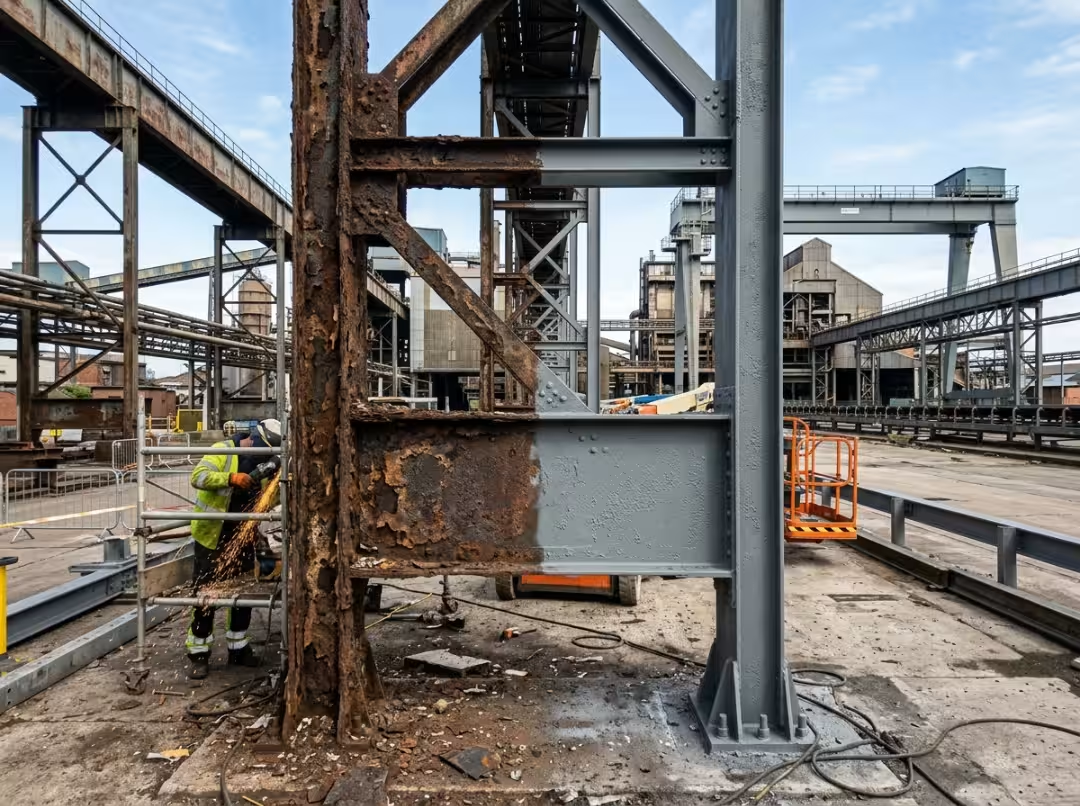
In 2007, the I-35W bridge in Minneapolis collapsed, killing 13 people. Corrosion wasn’t the sole cause, but decades of rust had quietly thinned steel that was never meant to weaken. That’s the nature of corrosion — it works slowly, out of sight, until the day it doesn’t.
Here’s the good news: most corrosion damage is preventable, and the cheapest defense is almost always a coating. Not an exotic one. The right one, applied correctly, and maintained on schedule.
This guide follows the decision the way an engineer actually makes it: why corrosion costs more than you’d expect, how coatings stop it, which family fits which job, and how to apply and maintain a system that lasts decades instead of years.
Why Corrosion Costs More Than Most Companies Admit
The NACE IMPACT study put the global cost of corrosion at roughly $2.5 trillion a year — about 3.4% of global GDP. More striking, it estimated that applying known prevention practices could save 15–35% of that. This isn’t a technology gap. It’s a discipline gap.
You see it everywhere in the field. Storage tanks that leak years early. Offshore platforms fighting salt around the clock. Bridges and pipelines that fail before their design life because rust went unchecked.
The mechanism is simple. Steel wants to return to its natural state — iron oxide. Put bare steel near water and oxygen, and the metal gives up electrons in a small electrochemical reaction. That reaction is rust, and left alone, it spreads.
Prevention beats repair every time. Recoating a structure costs a fraction of replacing it, and that’s before you add downtime, safety risk, and lost production. A tank you can recoat over a weekend versus a tank you have to cut out and rebuild — the math isn’t close. Everything that follows is about specifying, applying, and maintaining coatings that actually deliver those savings.
The Three Ways Coatings Stop Corrosion
Every coating on the market protects through one or more of three mechanisms. Understand these, and selection stops feeling like guesswork.
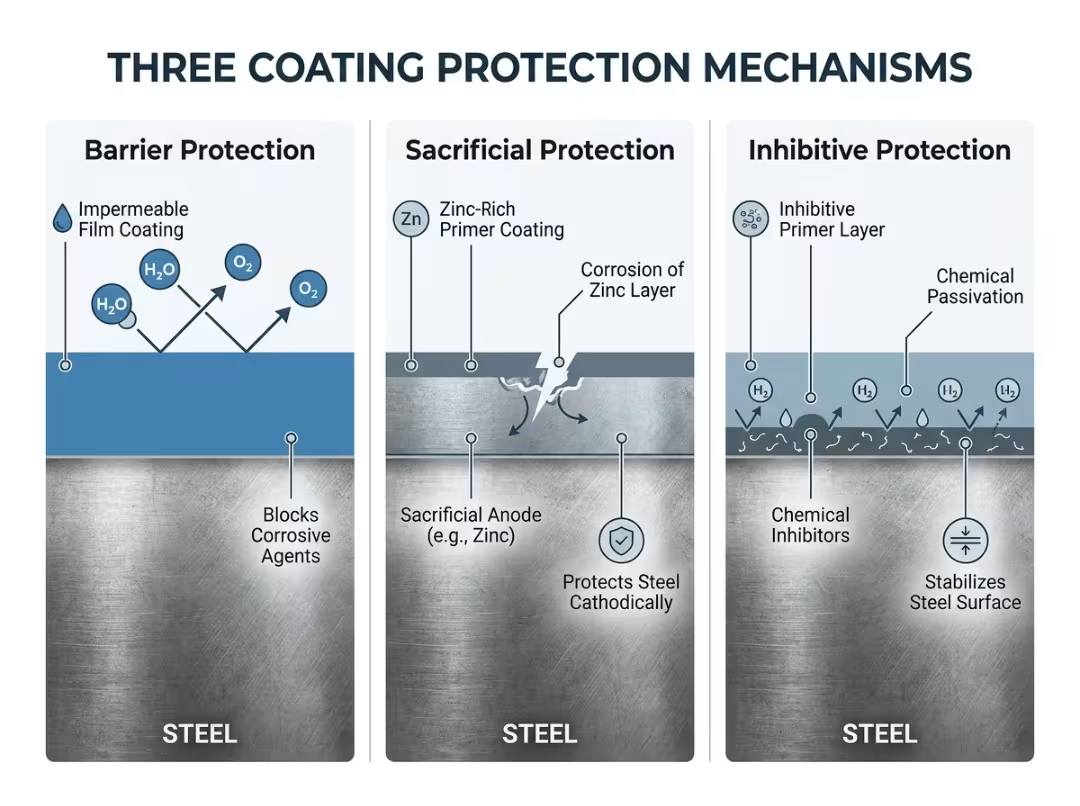
Barrier Protection
A barrier coating physically blocks water, oxygen, and chloride ions from reaching the metal. Think of it as a raincoat for steel.
Barrier performance matters most in immersion service, high humidity, and salt-laden air. The controlling variables are film thickness, permeability, and defects. A single pinhole, or “holiday,” becomes an entry point for corrosion beneath the film — and once it’s under the coating, it spreads where you can’t see it.
Barriers fail fastest at edges, corners, and scratches, anywhere the film thins out. That’s why surface geometry and careful application matter as much as the product you chose.
Sacrificial Protection
Here, a more reactive metal — usually zinc — corrodes first and shields the steel beneath it through cathodic action. The zinc gives itself up so the steel doesn’t have to.
Galvanizing and thermal spray are the two common delivery methods. Sacrificial protection earns its keep on cut edges, scratches, and marine exposure, where a barrier film alone would fail quickly. The trade-off is straightforward: sacrificial coatings self-heal minor damage but deplete over time. They’re powerful, not permanent.
Inhibitive Protection
Chemical inhibitors built into a primer passivate the steel surface and slow the corrosion reaction. Zinc phosphate is a common modern chemistry reagent; older chromate systems perform well but pose serious environmental and health concerns, which is why they’re being phased out.
Inhibitors work best as the bottom layer of a multi-coat system, not as a standalone fix. Their real value shows up at the point of damage — a scratch that reaches bare steel is far less dangerous when the primer beneath carries an inhibitor.
Most durable systems combine these mechanisms. Galvanized steel with a paint topcoat, for instance, provides sacrificial and barrier protection simultaneously.
The Main Families of Coatings
The product landscape sorts into three families, and many strong systems blend more than one.
Metallic Coatings
- Hot-dip galvanizing. Steel is dipped in molten zinc, forming a thick, durable layer with both barrier and sacrificial protection. It’s the standard for structural steel, guardrails, and utility poles. Ready-to-use galvanized steel is where most outdoor structural projects begin.
- Electroplating. A thin, precise metal layer for fasteners, automotive parts, and electronics. Excellent for tight tolerances, but weak where you need heavy coverage or wear resistance.
- Thermal spray (metalizing). Molten zinc or aluminum sprayed onto large structures like bridges and offshore platforms. It handles thick builds and field application better than hot-dip.
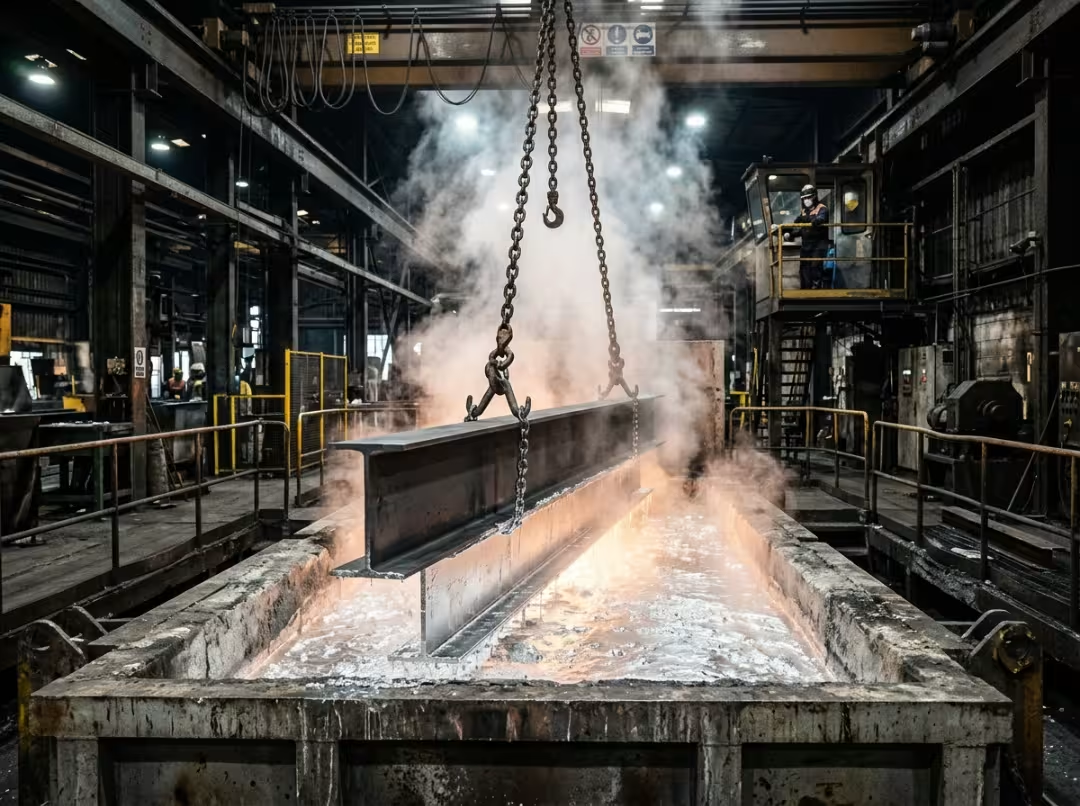
Weigh each on upfront cost, turnaround, appearance, and repairability. Hot-dip is economical at scale; thermal spray wins when a part is simply too big to dip.
Organic Coatings
- Liquid paints. The industry workhorse. A primer builds adhesion and corrosion control, intermediate coats add thickness, and the topcoat handles weather and chemicals.
- Powder coating. Dry powder is applied and oven-cured into a hard, uniform finish. Common on appliances, consumer goods, and industrial equipment.
Resin choice drives performance. Epoxies resist chemicals and moisture but chalk in sunlight. Polyurethanes hold color and gloss outdoors. A glossy topcoat looks great, but it still needs the right primer beneath it — appearance and protection are separate jobs. For finished panels, factory-applied prepainted steel gives a far more consistent organic coating than anything painted in the field.
Conversion Coatings
- Anodizing. An electrochemical process that grows a thick oxide layer on aluminum. It transforms the surface itself rather than adding a separate film.
- Phosphating and chromate conversion. Thin chemical layers that improve paint adhesion and add modest corrosion resistance.
Conversion coatings sometimes serve as the final finish, but more often they’re the base that helps a paint system grip.
How to Choose the Right Coating System
Treat selection as a sequence of questions. Answer them in order, and the right system narrows itself.
Match the Coating to the Environment
ISO 12944 grades atmospheric exposure from C1 (dry indoor) to C5 (severe marine or industrial), with additional classes for immersion. Start by pinning your environment to a class.
Then factor in temperature extremes, chemical contact, and abrasion. A coating built for a chemical plant may crumble on a beach. And separate continuous immersion from occasional wetness — immersion demands a far tougher barrier film.
Account for the Substrate
Steel, aluminum, galvanized surfaces, and weathered old paint each need a different prep and primer strategy. Surface cleanliness and profile — the roughness that gives a coating something to grip — matter more than most people expect. Standards like SSPC and ISO 8501 define what good preparation looks like.
Never coat over rust, mill scale, or soluble salts. Any one of them will destroy adhesion and cause early failure, no matter how good the paint is.
Compare Lifecycle Cost, Not Upfront Price
Run the numbers over 20 years, including material, labor, and shutdown time. A cheap coating that needs recoating every five years usually loses out to a pricier system that lasts twenty years.
The reason is labor. For tanks, towers, and hard-to-reach structures, access and labor costs dwarf the cost of paint itself. You’re not really buying paint — you’re buying the years between repaints.
Check Standards and Test Data
Look for ASTM and ISO methods covering salt spray, adhesion, and weatherability. Learn to read a technical data sheet, and ask for third-party test reports rather than marketing claims. Better still, request field performance data from an environment similar to yours.
Surface Prep and Application: Where Projects Win or Lose
Most coating failures are prep failures, not product failures. A premium coating over a dirty surface fails faster than a budget coating over a clean one. This is the section that separates a 20-year system from a 2-year one.
Surface Preparation
The prep sequence runs: degrease, remove rust and mill scale, then abrasive blast to the right profile. Standards like near-white blast and commercial blast map to service severity — harsher environments demand cleaner surfaces.
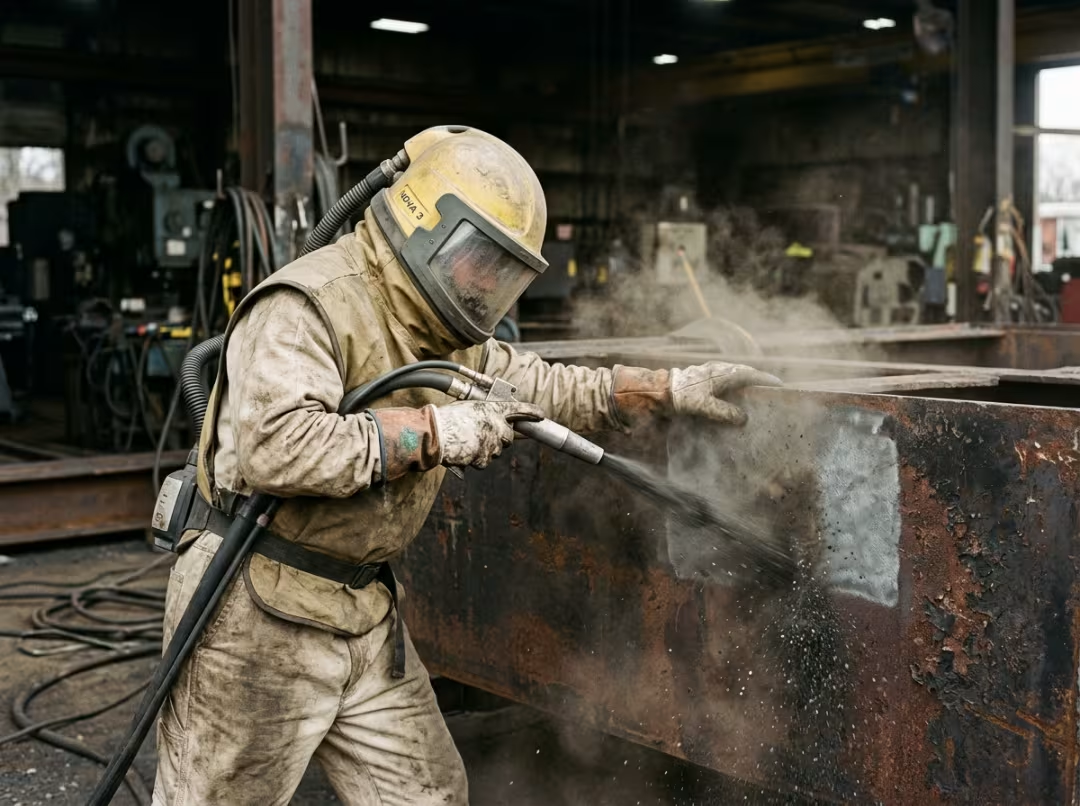
Watch soluble salts closely. They hide in the surface profile, draw moisture through the coating, and start blistering from underneath, where you won’t see the damage until it’s too late.
Application Methods
Spray, brush, roller, dip, and powder each suit different shapes and sizes. Whatever the method, hit your film-thickness targets and take wet-film measurements as you go — guessing at thickness is guessing at service life.
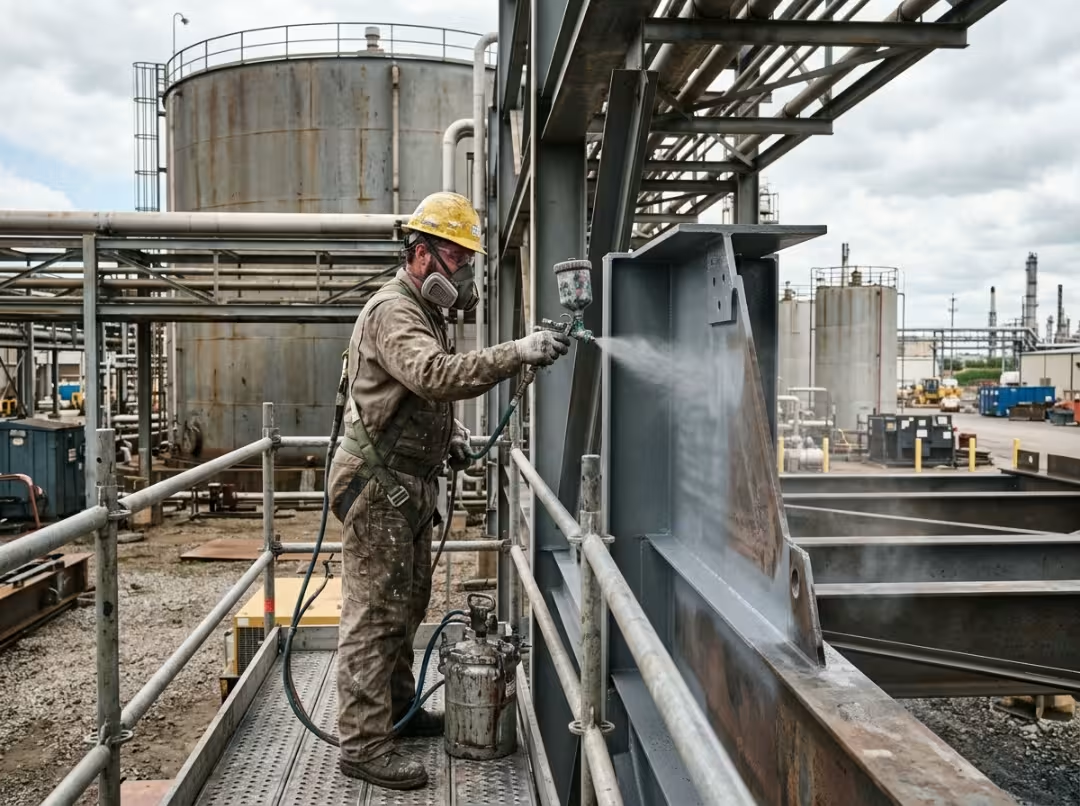
Respect curing conditions. Temperature, humidity, and recoat windows aren’t suggestions; miss them and the layers won’t bond. Watch for runs, sags, pinholes, and thin edges, and correct them before the next coat traps them in.
Inspection and Maintenance
Quality checks aren’t optional. Use dry film thickness gauges, holiday detection on tank linings, and adhesion pull-off tests. Catching a missed spot during application costs pennies; catching it after five years of service costs a shutdown.
Then maintain on a schedule. Plan touch-ups and recoats so the system lasts as long as the structure it protects. This discipline is what keeps building and construction assets in service for decades rather than failing early.
New Developments Worth Watching
Some of this is proven. Some is hype with a healthy marketing budget. Here’s an honest read.
Smart and self-healing coatings. Microcapsule and shape-memory technologies can repair small scratches and cracks on their own, and some sensor-equipped coatings report corrosion activity before visible damage appears. Several are commercially available — but they remain expensive, and independent field data is thin. Treat them as promising, not proven.
Nanotechnology and advanced additives. Nanoparticle fillers improve barrier performance by forcing water and oxygen to travel a longer path to the metal. Graphene and other emerging materials show strong lab results, but long-term outdoor data is sparse. Run a trial in your own environment before betting a whole project on one.
Greener formulations. The shift to waterborne and high-solids paints reduces VOC emissions, and regulation continues to accelerate it. Compliance no longer means sacrificing performance — but it does mean checking updated specs, since older favorite products keep getting reformulated or discontinued.
Frequently Asked Questions
How long should a protective metal coating last?
It depends on the system and environment. A quality system matched to its exposure class can run 15–25 years or more before major recoating, while a mismatched or poorly applied one may fail in two to five.
Can I coat directly over old paint that’s still intact?
Sometimes, if the old coating is well-adhered, clean, and compatible with the new product. Test adhesion first and confirm compatibility. When in doubt, strip to a sound surface — an overcoat is only as good as what’s beneath it.
Is hot-dip galvanizing better than powder coating for outdoor steel?
They solve different problems. Galvanizing provides sacrificial protection that survives scratches; powder gives a tough, attractive barrier finish. The strongest outdoor systems often combine both — galvanize first, then powder coat over it.
How do I know when a coating has failed?
Watch for rust bleed, blistering, cracking, chalking, or peeling. Blistering and rust spreading under the film mean water has reached the steel — that’s failure, not cosmetic wear, and it needs attention soon.
Do corrosion-inhibiting primers work without a topcoat?
Not well on their own. Inhibitive primers are designed as the bottom layer of a system. Without a topcoat for barrier protection, they degrade quickly, especially outdoors.
What’s the difference between cathodic protection and a barrier coating?
A barrier coating blocks the environment from the metal. Cathodic protection makes the metal the cathode, so it can’t corrode, typically using a sacrificial metal like zinc. Many systems use both together.
How much does surface prep really affect the result?
Enormously. Industry experience consistently ties the majority of premature failures to poor preparation. Prep is the single biggest lever on how long a coating lasts.
The Bottom Line
Protecting metal comes down to a clear decision path. Define the exposure environment first. Assess the substrate honestly. Choose a coating family and film thickness that match the service life you actually need. Then never skip surface prep or inspection — that’s where good specs go to die.
Your next step is concrete. Audit your current metal assets, document the actual exposure conditions each one faces, and pull up the relevant ISO 12944 class or ASTM standard before you call a single supplier.
A properly specified and maintained coating is the cheapest insurance a metal structure can carry. Most corrosion failures are preventable — with the right system and the discipline to apply it well.
