




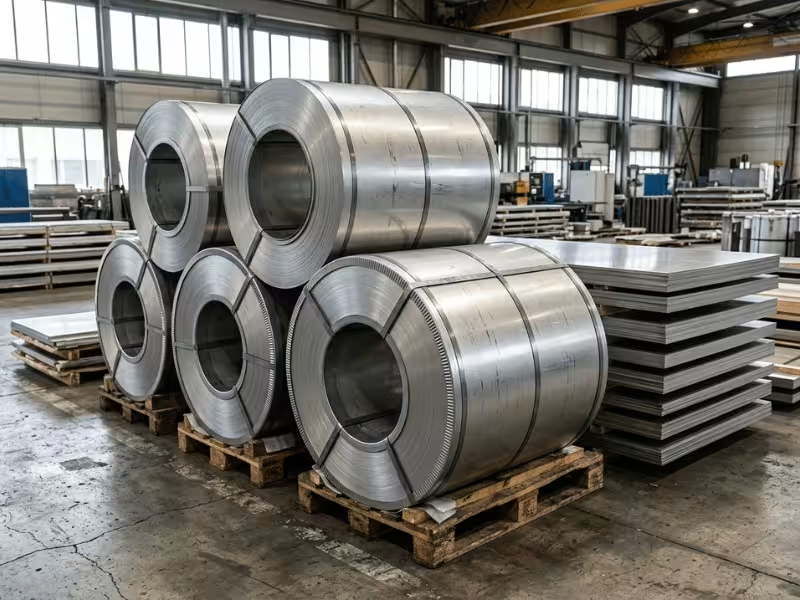
Many buyers think stainless steel never rusts. That idea causes trouble. Stainless steel resists corrosion, but it doesn’t resist every environment the same way.
I often see people compare 304, 316, 430, and 2205 as if they were small variations of one material. They are not. Each grade handles moisture, salt, cleaning chemicals, and wear differently.
The real problem is rarely whether stainless steel works on day one. Most grades work at first. The better question is how long it stays clean, strong, and low-maintenance after months or years of use.
This guide focuses on what matters most in real projects. It covers common grades, key type differences, main use cases, and a simple way to choose the right stainless steel without overspending or buying the wrong grade.
What Stainless Steel Is — and Why Grade Matters
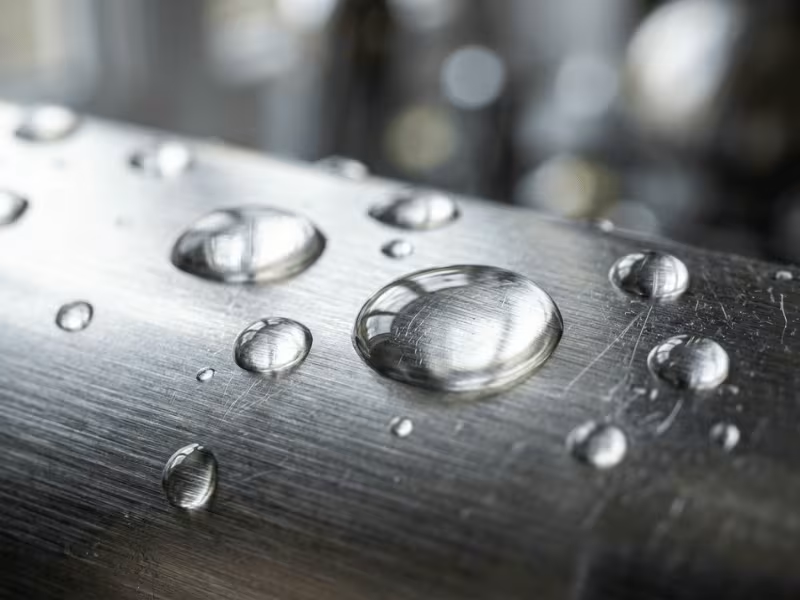
Let’s clear up the basics fast. Stainless steel is an iron-based alloy with at least 10.5% chromium. That chromium is the whole point. It reacts with oxygen and forms a thin, invisible surface layer called the passive layer.
Think of that layer as self-healing armor. Scratch it, and it rebuilds itself as long as oxygen is around. That’s what keeps ordinary rust from taking hold.
But here’s what trips people up. “Stainless” means it stains less, not that it’s stain-proof. It is not rust-proof either. Push it into the wrong environment, and it will pit, streak, and corrode like anything else.
Chromium is only the start. Add nickel, and you get better formability and a tougher passive layer. Add molybdenum, and the steel shrugs off salt and chlorides far better. Add nitrogen, and strength goes up. Each element shifts how the metal behaves in the real world.
So the big idea is simple. Stainless steel is not one material. It’s a whole family, and the members act very differently.
That’s why asking “is it stainless steel?” barely helps you. The question that matters is, “Which grade is it, and does that grade suit my environment?” Get that right, and you save yourself years of headaches. Get it wrong, and you’ll replace parts sooner than you’d like.
The Stainless Steel Grades Most People Actually Compare
You don’t need to memorize the whole periodic table to buy the right steel. In practice, most decisions come down to five grades. Learn these, and you’ll handle the vast majority of real projects.
304: The Everyday Workhorse
Ask for stainless steel and you’ll probably get 304. It’s the most common grade for a reason.
It forms and welds easily. It resists corrosion well in normal conditions. And it’s food-safe, which makes it the default for sinks, kitchen equipment, and food tanks.
I reach for 304 in most indoor jobs and mild outdoor spots. But it has a weak point: chlorides. Put 304 near saltwater, salty air, or heavy pool chemicals, and you’ll see brown pitting sooner than you’d like.
316: The Salt Fighter
316 looks almost identical to 304. The difference hides in the chemistry. It adds molybdenum, usually 2% to 3%.
That small addition changes everything near salt. Molybdenum helps the steel shrug off chlorides, so 316 holds up far better on coasts, on boats, and in places with harsh chemical cleaning.
Yes, it costs more, often 20% to 30% over 304. But I’ve watched too many people save a little upfront on 304, then rip it all out after it rusted. In a salty spot, 316 usually pays for itself.
430: The Budget Pick
430 is a different animal. It skips the nickel, which drops the price.
You’ll spot it in appliance panels, decorative trim, and some low-cost kitchen items. It looks the part and costs less. It’s also popular as a base for finished surfaces like color coated stainless steel, where looks matter more than heavy corrosion resistance.
The trade-off is durability. 430 handles less than 304, so I keep it indoors and dry. It’s magnetic too, which people sometimes mistake for a sign of “fake” stainless. It isn’t. It’s just a different family.
410 and 420: When Hardness Matters
Sometimes you don’t want corrosion resistance first. You want an edge that stays sharp or a part that survives wear.
That’s where 410 and 420 come in. You can harden them with heat treatment, so they turn strong and stiff. Knife makers love 420. Valve parts, pump shafts, and tools often use 410.
The catch: they trade corrosion resistance for that hardness. They won’t match 304 or 316 in a wet or salty setting. Keep them dry, keep them oiled, and they’ll serve you well.
2205 Duplex: The Heavy Hitter
2205 is a duplex grade, meaning it blends two structures for the best of both. You get high strength plus strong chloride resistance in one steel.
This is the grade I recommend for tough industrial work: chemical processing, offshore rigs, desalination plants. It handles pressure and salt that would eat 316 alive.
It’s not a consumer choice, though. It costs more, and it needs careful welding. For a home railing, it’s overkill. For a punishing marine plant, it’s often the smart call.
Quick Comparison
Here’s how these five stack up side by side.
|
Grade |
Main advantage |
Main limitation |
Common uses |
Should you use it outdoors? |
|---|---|---|---|---|
|
304 |
Great all-round value, easy to work with |
Pits near salt and chlorides |
Kitchens, sinks, food tanks, indoor fittings |
Yes, inland and mild spots — not near salt |
|
316 |
Strong chloride and salt resistance |
Costs more than 304 |
Coastal railings, marine gear, food processing |
Yes, including coastal and salty areas |
|
430 |
Low cost, clean look |
Weaker corrosion resistance, magnetic |
Appliance panels, decorative trim |
No, keep it indoors and dry |
|
410 / 420 |
Hardens for edges and wear parts |
Poor corrosion resistance |
Knives, valves, pump shafts, tools |
Only if dry and maintained |
|
2205 |
High strength plus salt resistance |
Expensive, needs careful welding |
Chemical plants, offshore, desalination |
Yes, built for harsh outdoor service |
Match the grade to your environment first, and these five will cover nearly everything you meet.
Stainless Steel Types in Simple Terms
Those grade numbers aren’t random. Each one belongs to a family, and the family tells you how the steel behaves before you ever check the spec sheet. Learn these five groups, and the numbers start to make sense.
Austenitic is the biggest family, and it’s where 304 and 316 live. These grades give you the best all-round corrosion resistance and form easily. They’re usually non-magnetic too. If you’ve worked with stainless before, you’ve almost certainly handled this type.
Ferritic grades cost less because they cut the nickel. They’re magnetic, and you’ll find them in appliance panels, trim, and car exhaust systems. Corrosion resistance is decent, not great, so I keep them in milder settings.
Martensitic is your family when you need hardness. These grades harden with heat treatment, which makes them strong and wear-resistant. Knife blades, valve parts, and tools rely on them. The trade-off is weaker corrosion resistance, so keep them dry.
Duplex blends the austenitic and ferritic structures into one. You get high strength plus strong resistance to salt and chlorides. This family shines in harsh industrial and marine jobs where lesser grades fail early.
Precipitation-hardening (PH) grades reach very high strength through a special aging process. Aerospace parts and high-load fasteners lean on them. They cost more and need careful processing, so you’ll rarely meet them outside demanding industrial work.
Here’s how the five families line up.
|
Type |
Corrosion resistance |
Strength |
Magnetic? |
Common examples |
|---|---|---|---|---|
|
Austenitic |
Excellent |
Moderate |
No (usually) |
304, 316 |
|
Ferritic |
Moderate |
Moderate |
Yes |
430, 409 |
|
Martensitic |
Lower |
High |
Yes |
410, 420 |
|
Duplex |
Very high |
Very high |
Yes |
2205, 2507 |
|
Precipitation-Hardening |
Good |
Very high |
Yes |
17-4 PH, 15-5 PH |
Once you know which family a grade sits in, picking the right one for your job gets much easier.
304 vs 316 Stainless Steel: The Difference That Matters Most
If there’s one comparison worth slowing down for, it’s this one. 304 and 316 sit side by side on most shelves, look nearly identical, and confuse buyers constantly. But the gap between them decides whether your part lasts for years or streaks with rust in a single season.
The Core Difference: Molybdenum
The two grades share a similar backbone. Both are austenitic, both resist corrosion well, both weld and form easily.
The split comes down to one element: molybdenum. 316 adds 2% to 3% of it. 304 typically has none.
That small change punches way above its weight. Molybdenum shields the passive layer from chlorides, the very thing that eats ordinary stainless. So while 304 and 316 behave almost the same in a dry kitchen, they part ways fast the moment salt enters the picture.
Where Each One Wins
304 is not the weaker grade. It’s the right grade for a huge range of jobs. Use it indoors, in fresh water, in food prep, and in mild outdoor spots away from the coast. It handles all of that beautifully and costs less doing it.
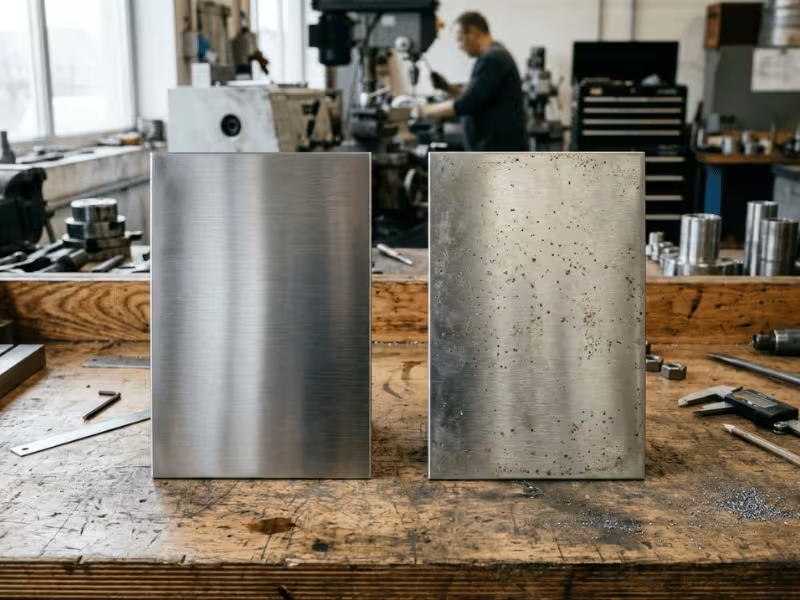
316 earns its keep where things get harsh. Sea air, saltwater spray, pool chemicals, and aggressive sanitizing washes all attack 304 over time. Molybdenum lets 316 hold the line where 304 starts to pit.
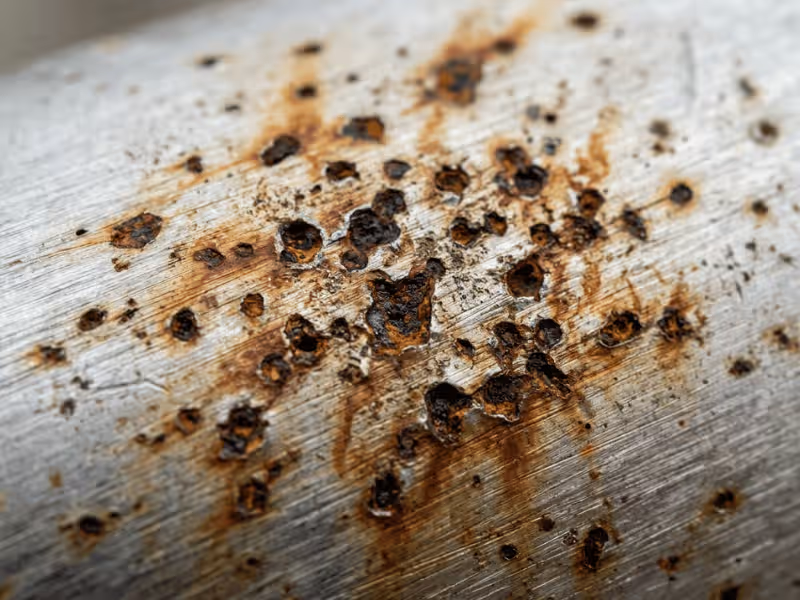
Watch for early pitting as the warning sign. If you spot tiny brown spots on 304 near salt or disinfectants, the grade is already failing you. That’s not a cleaning problem. That’s the wrong steel for the environment.
The Simple Rule
Keep this in your head and you’ll rarely go wrong: for inland, dry, and general-purpose use, 304 is often enough. For coastal exposure, saltwater, chlorides, or harsher cleaning conditions, 316 is usually the safer choice.
Yes, 316 costs more, often 20% to 30% above 304. But I’ve seen too many people save that margin upfront, then pay far more tearing out corroded 304 and installing 316 anyway. In a salty setting, the upgrade almost always wins on total cost.
|
304 |
316 |
|
|---|---|---|
|
Corrosion resistance |
Excellent in normal conditions |
Excellent, with an extra edge |
|
Chloride resistance |
Limited — pits near salt |
Strong, thanks to molybdenum |
|
Cost |
Lower |
20–30% higher |
|
Common applications |
Sinks, kitchens, indoor fittings, food tanks |
Coastal railings, marine gear, food processing, medical |
|
Best choice for |
Indoor and mild, inland outdoor use |
Salt, sea air, chlorides, harsh cleaning |
Read your environment first, weigh the true lifetime cost second, and the choice between these two usually makes itself.
Can Stainless Steel Rust? What Actually Causes Failure
Yes. Stainless steel can rust. Anyone who tells you otherwise is selling you a fantasy.
I’ve pulled corroded stainless off boats, railings, and food equipment more times than I can count. The metal is tough, not invincible. Once you understand why it fails, you can stop most of that failure before it starts.
What Actually Causes the Rust
The passive layer is your protection. Damage it or overwhelm it, and rust follows. A few culprits show up again and again.
Chlorides. Salt is the number one enemy. Sea air, road salt, pool chemicals, and harsh cleaners all attack the passive layer. This is why 304 pits near the coast and 316 holds up better.
Trapped moisture. Stainless needs oxygen to rebuild its passive layer. Seal water into a tight gap or under a gasket, and that repair can’t happen. Rust starts in the dark, damp spots you never see.
Poor surface finish. Rough, scratched surfaces trap dirt, salt, and water. A smooth, clean finish sheds contaminants and stays protected far longer.
Contamination from carbon steel. This one catches people off guard. Grind stainless with a wheel you used on mild steel, or scrub it with steel wool, and you press tiny iron particles into the surface. Those particles rust and stain your good steel. Keep separate tools for stainless. Always.
Wrong grade. Sometimes the steel was doomed on day one. Put 430 outdoors or 304 by the ocean, and no amount of care saves it. The grade simply doesn’t match the job.
Why Pitting Beats Uniform Rust to the Punch
Most people picture rust as an even brown coating. With stainless, that’s not the real danger.
The threats are pitting and crevice corrosion. Both drill down into the metal at tiny points instead of spreading across the surface.
That’s what makes them nasty. A pit can eat straight through a wall while the rest of the part still looks fine. You lose strength long before you see a problem. By the time it’s obvious, the damage runs deep.
So here’s the mindset that saves parts: stainless steel resists rust, but it does not manage itself. Rinse off salt. Clean the surface. Check tight joints where water hides. Give the metal oxygen and a clean face, and it keeps its armor.
How to Choose the Right Stainless Steel for Your Application
Picking a grade doesn’t have to feel like guesswork. Work through it in the right order, and the answer usually falls out on its own. I follow the same three questions on every job: where will it live, how will it be made, and how long does it need to last?
Start With the Environment
The environment decides more than any other factor. Before you compare prices or finishes, look hard at where the part will actually sit.
- Indoor or outdoor? Outdoor parts face rain, sun, and dirt that indoor parts never see.
- Fresh water or saltwater? Salt is the fastest way to ruin the wrong grade. Sea air counts too.
- Any acids, chlorides, or cleaning chemicals? Pool chemicals, disinfectants, and industrial washes all attack the passive layer.
- Dry, wet, or cyclical? Parts that go wet and dry over and over take the hardest beating. Trapped moisture is worse than a steady soak.
- What’s the temperature range? High heat and deep cold both change how the steel holds up.
Nail down these answers first. A grade that suits a dry kitchen will fail fast on a coastal railing, no matter how much you spend on it.
Then Consider How It’s Made
Once you know the environment, think about fabrication. The way a part gets built can rule some grades in and others out.
Welding pushes you toward low-carbon grades like 304L or 316L. Regular grades can weaken at the weld zone and rust there first. Deep drawing, like forming a sink from one sheet, favors austenitic grades such as 304 that stretch without cracking.
Need a sharp edge or a part that resists wear? That calls for a martensitic grade you can harden with heat. And if the surface has to look sharp, plan the finish early. A polished face costs more but sheds dirt and resists corrosion better.
Then Weigh Service Life and Maintenance
Here’s where buyers trip up most. The cheapest grade on the quote is rarely the cheapest grade over ten years.
Weigh the upfront material cost against the full lifecycle cost. A part that fails early drags a lot of hidden bills with it:
- Downtime while you shut the line or the space to swap it out.
- Replacement labor, which often costs more than the metal itself.
- Cleaning frequency, since some grades need more upkeep in harsh spots.
- Failure consequences, especially where safety or contamination is on the line.
I’ve watched people save a small margin on 304, then pay several times over ripping it out and installing 316. Spend the extra upfront when the environment is tough. It usually wins.
A Simple Selection Path
Put the three questions together, and a clear path shows up:
- General indoor use → 304 is often enough.
- Decorative indoor parts or lower-cost appliances → 430 may work, if it stays dry.
- Salt, marine air, or chlorides → step up to 316 or higher.
- High strength plus corrosion resistance → look at duplex like 2205.
- Hardness, blades, or wear parts → choose a martensitic grade you can harden.
Here’s the same logic laid out against common jobs, plus the thing I’d check before ordering.
|
Scenario |
Main risk |
Usually suitable grade |
What to double-check |
|---|---|---|---|
|
Indoor fittings, sinks, food prep |
Mild moisture, cleaning agents |
304 |
Whether cleaners contain chlorides |
|
Decorative panels, budget appliances |
Weak corrosion resistance |
430 |
Keep it dry and indoors |
|
Coastal railings, marine hardware |
Salt and chloride pitting |
316 |
Rinse routine and drainage |
|
Chemical plants, offshore, pressure jobs |
Strong chlorides plus load |
Duplex (2205) |
Welding controls and spec match |
|
Knives, valves, pump shafts, tools |
Wear and edge loss |
Martensitic (410, 420) |
Heat treatment and dry storage |
Run through the environment, the build method, and the lifecycle before you commit. Do that, and you’ll pick a grade that lasts instead of one you replace.
Common Uses of Stainless Steel by Scenario
Grades come alive once you see where they actually work. Here’s how the right steel plays out across five jobs I run into all the time.
Food Equipment and Commercial Kitchens
Kitchens run on stainless because it wipes clean and won’t taint the food. That’s why sinks, prep tables, and mixing tanks lean on 304.
The mistake I see most is using 304 everywhere, even where salt and acid sit for hours. Brine tanks, pickling gear, and heavy sanitizer washes call for 316. Watch your cleaning chemicals. If they carry chlorides, step up the grade before the pitting starts. The same care applies to hygienic environments like clean room panels, where surface finish and grade both matter.
Outdoor Railings and Architectural Trim
Railings and trim need strength that still looks sharp for years. 304 handles most inland jobs, and it holds a clean finish without much fuss.
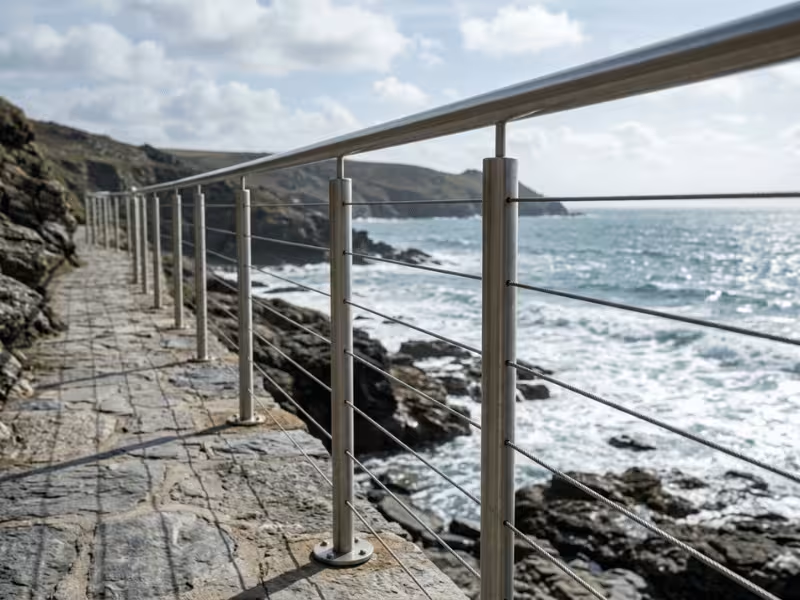
People forget that “outdoor” isn’t one condition. A railing three blocks from the sea faces salt air that eats 304. Check your distance from the coast, and check that water drains off the part instead of pooling in the joints.
Marine and Coastal Installations
Salt is brutal, so this is where cheaper grades die fast. Boat fittings, dock hardware, and coastal railings need 316 at minimum.
The classic error is trusting 304 near saltwater. It rusts within a season. For constant spray or submerged parts, even 316 struggles, so look at duplex like 2205. And rinse the metal often. Salt left on the surface keeps attacking long after the tide goes out.
Appliances and Decorative Panels
Here the job is looks and cost, not harsh corrosion. Fridge doors, oven fronts, and trim panels often use 430 because it’s cheaper and stays indoors. This is also where finished sheet products shine, such as steel for decorative wall panels, where appearance drives the choice.
Buyers panic when a magnet sticks to 430 and assume it’s fake. It isn’t. It’s just a different family. The real thing to watch: keep 430 dry. Put it in a steamy or splashy spot, and it’ll spot and streak.
Knives, Tools, and Wear Parts
Blades and tools need hardness, not corrosion resistance first. Martensitic grades like 420 and 410 harden with heat, so they hold an edge and shrug off wear.
Don’t expect these to fight rust like 304. They won’t. Keep them dry, wipe them down, and add a light oil on cutting edges. Treated right, they last for years.
Buying Stainless Steel Without Getting the Wrong Grade
Plenty of guides tell you what stainless steel is. Very few tell you how to keep from getting burned when you buy it. This is where projects quietly go wrong, and where a little caution saves you real money.
I’ve seen material arrive stamped as 316 that turned out to be 304, or worse. The paperwork looked fine. The steel didn’t. Here’s how to catch problems before your money leaves.
Always Ask for the Mill Test Report
The Mill Test Report, or MTR, is your proof. It lists the chemistry, the mechanical properties, and the heat number that ties the material to a specific batch.
Don’t just file it away. Match the heat number on the MTR to the marking stamped on the actual steel. If those two don’t line up, stop. Either the paperwork belongs to a different batch, or someone swapped the material. No match, no acceptance.
Don’t Trust the Magnet Test Alone
A magnet is handy, but it lies more often than people think. Yes, 304 and 316 are usually non-magnetic while 430 is magnetic. But cold working can make 304 grab a magnet, and that fools plenty of buyers.
A magnet tells you the family, at best. It never tells you 304 from 316, and that’s the difference that matters near salt. Use it as a rough gut check, never as your final answer.
Confirm Finish, Dimensions, and Form Before You Order
Get the details in writing first. Finish, thickness, tolerance, length, and form all change what shows up on your dock.
A 2B finish and a No. 4 finish look and perform differently. Gauge numbers aren’t inches, so convert before you order. Confirm edge condition and flatness too. Sorting this out afterward means restocking fees or scrap.
Treat Suspiciously Low Pricing as a Warning
If one quote sits far below the rest, ask why. Stainless has a real material cost driven by nickel and molybdenum. Nobody sells 316 at a 304 price out of kindness.
A price that seems too good usually means grade substitution, an off-spec batch, or a mill that cuts corners. Cheap steel that fails early costs far more than the upgrade you skipped.
Use PMI or XRF for Critical Jobs
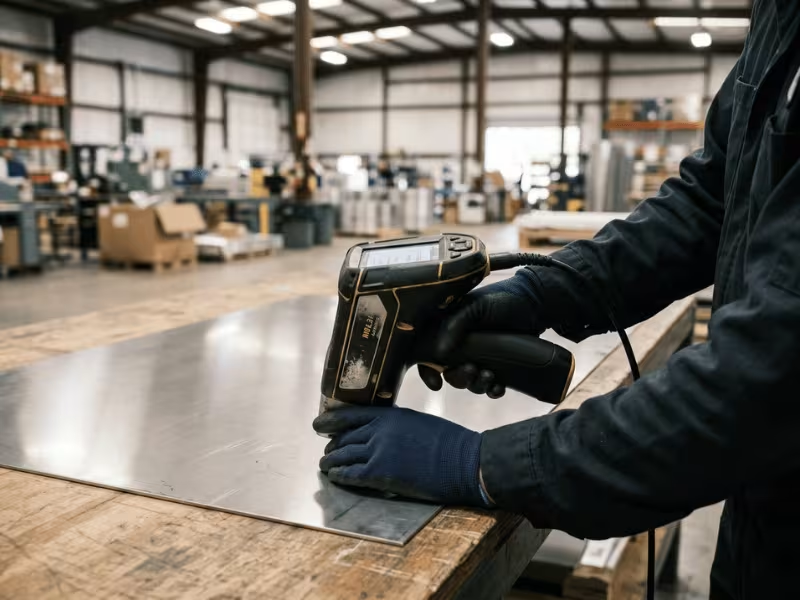
When failure isn’t an option, verify the metal yourself. Positive Material Identification (PMI), usually done with a handheld XRF gun, reads the actual chemistry in seconds. For pressure equipment, marine hardware, or anything safety-related, insist on it.
|
What to check |
Why it matters |
What can go wrong if ignored |
|---|---|---|
|
MTR and heat number |
Proves chemistry and ties steel to its batch |
You accept the wrong or unverified grade |
|
Actual grade (not just magnet) |
Magnets can’t tell 304 from 316 |
Early pitting and premature failure |
|
Finish, dimensions, tolerance, form |
Controls fit, look, and performance |
Rework, scrap, and restocking fees |
|
Pricing vs. market |
Low prices signal substitution |
You pay for 316, receive 304 |
|
PMI/XRF on critical orders |
Confirms real chemistry on site |
Safety failures and costly replacements |
Verify the metal before it goes into your project, not after it fails.
Common Stainless Steel Terms Buyers Should Know
Spec sheets and quotes throw a lot of shorthand at you. Learn these few terms, and you’ll read them with confidence instead of guessing.
The “L” in 304L and 316L. The L means low carbon. Less carbon means the steel resists sensitization, where the weld zone loses corrosion resistance. If your part gets welded, ask for the L grade. It’s cheap insurance against rust starting right at the seam.
18/8 and 18/10. These numbers show up on cookware and cutlery. The first is the chromium percentage, the second is the nickel. So 18/8 means 18% chromium and 8% nickel, which is basically 304. 18/10 adds a bit more nickel for a slightly better shine and feel. In practice, 18/10 is very close to 304 chemistry.
Finish terms: 2B, BA, No. 4. These describe the surface. 2B is the standard mill finish, smooth with a light sheen, and it covers most jobs. No. 4 is brushed, with fine visible lines, common on appliances and kitchen gear. BA, or bright annealed, gives a reflective, near-mirror look.
“Equivalent” grades. ASTM, EN, JIS, and GB all name grades differently. A chart may call two grades equivalent, but their chemistry tolerances can differ. Don’t treat them as identical. Check the actual composition on the MTR before you commit.
FAQs
What is the difference between 304 and 316 stainless steel?
The short answer is one element: molybdenum. 316 adds 2% to 3% of it, and 304 has none.
That gap only matters when salt shows up. In a dry kitchen, both grades behave almost the same. But near the coast, in pool chemicals, or under harsh sanitizing washes, 304 starts to pit while 316 holds firm. Use 304 for indoor and mild jobs. Reach for 316 when chlorides enter the picture.
Can stainless steel rust?
Yes, it can. “Stainless” means stains less, not stain-proof.
The chromium in the steel forms a thin passive layer that protects it. Overwhelm that layer, and rust follows. Salt is the usual culprit, but trapped moisture, rough surfaces, and contamination from carbon steel tools all cause it too. The sneaky part is pitting: instead of an even brown coating, stainless corrodes in tiny points that drill deep.
Is stainless steel magnetic?
It depends on the family. Austenitic grades like 304 and 316 are usually non-magnetic. Ferritic grades like 430 and martensitic grades like 410 are magnetic.
Here’s where people get tripped up. Cold working can make 304 grab a magnet, even though it’s technically a non-magnetic grade. So a magnet sticking doesn’t mean the steel is fake or low quality. At best, a magnet hints at the family. It never tells you 304 from 316.
What does the “L” mean in 304L or 316L?
The L stands for low carbon. That’s the whole story, and it matters most when you weld.
Regular grades can suffer sensitization at the weld zone. The heat pulls carbon and chromium together, which leaves that area open to rust. Less carbon means less of that problem. So if your part gets welded, ask for 304L or 316L. The cost difference is small, and it’s cheap insurance.
Which stainless steel is best for outdoor use?
It comes down to how far you sit from salt. For inland, dry, or mild outdoor spots, 304 handles the job well and costs less.
Move toward the coast, and the answer changes. Salt air attacks 304 even a few blocks from the sea, so step up to 316. For constant spray or marine hardware, 316 is the baseline, and duplex like 2205 handles the harshest exposure. Skip 430 outdoors entirely.
Is 18/10 stainless steel the same as 304?
They’re very close, but not labeled the same way. The numbers 18/10 describe chemistry: 18% chromium and 10% nickel. You see this on cookware and cutlery.
304 typically runs about 18% chromium and 8% nickel, which lines up with the 18/8 label. 18/10 adds a touch more nickel for a slightly better shine and feel. In practice, it behaves almost identically to 304 for corrosion resistance.
How can I tell if stainless steel is real?
Don’t rely on a magnet alone. It fools people, since cold-worked 304 can turn magnetic.
The real proof is the Mill Test Report, or MTR. It lists the chemistry and a heat number. Match that heat number to the marking stamped on the steel itself. If they don’t line up, walk away. For critical jobs, verify the metal on site with Positive Material Identification, usually a handheld XRF gun.
What is the best stainless steel for saltwater?
For most saltwater jobs, 316 is your baseline. The molybdenum inside it fights chlorides far better than 304, which rusts within a season near the ocean.
But 316 has limits too. For constant spray, submerged parts, or offshore work, look at duplex grades like 2205 or 2507. One habit matters as much as the grade: rinse the metal often. Salt left on the surface keeps attacking long after the tide goes out.
Conclusion
Never pick stainless by the grade name on the label. That number means nothing until you know where the part will live.
Start with the environment every time. Is it wet or dry? Inland or coastal? Any chlorides, acids, or harsh cleaners in the mix? Answer that first, then compare grades against the real exposure.
304 covers most indoor and mild jobs. 316 earns its price near salt and chemicals. 430 works for dry, decorative indoor use. Duplex
