




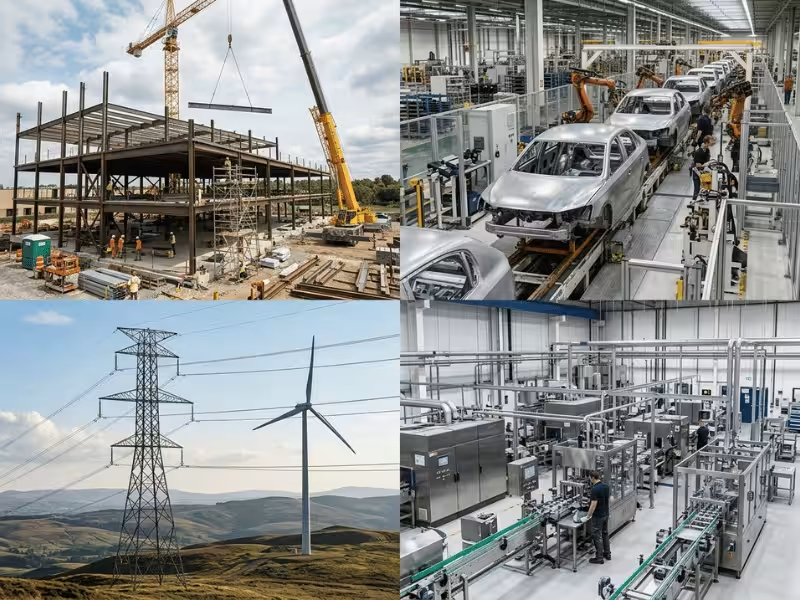
A practical look at where steel is used, why it remains essential, and when it outperforms alternative materials.
Steel shows up in construction, automotive, energy, and manufacturing. These industries use it in different ways, but they choose it for the same core reason: it solves hard engineering problems without pushing costs too high.
You can see steel in building frames, car bodies, pipelines, wind towers, factory machines, and food processing equipment. It carries heavy loads, handles demanding conditions, and fits many production methods.
But a useful article should do more than list examples.
I want to show where steel performs best, why engineers still trust it, and how to judge whether it fits a specific job. That matters more than memorizing a long list of uses.
In many projects, the real question isn’t “Is steel used here?” The better question is “Why is steel the better choice here, and when is it not?”
Let’s start with the reasons steel keeps earning its place.
Why Steel Is Used Across So Many Industries
Different industries reach for steel for the same handful of reasons. Once you know those reasons, every use case in this article makes more sense. Here’s the short framework I use when I explain steel to clients.
Strong and easy on the budget. Steel gives you a lot of strength for what you pay. Few materials match its balance of load capacity and cost. When a project needs to carry weight without draining the budget, steel almost always wins that math.
Simple to shape and join. You can cut, bend, roll, and weld it. Fabricators work with steel every day, so shops are set up for it. That means fewer surprises on the floor and faster turnaround on real jobs.
A grade for nearly every job. Steel isn’t one thing. It comes in mild grades for framing, high-strength grades for cars, stainless for wet or clean environments, and tool steels for wear. You pick the grade that fits the condition, not the other way around.
Recyclable and easy to find. Steel is one of the most recycled materials on the planet, and scrap feeds new production. Supply chains are mature and global, so sourcing rarely holds up a project.
Where steel struggles. Steel is heavy, which hurts in weight-sensitive designs. It rusts without a coating or the right alloy. And it carries a real carbon footprint, though cleaner steelmaking is closing that gap.
Keep these five points in mind. Every industry ahead trades on some mix of them, and the smart choices come from knowing which ones matter most for the job at hand.
Construction: Where Steel Delivers the Most Value
Construction is where steel earns its reputation. No other industry puts it to work in so many forms, from the hidden bars inside a concrete column to the exposed frame of a stadium. Here’s where it pulls the most weight, and what I tell clients to watch for on each front.
Frames that go tall, span wide, and go up fast
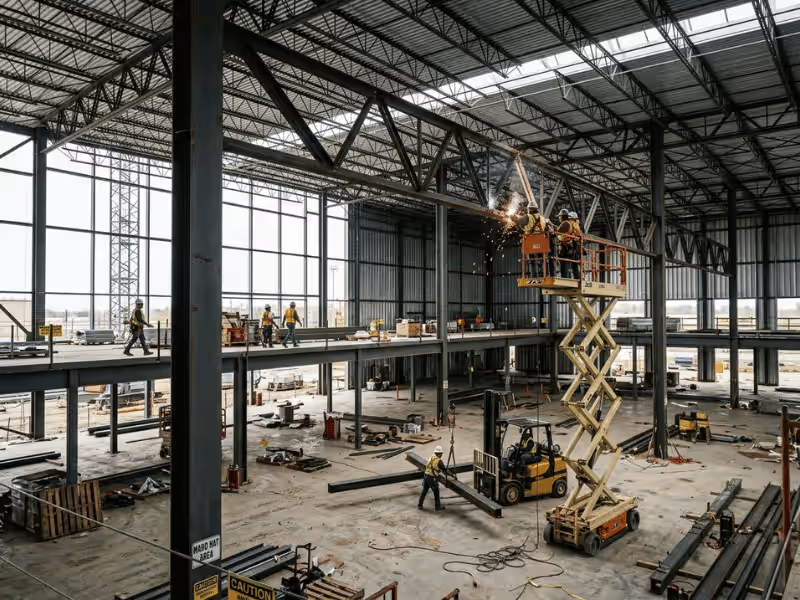
When a building needs height or a clear open floor, steel is usually the answer. I-beams, wide-flange columns, hollow structural sections (HSS), and trusses carry heavy loads while staying slim.
That slimness buys you space. A steel frame lets you span 40 or 60 feet between columns, so warehouses, gyms, and offices get open floors that concrete alone can’t match at the same weight.
Speed is the other big win. Steel arrives cut and drilled to size, and crews bolt it together in almost any weather. A frame that takes weeks in concrete can go up in days. That schedule advantage often decides the whole project.
One tip from the field: don’t just chase the highest strength grade. A common structural grade like A992 handles most framing at a good price. Save the premium grades for where the numbers actually demand them.
Rebar and mesh: the tension steel concrete can’t live without
Concrete is strong under compression but weak in tension. It cracks and fails the moment you pull or bend it. Steel fixes that.
Rebar and welded wire mesh sit inside slabs, columns, footings, and beams to carry the tensile loads concrete can’t. Post-tensioning strands take it further, letting engineers pour thinner slabs and longer spans. Nearly every bridge, road, tunnel, and water structure relies on this pairing.
It lasts because of a quiet chemistry trick. Fresh concrete is highly alkaline, and that environment forms a passive film on the rebar that stops rust. Protect that film, and the steel can last 75 years or more.
The trouble starts when chlorides break through. On coastal builds and highways treated with de-icing salt, salt reaches the bar, the passive layer fails, and rust expands and cracks the concrete from inside.
That’s where plain black rebar isn’t enough. For those jobs, I push clients toward epoxy-coated or galvanized bar, and on high-exposure marine work, stainless rebar. It costs more up front, but it saves you from tearing out a deck 15 years early.
Roofing, cladding, and surviving harsh sites
The building envelope takes the most abuse from weather, so coatings matter most here.
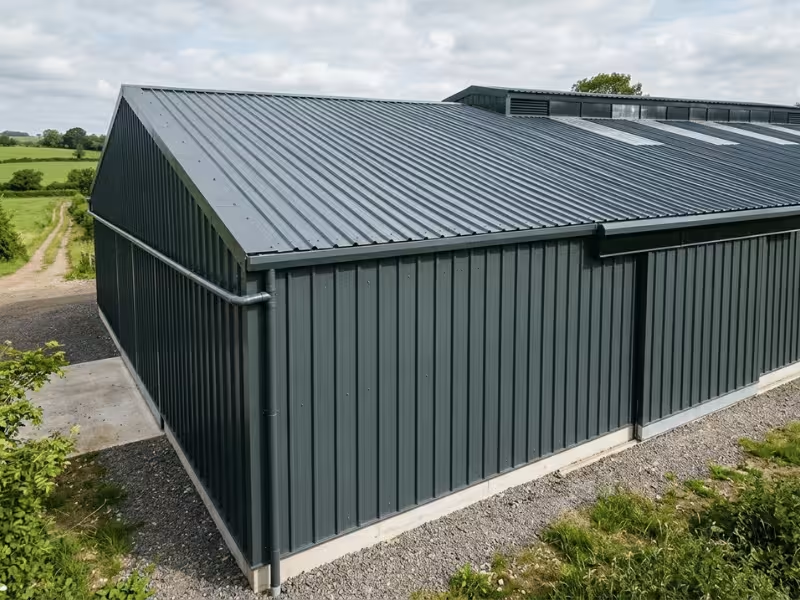
Galvanized and Galvalume sheet steel handle roofing and wall panels on industrial, agricultural, and commercial buildings. Many of these panels start as color-coated coil, and a good prepainted steel for roofing sheets combines the base metal’s strength with a paint layer that fights weather and fading. The zinc or zinc-aluminum coating underneath provides structural protection. It shields the steel and, better yet, sacrifices itself first at scratches and cut edges, so small damage doesn’t spread into rust.
Match the coating to the environment:
- Galvanized (G90) works for most standard roofing and framing.
- Galvalume holds up longer against general weathering and heat.
- Aluminized steel shines in high-heat spots like flues and HVAC parts.
Inside the walls, metal studs have largely replaced wood in commercial interiors. They don’t burn, rot, warp, or feed termites, which keeps them steady over a building’s life. Coated steel also shows up as wall cladding panels and insulated sandwich panels, where the finish carries both looks and durability.
A word on the tough sites. Near the coast, around pools, or in chemical plants, salt and fumes chew through zinc coatings faster than most people expect. Standard galvanized steel that lasts 40 years inland might fade in a fraction of that by the shore.
In those conditions, plan early. Step up to a heavier coating, add a quality paint system on top, or move to stainless (304 for general use, 316 where chlorides are heavy) for exposed fasteners and fittings. The small parts fail first, so spec them for the environment, not the catalog.
Automotive: Why Steel Still Dominates Modern Vehicles
Pick up a car brochure, and you’ll hear plenty about aluminum body panels. That makes it easy to assume steel has left the garage. It hasn’t. A typical vehicle still carries more steel than any other material, and the reasons are practical, not nostalgic. Let me walk you through where it does the heavy lifting.
The body: thin, strong, and built to protect you
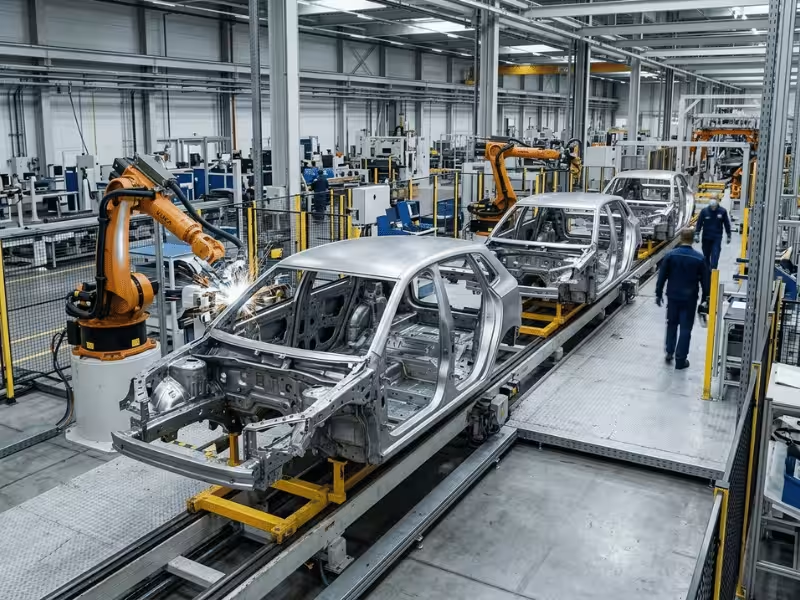
The body-in-white, the bare welded shell of a car, is where steel proves itself. Today’s shells aren’t the soft, heavy panels of the 1980s. They lean on advanced high-strength steel (AHSS), which lets engineers use thinner sheets that still take a hard hit.
Look at the safety cage around you, and you’ll find boron steel in the B-pillars, door beams, and roof rails. Hot-stamped boron parts reach tensile strengths above 1,500 MPa, several times that of ordinary sheet. In a crash, they hold their shape and keep the passenger cell intact while softer zones crumple to soak up energy.
That mix matters. Automakers pair grades on purpose: crumple zones use steels that fold and absorb, while the cage uses steels that refuse to bend. The result is a lighter body that meets tough crash rules without pricing the car out of reach.
Under the skin: the parts that grind, spin, and heat up
Away from the body, steel handles the jobs no light metal wants. Gears, crankshafts, camshafts, and drive shafts run on forged and alloy steels that shrug off millions of stress cycles. These parts face fatigue every second the engine turns, and steel’s endurance is hard to beat.
Springs tell the same story. Coil springs, leaf springs, and stabilizer bars use spring steel with careful heat treatment, so they flex thousands of times a day and snap back without sagging.
Then there’s heat. Exhaust systems live in a punishing world of hot gas and road salt. Stainless steel earns its keep here, letting a good system survive 15 years or more where plain steel would rust through in a few.
So why not just switch to aluminum?
Here’s the honest comparison. Aluminum is lighter, roughly a third the density of steel, and that’s a real gift for hoods, some doors, and premium chassis parts. It wins on weight, and in high-end or performance cars, that weight is worth the price.
But three things keep steel in the driver’s seat for most of the car.
Cost. Aluminum costs several times more per pound, and getting the same strength often means using more of it. For a mass-market vehicle built by the millions, that gap decides the whole business case.
Crash performance for the money. Modern AHSS delivers crash protection that rivals aluminum designs at a fraction of the cost. You don’t need exotic metal to build a safe cage.
Joining. This one gets overlooked. Steel spot-welds fast and cheap, and factories are built around it. Aluminum needs rivets, adhesives, or special welding, which slows the line and raises the bill.
So aluminum wins where weight beats everything else: luxury cars, sports cars, and select structural pieces. Steel wins where cost, safety, and buildability all have to balance at once, which describes nearly every car most people drive. Even electric vehicles keep coming back to high-strength steel, because heavy battery packs demand strong crash protection at a price that works.
Energy: Steel in Power, Oil and Gas, and Renewables
Energy is where steel stops being just a frame and starts doing chemistry. Yes, the sector uses plenty of structural steel. But it also demands specific alloys that survive heat, pressure, and corrosion no ordinary grade could handle. Get the grade wrong here, and the failure isn’t cosmetic. It’s a shutdown, or worse.
When steel has to take the heat and the pressure
Inside a power plant, boilers, steam piping, and turbine housings work in brutal conditions. Steam runs past 540°C at high pressure, and the metal has to hold its strength for years without creeping or cracking.
Plain carbon steel would sag and fail. So engineers reach for chromium-molybdenum alloy steels like P91 and P22. These grades resist creep at high temperature and shrug off oxidation. In nuclear and chemical plants, pressure vessels and piping follow strict codes, and the alloy choice is written into the design, not left to chance.
The same logic runs through oil and gas. Line pipe follows API 5L specs, with grades picked for pressure and temperature. When a well produces sour gas, hydrogen sulfide attacks ordinary steel and cracks it from the inside. That’s why sour-service jobs call for specially controlled steels rated to resist that cracking. Wellheads, downhole tubulars, and refinery piping all get spec’d the same careful way.
The grid runs on steel most people never see
Move from the plant to the wires, and steel takes on a new set of roles. Transmission towers, poles, and substation frames stand galvanized against decades of weather, carrying lines across every kind of terrain.
But the most interesting steel in the grid hides inside transformers. Transformer cores use grain-oriented electrical steel, an alloy with added silicon and a grain structure aligned in one direction. That alignment isn’t decoration. It lets magnetic fields flow with far less loss.
Here’s why that matters. A transformer runs 24 hours a day, every day, for 30 years or more. Even a tiny efficiency gain in the core adds up to huge energy savings over that life. Cheaper steel here means higher losses forever.
Renewables lean on steel harder than most expect
Clean energy hasn’t reduced the need for steel. If anything, it has raised it.
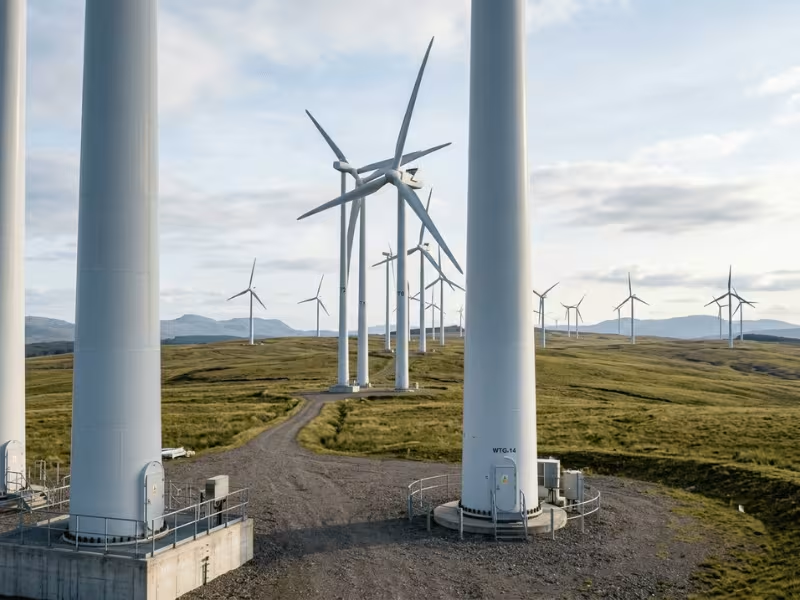
Wind turbine towers are rolled from heavy steel plate, and today’s largest towers climb past 100 meters to catch stronger wind. Every meter is steel plate welded into a tapered tube stiff enough to hold a nacelle steady in a gale.
Go offshore and the demands climb again. Monopiles and jacket foundations use thick plate with built-in corrosion allowances, because saltwater never stops attacking. Even solar depends on it, with tracker frames, mounting rails, and ground screws in galvanized steel holding panels through wind and weather for decades.
The pattern across energy is clear. The sector needs steel not only to stand up, but to perform under conditions that would destroy the wrong grade. Choosing that grade is the real work.
Manufacturing: Why Steel Remains the Default Material in Production Environments
Walk onto any factory floor and steel is everywhere, often in ways you stop noticing. It builds the machines, shapes the products, and shows up again in what leaves the loading dock. In production, steel isn’t the fancy choice. It’s the reliable one, and that’s exactly why it stays.
The machines that make everything else
Production equipment lives or dies on stiffness. A machine tool that flexes under load cuts sloppy parts, so frames get built from heavy steel or cast iron to hold their shape and kill vibration. That rigidity keeps tolerances tight, hour after hour.
Then there are the tools that touch the work. Tool steels earn their keep here:
- H13 handles die casting and hot forming, where heat and shock never let up.
- D2 holds a sharp edge in stamping dies and blanking tools.
- M2 runs in drills, taps, and cutting tools that stay hard while they get hot.
Around those machines, conveyors, robot arms, and fixtures all lean on structural steel and precision shafting. They take the daily beating and keep moving.
Where cleanliness sets the rules, stainless takes over
Food, beverage, and pharma plants play by a different rulebook. Here the metal has to resist corrosion and wash down clean, so stainless steel runs the show.
Grade 304 covers most tanks, piping, and mixers. When acids, salts, or aggressive cleaning agents enter the picture, I steer clients to 316, which adds molybdenum and fights chloride attack far better. Sanitary standards like 3-A and EHEDG demand surfaces that clean fully and leave no traps. Stainless meets that bar, which is why nobody swaps it out.
The steel that ends up in your kitchen
Manufacturing also shapes steel into the goods you use daily. Refrigerators, ovens, washers, and dryers rely on cold-rolled and coated sheet, prized because it stamps cleanly and takes a finish well. This is a big market for laminated and prepainted coil, since a steel panel for refrigerators and appliances needs a surface that looks good for years and survives daily handling. HVAC ductwork and heat exchangers use galvanized and aluminized steel, and packaging quietly consumes huge volumes of tinplate for cans and drums.
The thread across all three is simple. Steel gives producers strength, wear resistance, and cleanability at a price that scales. That combination is hard to walk away from, so most plants never do.

When Steel Is the Better Choice—and When It Is Not
By now you’ve seen steel win across four big industries. But a good engineer never treats it as the automatic answer. The smart move is knowing when steel earns its spot, and when another material serves you better. Here’s the decision logic I use.
When steel is usually the right call
Reach for steel first when these things line up.
Strength has to fit a budget. When a project needs to carry heavy loads without draining the wallet, steel’s strength-to-cost ratio is tough to beat. This is why it wins over aluminum in mass-market cars and over concrete in fast-track buildings.
You need to weld and fabricate freely. Steel bends, cuts, and welds with tools every shop already owns. Aluminum needs special methods, and concrete locks you into forms and cure times. Steel gives you room to adjust on site.
Supply has to stay reliable. Steel sources easily, almost anywhere. When a schedule can’t wait on a rare material, that mature supply chain keeps the job moving.
Repair and recycling matter. You can cut, patch, and reweld steel in the field. At end of life, it recycles cleanly and holds real scrap value. Once a composite part cracks, you often replace the whole thing.
When another material earns the job
Steel isn’t the answer everywhere. Four conditions push me toward something else.
Weight rules the design. When every kilogram counts, aluminum, titanium, or composites pull ahead. Aircraft, drones, and high-end sports cars trade cost for lightness on purpose.
The chemistry turns hostile. In harsh acids or strong chlorides, even good stainless can pit and fail. Here plastics, special alloys, or lined vessels often outlast steel and cost less to maintain.
You need electrical insulation. Steel conducts. When a part must not carry current, polymers or composites do the job steel never can.
Looks and low upkeep drive the exterior. On some architectural facades, a client wants a finish that never needs painting. Aluminum panels can win those jobs on maintenance alone.
Before you commit, ask what the part truly has to survive: the load, the environment, the weight target, and the total cost over its life. Steel wins when strength, cost, and buildability outrank weight and corrosion. When the reverse is true, let it go. That judgment, not habit, separates a good material choice from an expensive mistake.
Quick Comparison Table: Steel by Industry
You’ve read a lot of detail across four industries, so here’s the whole picture in one view. I use a table like this when a client wants to compare options fast, without rereading every section.
Read it across each row. You’ll see what steel does in that industry, why it earns the job, and the one problem you have to plan for. That last column matters most. It’s the difference between a choice that lasts and one that fails early.
|
Industry |
Typical Steel Applications |
Why Steel Is Used |
Main Limitation to Manage |
|---|---|---|---|
|
Construction |
Beams, columns, HSS, rebar, roofing and cladding panels |
Strong and cheap per load, spans wide, goes up fast |
Corrosion on coastal and de-iced sites; match coating or grade |
|
Automotive |
Body-in-white, safety cage, gears, shafts, springs, exhaust |
Crash strength at low cost, easy to spot-weld at scale |
Weight; managed with AHSS and boron grades |
|
Energy |
Boilers, pipelines, transmission towers, transformer cores, wind towers |
Survives heat, pressure, and weather; alloys cut power loss |
Wrong grade fails under creep, sour gas, or salt |
|
Manufacturing |
Machine frames, tool steels, tanks, appliance panels, packaging |
Stiff, wear-resistant, cleans down easily, scales cheaply |
Corrosion in wet or sanitary lines; step up to 316 stainless |
|
Marine / Rail / Agriculture |
Hull plate, rails, wheels, silos, implements, piping |
Toughness and long service life at heavy loads |
Constant abrasion and saltwater; needs coatings and upkeep |
Other Industries That Also Depend on Steel
The four big industries get the spotlight, but steel quietly holds up plenty of others. Here’s where else it does real work.
- Rail and transit. Rails, wheels, axles, and rolling stock frames all run on hardened steel. These parts roll millions of miles under heavy loads, so they need toughness that shrugs off constant wear.
- Shipbuilding and marine. Hull plate, bulkheads, and offshore platforms lean on steel for strength and weldability. Saltwater never quits, so builders spec heavy coatings and corrosion allowances from day one.
- Agriculture. Tractors, plows, grain silos, and irrigation piping use steel because it takes a beating in the field and keeps going. Farmers need gear that survives dirt, weather, and years of hard use.
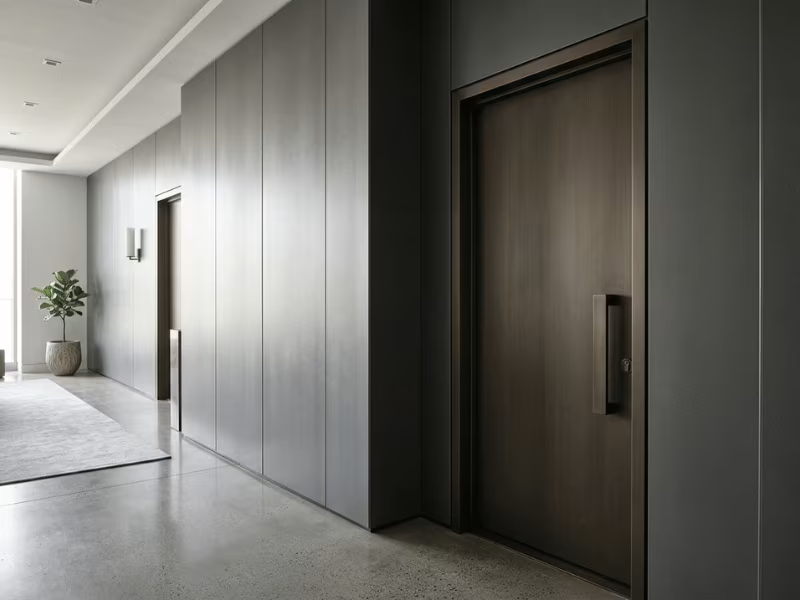
- Doors and interiors. Roller shutter doors, garage doors, and decorative interior panels use coated and laminated steel because it holds a finish, resists dents, and stays flat over long spans.
- Medical equipment. Surgical tools, hospital beds, and autoclave housings rely on stainless steel. It resists corrosion, cleans fully, and holds up to repeated sterilization.
The pattern repeats itself. Wherever a job demands strength, durability, and a fair price, steel keeps showing up.
FAQs
Which industry uses the most steel?
Construction. It takes roughly half of all steel produced worldwide, far more than any other sector. Frames, rebar, roofing, and infrastructure add up fast. Automotive comes next, but it doesn’t come close to the volume construction pulls every year.
Why is steel still used in cars instead of aluminum?
Cost and safety, mostly. Aluminum is lighter, but it costs several times more per pound, and you often need more of it to match steel’s strength. Modern high-strength steel meets tough crash rules at a fraction of that price. Steel also spot-welds fast on the assembly line, while aluminum needs slower, pricier joining methods.
What type of steel is used in construction?
It depends on the part. Structural framing usually runs on a common grade like A992 for beams and columns. Concrete gets reinforced with carbon-steel rebar and welded wire mesh. Roofing and cladding use galvanized or Galvalume sheet, often with a color coating on top. On coastal or de-iced sites, builders step up to epoxy-coated, galvanized, or stainless rebar to fight corrosion.
Why is stainless steel preferred in food and pharmaceutical equipment?
Because it resists corrosion and cleans down fully. Grade 304 covers most tanks, piping, and mixers. When acids or harsh cleaning agents show up, 316 handles them better thanks to added molybdenum. Sanitary standards like 3-A and EHEDG demand smooth surfaces that leave no place for bacteria to hide, and stainless meets that bar.
Can steel perform well in offshore or corrosive environments?
Yes, with the right protection. Plain steel rusts fast in saltwater, so engineers plan for it. Offshore foundations use heavy plate with built-in corrosion allowances, protective coatings, and cathodic protection. For exposed fittings, stainless grades like 316 hold up well. Get the grade and coating right, and steel stands in the sea for 25 years or more.
How do buyers choose the right steel grade for an application?
Start with what the part must survive: the load, the temperature, the environment, and the service life. Match those demands to a grade. Need strength on a budget? A standard carbon grade works. Facing heat and pressure? Move to an alloy steel. Fighting corrosion? Choose stainless, and pick 316 over 304 where chlorides are heavy. The condition sets the grade, not the other way around.
The Real Takeaway
Look back across construction, automotive, energy, and manufacturing, and you’ll notice each one reaches for steel with a different goal in mind. But the choice always comes down to the same four questions: How much strength do you need? What’s the budget? How easily can you shape and join it? And what will it face in service?
Answer those honestly and the right material becomes clear.
Here’s the part people skip. Picking steel is only half the job. Picking the right grade and finish is the other half, and it decides whether your project lasts 5 years or 50. A prepainted or coated steel built for the right environment can carry both the strength and the surface a job demands.
Steel isn’t standing still, either. Cleaner steelmaking and stronger new grades keep pushing what it can do. Across all four industries, steel will earn its spot for a long time to come.
