




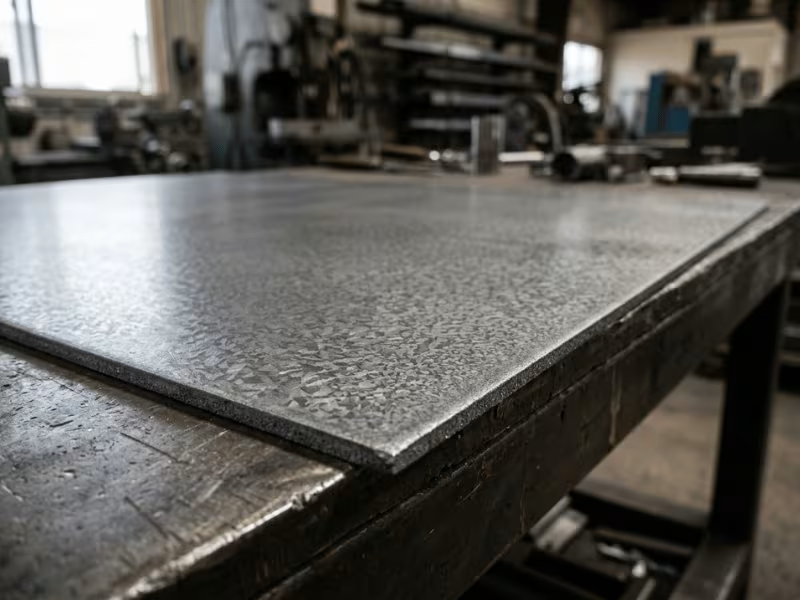
Bonderized metal is steel with a phosphate conversion coating that helps paint stick better and gives short-term surface protection. But it does not replace the corrosion resistance of galvanized steel.
Most readers do not search this term for theory. They want to know if bonderized metal makes sense for painted parts, if it can replace cold-rolled or galvanized steel, and if it can handle outdoor use.
I see the same confusion again and again. The name sounds protective, so buyers often expect more corrosion resistance than the material can really deliver. This guide clears that up. It explains what bonderized metal is, where it works well, and when another substrate makes more sense.
What Bonderized Metal Actually Is
Let’s clear up what you’re really buying, because the term hides more than it explains.
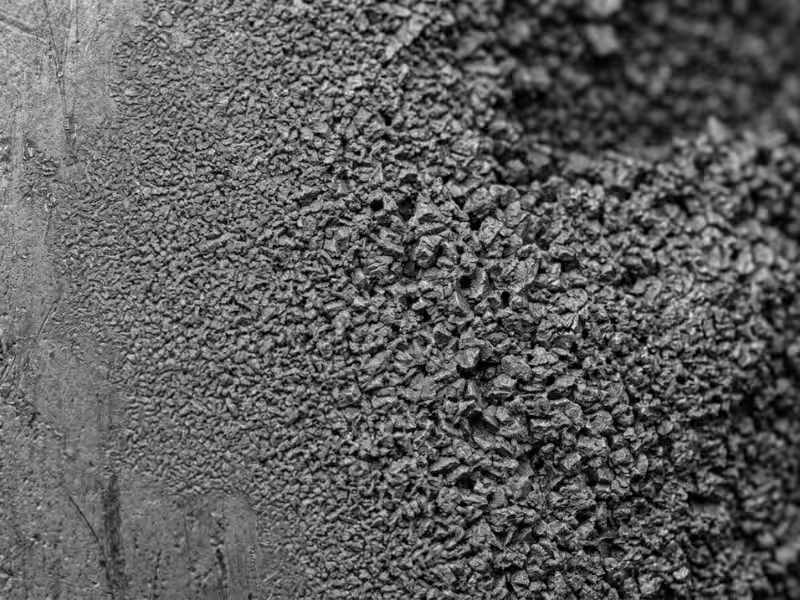
Bonderized metal is steel that runs through a zinc phosphate bath at the mill before it ever reaches your shop. That bath leaves behind a thin, crystalline layer that grows right into the steel surface, not on top of it like paint. The result is a slightly rough, matte gray finish that gives coatings something to hold onto.
That’s the whole idea. The phosphate layer is a prep surface, built to make paint and powder coat stick better.
Why the Name Trips People Up
Here’s a detail that catches a lot of buyers. “Bonderized” started as a brand name — Bonderite — for a specific line of phosphate treatments. Over time, people stretched it to cover almost any zinc phosphate process.
So when a spec sheet says “bonderized,” it doesn’t tell you the exact chemistry or coating weight. Two coils with the same label can behave differently on your paint line. Don’t stop at the name. Ask which pretreatment the mill actually ran, and confirm the coating weight in grams per square meter.
What It Is Not
This is where I see the most costly mistakes.
- It’s not galvanized. There’s no thick zinc layer sacrificing itself to protect the steel.
- It’s not a corrosion barrier. The phosphate film slows flash rust in storage, and that’s about it.
- It’s not a finished outdoor surface. Bare bonderized steel left in the weather will rust, often within weeks.
Think of it as a starting point for a good paint job, never the final protection itself. Get that straight, and every other decision downstream gets easier.
Why Buyers and Fabricators Care About It
If bonderized metal is just a prep surface, why do so many shops pay extra for it? The answer comes down to what happens after the coil hits your production line.
The biggest draw is paint adhesion. That rough, porous phosphate layer gives coatings a surface to grip. Instead of paint sitting on smooth, slippery steel, it locks into the tiny crystal structure like grout into tile. The payoff shows up on the finished part: less peeling, less chipping, and fewer callbacks over the life of the product.
That grip also brings consistency. Both powder coat and liquid paint go on more evenly, so you get fewer thin spots and blisters. When you run high volumes, that uniformity matters more than any single perfect panel. It keeps your reject rate low and your finish predictable from one batch to the next.
The second reason is process savings. Cold-rolled steel usually needs cleaning and an in-house phosphate step before it can take paint well. That means a pretreatment line, chemicals, wastewater handling, and the labor to run it all.
Bonderized coil arrives with that work already done at the mill. For a shop without its own phosphate line, that’s a real advantage. You skip the equipment, skip the chemistry, and move straight to painting. If your finished parts always end up painted, it’s worth comparing bonderized coil against a ready-to-use option like prepainted steel, which removes the paint step entirely.
The third reason is where I have to slow buyers down. Yes, the coating gives some rust resistance, but only the short-term kind. The phosphate film holds back flash rust while coils sit in a warehouse or ride in a shipping container. That protection buys you time, not years.
Do not confuse this with lasting corrosion defense. Once the coil leaves storage, that thin layer will not stand up to weather, salt, or moisture on its own. The rust resistance exists to keep the surface clean until you paint it — and paint is what does the real protecting.
How Bonderized Metal Works
You don’t need a chemistry degree to understand this coating. But knowing the basic steps helps you spot why some coils paint beautifully and others give you trouble.
The process runs in a few clear stages at the mill.
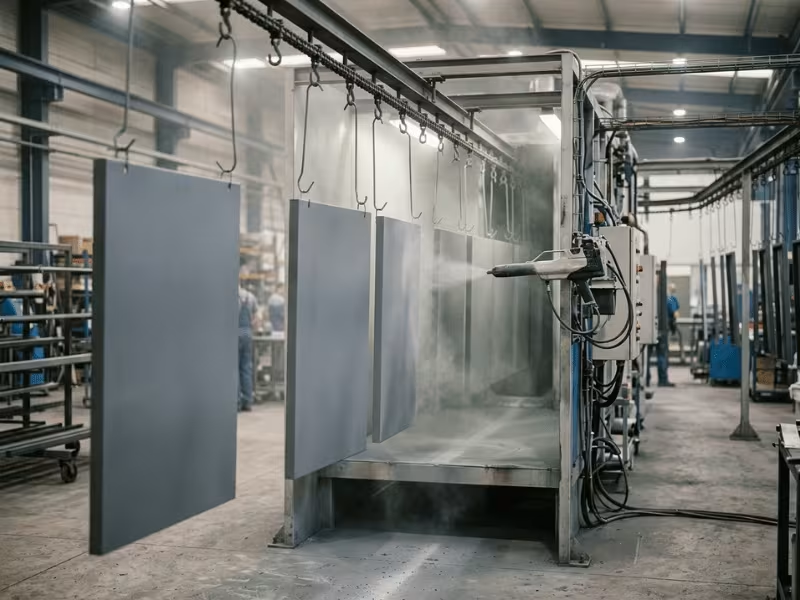
First comes cleaning. Oil, dirt, and mill scale all block the reaction, so the steel gets scrubbed down to a bare surface. Next is activation, a light pretreatment that primes the steel so the crystals form evenly.
Then the real work happens. The steel meets a zinc phosphate bath, and the solution reacts with the surface to grow a thin crystal layer. This reaction stops on its own once the surface converts, which keeps the coating weight predictable.
A rinse washes away leftover chemicals and salts that would otherwise cause defects. Finally, the coil dries, and the mill usually adds a light oil film to guard against rust in transit.
Why This Matters on Your Line
Here’s the part that hits your finish quality. That crystal layer changes the surface profile from smooth to slightly rough and porous. Paint and adhesives grab into those tiny pockets instead of sliding across bare steel. You get stronger bonds and fewer defects.
But watch the oil film. It protected the coil in shipping, yet it can wreck adhesion if it stays on. Many powder coat failures trace straight back to skipped oil removal. Clean it off before you finish, and the phosphate surface does its job.
Bonderized Metal vs Other Common Substrates
This is the section that settles most arguments on the shop floor. Bonderized metal only makes sense when you compare it against the alternatives you’d actually consider for the same part. So let’s line it up against the three substrates buyers weigh most, then look at whether you should even outsource the pretreatment at all.
Here’s the quick view before we dig in.
|
Material |
Paint adhesion |
Corrosion resistance |
Best use |
Relative cost |
Main drawback |
|---|---|---|---|---|---|
|
Bonderized steel |
Excellent |
Short-term only |
Painted indoor parts |
Moderate |
No lasting rust protection |
|
Cold-rolled steel |
Poor without prep |
Very poor bare |
Any part with in-house pretreatment |
Lowest |
Needs your own phosphate line |
|
Galvanized steel |
Fair, needs care |
High, self-healing |
Bare or painted outdoor parts |
Higher |
Zinc can complicate painting |
|
Galvannealed steel |
Very good |
Good |
Painted parts needing more durability |
Highest of the four |
Costs more than bonderized |
vs Cold-Rolled Steel
This choice comes down to one question: do you want to run your own pretreatment line?
Cold-rolled steel is the cheapest option per ton. But it arrives bare. Leave it exposed and it flash rusts fast. Before paint, you have to clean it and add a phosphate step yourself, or the coating peels.
Bonderized coil skips all that. The mill already did the phosphate work, so you paint straight away.
My rule is simple. If you already own a phosphate line and run it well, cold-rolled often wins on total cost. If you don’t, bonderized saves you the equipment, chemicals, and wastewater headache. The raw material costs more, but the finished part usually costs less.
vs Galvanized Steel
People mix these up constantly, and it burns them.
Galvanized steel carries a thick zinc layer that sacrifices itself to protect the steel, even at cut edges and scratches. That’s real corrosion defense. Bonderized metal has nothing like it.
But flip to paint, and the picture changes. That same zinc surface can fight adhesion if you skip proper prep, and it needs the right primer system. Bonderized steel takes paint more easily right out of the gate.
So pick galvanized when the part faces weather, moisture, or bare exposure. Pick bonderized when the part stays indoors, gets painted, and you want a clean, reliable finish without wrestling with the zinc.
vs Galvannealed Steel
Galvannealed is the closest competitor, and honestly the toughest call.
It starts as galvanized steel, then gets heated so the zinc diffuses into the surface and forms a zinc-iron alloy. That alloy takes paint very well and still offers solid corrosion protection. In many ways it gives you both worlds.
The catch is cost. Galvannealed sits at the top of this group.
Here’s how I decide. If the painted part needs to survive more than a clean, dry indoor life, galvannealed earns its price. If it’s a low-cost indoor housing or enclosure that gets painted and stays protected, bonderized does the job for less.
A Quick Note on In-House Phosphating
Some shops ask whether they should just phosphate cold-rolled steel themselves instead of buying bonderized.
The answer depends on volume. A dedicated phosphate line pays off at high throughput, where the per-part savings add up. At lower volumes, the equipment, chemistry, and labor rarely justify the investment.
Match your choice to the environment, the finish, and your own capacity. Get those three right, and the substrate almost picks itself.
Where Bonderized Metal Works Best
Bonderized metal earns its keep in one clear situation: the part gets painted and stays out of harsh weather. Match it to those jobs and it performs beautifully. Here are the four places I recommend it most.
Appliances and HVAC Housings
This is bonderized metal’s home turf. Refrigerator liners, washer housings, dryer cabinets, and indoor HVAC panels all live inside, and they all get a painted finish.
The environment stays dry and controlled, so short-term corrosion protection is all you need before the paint goes on. The phosphate surface then delivers the clean, even finish appliance makers depend on. Just as important, it lets a shop skip building its own phosphate line — a big deal on high-volume home appliance work.
Furniture, Shelving, and Enclosures
Powder coat lines love this substrate. Office furniture, storage racks, electrical enclosures, and server cabinets all benefit from the uniform grip the phosphate layer provides.
That consistency shows up in the finished look. You get a smooth, even coat across every panel, with fewer thin spots and blisters from batch to batch. For anything where appearance sells the product — including furniture panels — that reliability is worth the raw material premium. These parts also stay indoors, so corrosion risk stays low.
Automotive Interior and Under-Hood Painted Parts
Here I add a caution. Bonderized metal fits interior brackets, seat frames, and some under-hood components — the painted parts tucked away from direct weather.
It works because those parts get coated and stay somewhat protected. But don’t confuse this with body panel protection. Exposed panels face road salt, spray, and constant moisture, and bonderized steel can’t handle that. Automakers reach for galvanized or galvannealed there. Keep bonderized where the part gets painted and shielded, and it holds up fine.
Light-Duty Painted Equipment and Building Components
The last group needs the tightest guardrails. Interior framing, door frames, ceiling grids, and painted panels on light equipment can all use bonderized metal — but only when the paint system stays intact and the part stays dry.
The moment moisture gets past the coating, or the part sees outdoor exposure, this substrate falls short. So I only spec it here when I’m confident the finish will hold and the environment stays protected.
Notice the thread across all four. Bonderized metal shines when paint does the protecting and the part stays out of the weather. Stay inside that boundary, and it rewards you with a clean finish at a fair cost.
Where It Usually Fails or Gets Misused
Most bonderized metal failures I get called in to inspect share one root cause. Someone treated the material like galvanized steel. Here’s the truth that saves you from that trap: bonderized metal is often mis-specified as a corrosion solution when it is really a paint-prep solution. Keep that straight, and you avoid the four failures below.
Outdoor Exposure Without a Strong Coating System
This is the big one. A spec calls for bonderized steel on an outdoor part, the paint system is thin or wrong, and rust shows up within a season.
The phosphate layer offers no real weather defense. Paint does all the protecting outdoors, so a weak or incomplete coating leaves the steel wide open. If the part sees rain, sun, or humidity, the finish system has to carry the full load — and many don’t.
For outdoor jobs, I push clients toward galvanized or galvannealed, or I insist on a barrier topcoat built for exposure.
Cut Edges, Scratches, and Weld Areas
These spots break the coating, and bonderized metal has no way to heal itself.
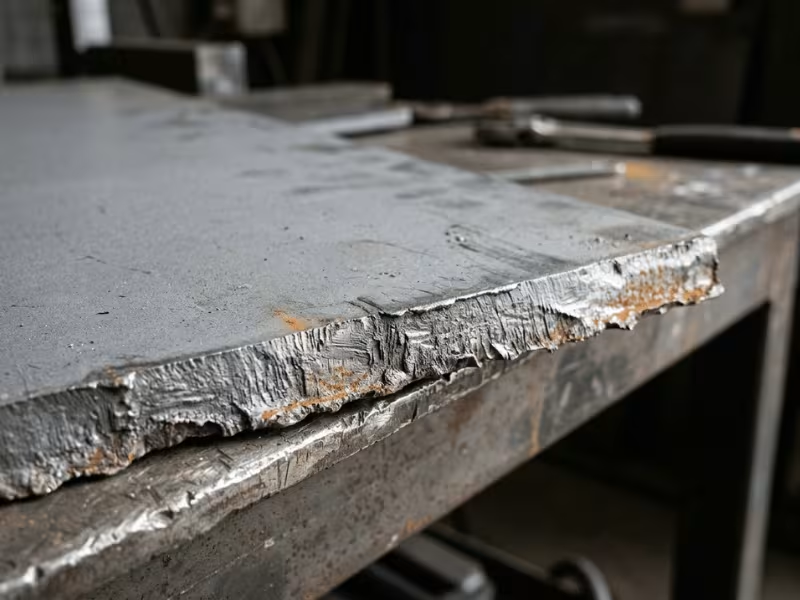
Galvanized steel sacrifices zinc to protect a bare edge. Bonderized doesn’t. Once you cut, gouge, or weld through the surface, that steel is on its own. Rust starts at the edge and creeps under the paint film.
Weld zones lose the coating entirely to the heat, leaving a bare, discolored ring. I treat every cut edge and weld as an open door for corrosion. Prime them before you finish, and never assume the phosphate layer wraps around a fresh cut. It doesn’t.
Humid Storage and Aged Coils
Time and moisture quietly ruin more coils than people expect.
The phosphate surface holds back flash rust for a while, not forever. Store a coil in a damp warehouse, and the humidity slowly degrades that thin layer. Push past the recommended shelf window, and you’ll see dull spots, staining, or light surface rust before you ever paint.
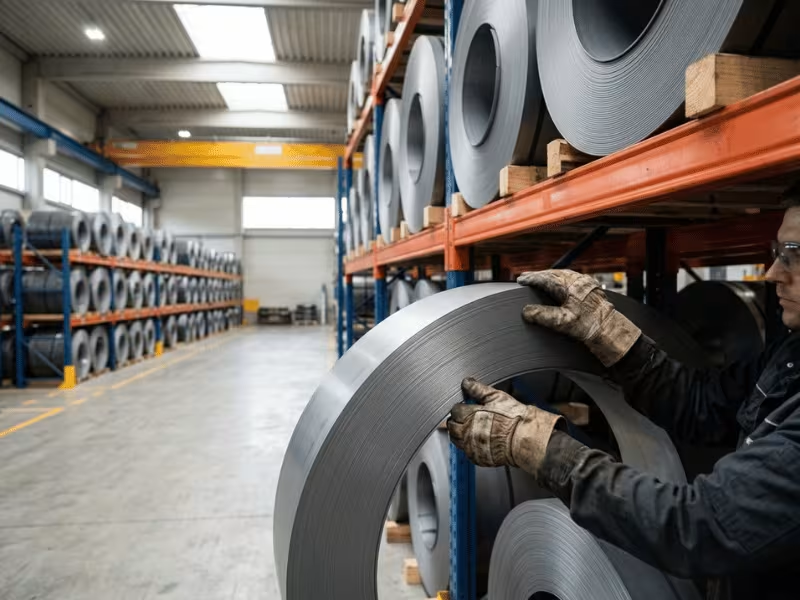
Keep coils in dry, climate-controlled storage. Handle them with gloves, since fingerprints and salt speed up the damage. And use older stock first — an aged coil that paints poorly costs far more in reworks than it saved on the shelf.
Assuming Bonderized Means Rust-Proof
This last one is a mindset problem, and it drives all the others.
The name sounds protective, so buyers expect galvanized-level defense. It isn’t there. Bonderized metal resists rust only until the paint goes on. After that, the coating you apply does the real work.
I’ve watched good parts fail simply because someone specified bonderized where galvanized belonged. They matched the name to a feeling, not the material to the environment.
So treat bonderized metal as what it is: a clean, paint-ready surface for protected, painted parts. Ask what the environment demands, what the finish system delivers, and where the coating gets broken. Answer those honestly, and these four failures rarely show up on your parts.
When to Choose Bonderized Metal — and When to Skip It
After all the comparisons, the decision comes down to a few honest questions about your part. I run every job through the same quick filter, and it rarely steers me wrong.
Choose bonderized metal when:
- The part gets painted or powder coated. This is the core case. The phosphate surface exists to grip a finish, so if paint isn’t part of the plan, you’re buying the wrong material.
- The part lives indoors or in a protected spot. Dry, controlled environments play to its strengths. Think appliance housings, enclosures, shelving, and interior framing.
- You want to skip an in-house pretreatment line. No phosphate line, no wastewater handling, no extra labor. The mill already did that work, so you move straight to painting.
- You only need rust resistance before finishing. If the coating just has to hold off flash rust in storage until the paint goes on, bonderized does exactly that.
Skip bonderized metal when:
- The part stays bare. Without paint, the thin phosphate layer offers almost no protection. Bare bonderized steel rusts fast.
- The part faces weather, coastal air, humidity, or washdown. These conditions overwhelm the coating. Reach for galvanized or galvannealed instead.
- Cut edges stay exposed. Bonderized metal doesn’t sacrifice itself to protect a raw edge the way galvanized does. Exposed cuts become rust starting points.
- Long-term corrosion resistance matters more than paint readiness. If durability against moisture outranks finish quality, this substrate is the wrong tool.
Here’s the pattern under all of it. Bonderized metal is a paint-prep surface, not a corrosion barrier. When paint does the protecting and the part stays sheltered, it delivers a clean finish at a fair price. When the steel has to fight the environment on its own, you need a different substrate. Match the material to that reality, and the choice gets simple.
How to Specify and Buy It Correctly
Getting the material right on paper saves you from surprises on the paint line. A few clear specs and a short conversation with your supplier prevent most of the problems buyers run into.
What to Confirm on the PO or Spec
Never let the word “bonderized” stand alone on a purchase order. Spell out the details that actually drive performance.
Name the pretreatment type and coating weight in grams per square meter, so you know exactly what surface arrives. State the substrate grade to match your forming and welding needs. Call out the oil condition, since a heavy film can wreck adhesion if nobody removes it. And confirm the finish compatibility with your paint or powder system before you commit.
Questions to Ask the Supplier
A good mill will answer these without hesitation. If they dodge, treat that as a warning.
Ask about the storage window and the humidity range they recommend, because an aged coil paints poorly. Request test panels you can run through your own line. Ask for adhesion data from their process, and push them to confirm their coating works with your specific paint system. These answers tell you whether the coil fits your job or just fits the label.
Run a Trial Before Full Production
Here’s the step too many shops skip. Never move a new coil straight into a full run.
Pull sample panels first, then finish them with your real paint system, not a lab stand-in. Your actual line temperatures, chemistry, and cure times reveal problems a spec sheet never will.
Then test the results. Bend the panel to check whether the coating cracks or flakes. Run a tape or crosshatch adhesion check to see if the finish holds. Catch a weak bond on ten panels, and you save yourself a scrapped batch of a thousand.
Spend an afternoon on this trial, and you buy real confidence before the whole order goes to paint.
Common Mistakes Buyers and Shops Make
The same handful of errors show up on nearly every failed part I inspect. Here are the five to watch for, and how to steer clear of each one.
Treating bonderized like galvanized. This is the costliest mix-up. The name sounds protective, so buyers spec it for outdoor jobs and expect zinc-level defense. It isn’t there. Match the material to the environment, not to how the word feels.
Assuming it won’t rust before painting. Bonderized metal resists flash rust for a while, not forever. Leave bare coil sitting around and it corrodes. Paint promptly, and treat the phosphate layer as a short-term head start, nothing more.
Skipping oil removal. The mill adds a light oil film to protect the coil in transit. Leave it on, and your powder coat or paint won’t grip. Most adhesion failures I see trace straight back here. Clean the surface fully before you finish.
Storing coils too long in humidity. Damp warehouses quietly ruin good stock. Moisture degrades the thin coating, and an aged coil paints poorly. Keep coils dry and climate-controlled, respect the shelf window, and use older stock first.
Forgetting edge and weld priming. Cut edges and weld zones lose the coating completely, and bonderized steel won’t heal a bare spot the way galvanized does. Rust starts there and creeps under the paint. Prime every edge and weld before finishing.
None of these are hard to avoid. They just take a moment of attention before the part reaches paint. Get these five right, and you sidestep the failures that send parts back to the shop.
FAQs
What is bonderized metal made of?
Bonderized metal starts as ordinary carbon steel, usually cold-rolled. At the mill, it runs through a zinc phosphate bath that grows a thin crystalline layer right into the surface. That layer isn’t a coating sitting on top like paint. It bonds with the steel to create a slightly rough, matte gray finish. The whole point of that phosphate layer is to give paint and powder coat something to grip. Underneath, it’s still plain steel.
Is bonderized steel the same as galvanized steel?
No, and mixing them up causes expensive mistakes. Galvanized steel carries a thick zinc layer that sacrifices itself to protect the steel, even at cut edges and scratches. That’s real corrosion defense. Bonderized steel has only a thin phosphate layer built to help paint stick. It offers no lasting rust protection on its own. Pick galvanized when the part faces weather. Pick bonderized when the part gets painted and stays indoors.
Does bonderized metal rust?
Yes, it rusts once the coating is gone or broken. The phosphate layer holds back flash rust while the coil sits in storage or ships, but that’s short-term protection only. Leave bare bonderized steel outdoors, and it rusts within weeks. Cut edges, scratches, and weld zones lose the coating and corrode fast. The material resists rust just long enough to reach your paint line. After that, the paint does the real protecting.
Can bonderized steel be powder coated?
Yes, and it’s one of the best substrates for it. The rough phosphate surface gives powder a strong mechanical grip, so you get an even coat with fewer thin spots and blisters. One warning, though: remove the transit oil film first. That light oil protects the coil in shipping, but leave it on and the powder won’t bond. Most powder coat adhesion failures I inspect trace straight back to skipped oil removal. Clean it, then coat.
Is bonderized steel good for outdoor use?
Not on its own. The phosphate layer offers no real weather defense, so outdoor performance depends entirely on the paint system over it. A thin or incomplete coating leaves the steel wide open, and rust shows up within a season. Cut edges make it worse, since bonderized steel won’t protect a bare edge. For outdoor jobs, I steer clients toward galvanized or galvannealed, or I insist on a barrier topcoat built for exposure.
What is the difference between bonderized and galvannealed steel?
Bonderized steel carries a thin phosphate prep layer with no lasting corrosion protection. Galvannealed steel starts as galvanized, then gets heated so the zinc diffuses into the surface and forms a zinc-iron alloy. That alloy takes paint very well and still resists corrosion. So galvannealed gives you both good adhesion and durability, while bonderized only preps the surface. Galvannealed costs more. Choose it when a painted part needs to survive more than a clean, dry indoor life.
The Bottom Line
Strip away the name, and bonderized metal is one thing: a paint-ready surface. It preps steel for a great finish. It does not protect steel for the long haul the way galvanized does.
So stop asking “Is bonderized better?” That question leads nowhere. Ask instead: better for what environment, what finish system, and what corrosion requirement? The honest answers point you to the right substrate every time.
Before you order, work through four steps:
- Confirm the environment. Indoor and dry, or exposed and wet?
- Confirm the finish process. Paint or powder coat, with proper prep?
- Request a sample panel. Test it on your real line before the full run.
- Check pretreatment and storage. Know the coating weight and the shelf window.
Get those four right, and bonderized metal rewards you with a clean, lasting finish.
