




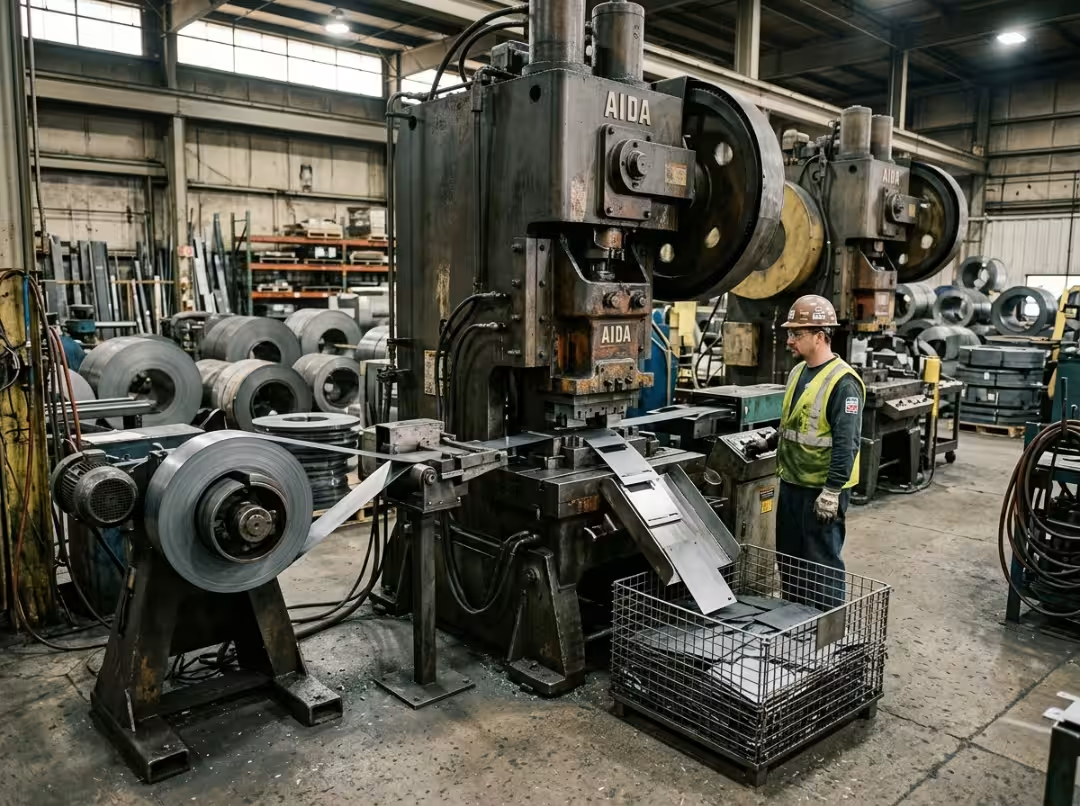
That flat steel washer in your hand, the bracket bolted to an engine, the thin laminations stacked inside a motor — most of them started life the same way: as a flat blank punched out of a larger sheet in a single stroke. That’s steel blanking.
In plain terms, steel blanking is a stamping process that cuts a flat shape out of a larger sheet using a punch and a die. The piece that drops out is the part you want. It’s one of the fastest, most repeatable ways to turn sheet steel into finished components at scale, which is why it quietly sits behind so much of modern manufacturing.
This guide follows the thread that actually matters to a buyer or engineer: what blanking is, how the process controls edge quality, which type fits your part, where it wins, and how it stacks up against laser and waterjet cutting. By the end, you’ll know whether blanking is the right call for your run — or whether another method takes it.
What Steel Blanking Actually Is
The core idea is simple, but one distinction trips people up more than any other.
Blanking vs. Piercing
These two operations look identical on the press but produce opposite results:
- Blanking removes the piece that becomes the part. The material punched out is the product.
- Piercing removes the piece that becomes scrap, leaving a hole behind in the part.
Same tooling principle, reversed intent. Many parts need both, and a single compound tool can handle them in one stroke — more on that below.
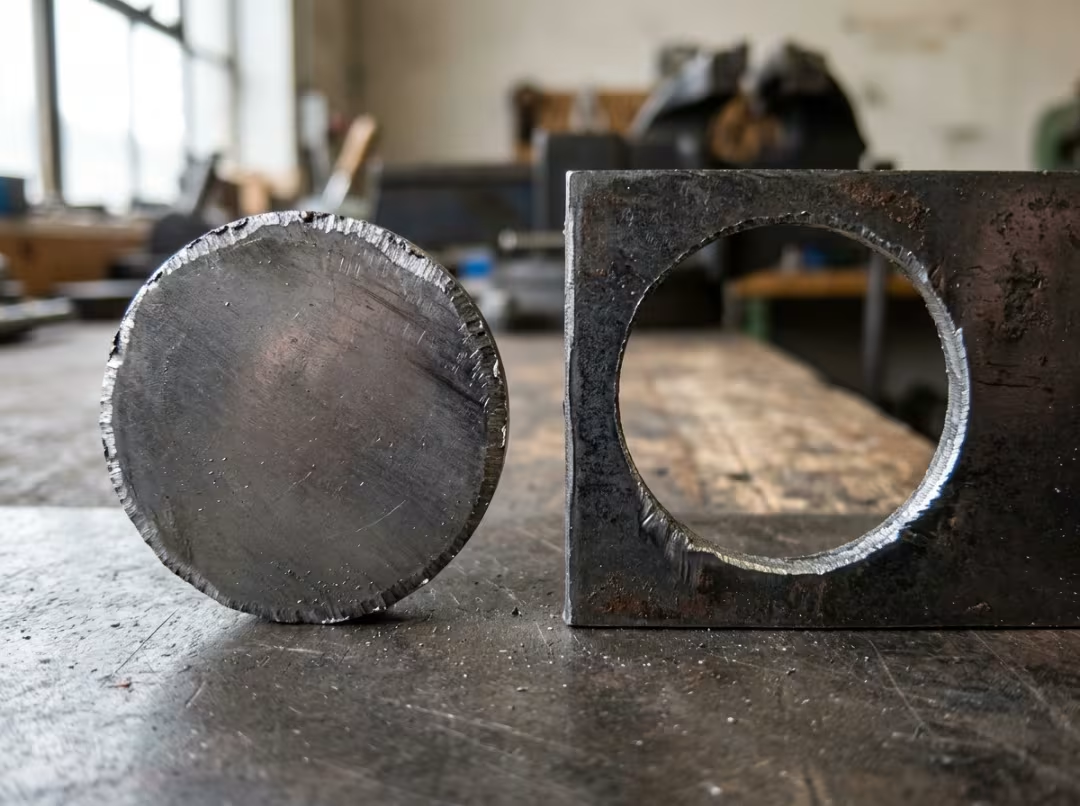
The Role of the Blank
A blank isn’t always the finished product. It plays two roles:
- The final part — a steel washer or flat gasket comes off the press ready to use.
- The starting shape — for parts drawn, bent, or formed later. An EV battery housing or a motorcycle bracket begins as a flat blank before the press shapes it into three dimensions.
So the blank is often the foundation of a multi-step part, not the end of the line. Getting it right sets up everything downstream.
Core Definitions
Five terms cover almost every blanking conversation:
|
Term |
What it means |
|---|---|
|
Blank |
The flat piece cut from the sheet — the product or the stage for the next step |
|
Slug / skeleton |
The leftover sheet material around the blank, sent to recycling |
|
Punch and die |
The two shearing faces that cut the steel |
|
Clearance |
The controlled gap between punch and die that decides how cleanly the steel breaks |
|
Burr |
The small ragged edge along the cut, usually removed later |
Clearance is the one worth memorizing. It’s the single variable that most controls edge quality, and it’s set as a percentage of sheet thickness — not a fixed number.
The Steel Blanking Process, Step by Step
Every cycle follows the same sequence, whether it runs once or hundreds of times a minute:
- Feed and align. The sheet enters the press, positioned by precision pins or an automated feeder.
- Shear. The press drives the punch down, forcing the blank through the die and shearing the steel along the cut line.
- Eject. The blank drops through the die or transfers to the next station.
- Clear scrap. The remaining sheet skeleton exits as scrap for recycling.
- Repeat. On a high-speed mechanical press, this cycle can run hundreds of times per minute.
The key advantage: blanking cuts the entire contour in one stroke. A laser or waterjet has to travel the full perimeter of every part. That single difference is why blanking dominates high-volume work.
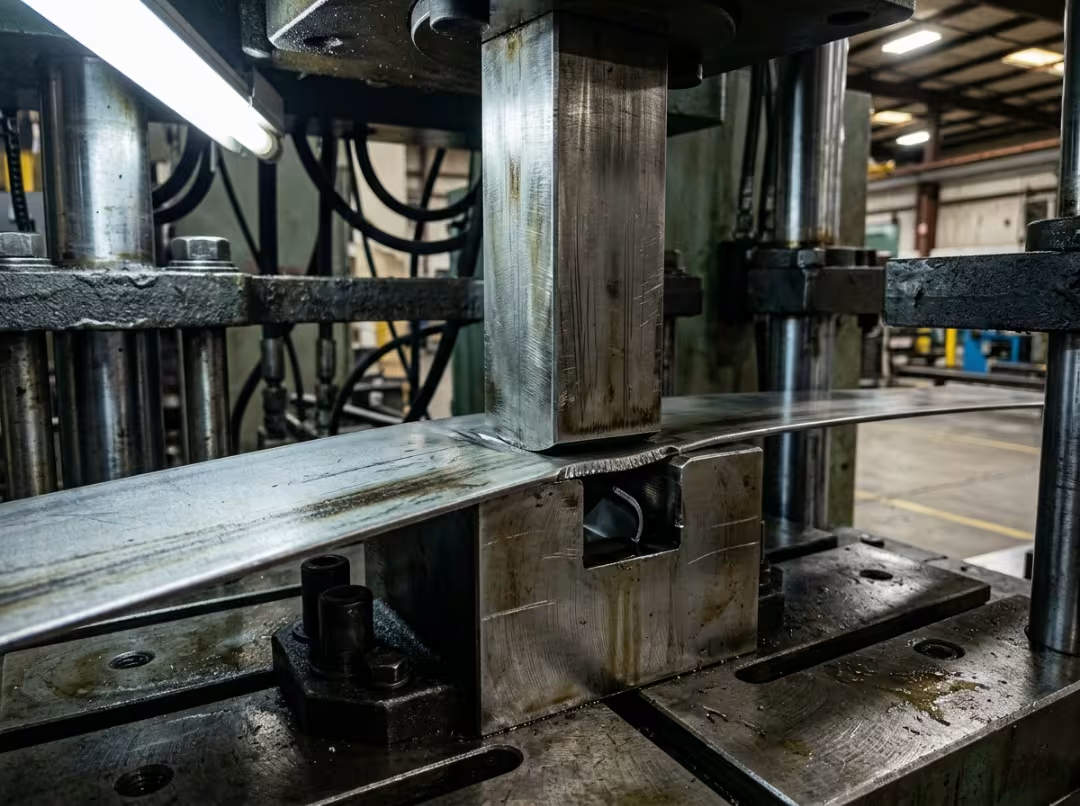
What Controls a Clean Cut
Edge quality isn’t luck. Four factors decide whether a blank comes off crisp or ragged:
- Die clearance relative to sheet thickness — the biggest lever by far.
- Punch speed and press force — enough to shear cleanly without tearing.
- Material hardness and ductility — harder steel breaks differently than soft.
- Burr and rollover levels — both climb fast when clearance is mismatched.
Get clearance wrong and you’ll fight burrs, rollover, and edge fracture for the entire run. Get it right and the press does the quality work for you, part after part.
The Main Types of Blanking
Three variants cover most needs. The right one depends on the edge quality you require and the volume you’re running.
Conventional Blanking
The standard workhorse. It suits parts with normal tolerances that don’t need a special edge finish.
- Runs across most steel types and gauge ranges
- Lower die cost than finer variants
- Leaves a small break line and slight rollover on the edge — perfectly acceptable for many commercial parts
Choose it when the part tolerates a standard sheared edge and cost matters more than a flawless cut face.
Fine Blanking (Precision Blanking)
The premium option. A V-ring assembly, an extra punch, and a counter-punch control metal flow during the cut, so the steel shears cleanly instead of fracturing.
- Produces a smooth, nearly burr-free edge with tight dimensional precision
- Common in gears, sensor brackets, and transmission plates — blanks that go straight into assembly
- Costs more to set up, but often eliminates secondary machining entirely
Choose it when the blank must be assembly-ready with no finishing, and the volume justifies the higher tooling investment.
Compound Blanking
Combines blanking and piercing in a single die, so one stroke does both jobs.
- Higher tooling cost, but shorter cycle time and less material handling
- Best for moderate part sizes where saved handling adds up across a high-volume run
Choose it when a part needs both an outer shape and internal holes, and volume is high enough to recover the tooling cost.
|
Type |
Edge quality |
Tooling cost |
Best fit |
|---|---|---|---|
|
Conventional |
Standard, slight rollover |
Low |
High-volume commercial parts |
|
Fine blanking |
Smooth, near burr-free |
High |
Assembly-ready precision parts |
|
Compound |
Standard, both cuts at once |
Medium–high |
Parts needing shape + holes |
Steel Grades and Thicknesses You Can Blank
Blanking is forgiving on material. It handles:
- Carbon steels — low, medium, and high carbon
- Galvanized and stainless grades
- Non-ferrous metals — aluminum and copper alloys for lighter, conductive parts
Sheet thickness ranges from very thin foil-gauge stock up to heavy plate, depending on press capacity. One rule holds throughout: thicker and harder material demands more force and shortens tool life. Smart designers pick the softest grade that still meets the part’s spec rather than forcing a hard alloy through the press.
Coated feedstock blanks well too. Zinc-coated and prepainted material — like PPGI coil and sheet — can be blanked with the finish already applied, as long as clearance and tooling are set to protect the coating at the cut edge.
Benefits of Steel Blanking
Why manufacturers keep reaching for it:
- High-speed output. A single press can punch hundreds of blanks per minute.
- Stable repeatability. Once the press and clearances are dialed in, every blank matches across a long run.
- No heat-affected zone. Blanking is cold shearing — no heat is baked into the metal, so the steel’s metallurgy stays unchanged. Laser and plasma can’t say that.
- Waste control. A smart nesting layout packs the most parts per sheet, keeping scrap low.
- Consistent edge quality. With correct tooling, the edge stays straight and predictable across the whole batch.
- Low per-part setup once the production die exists.
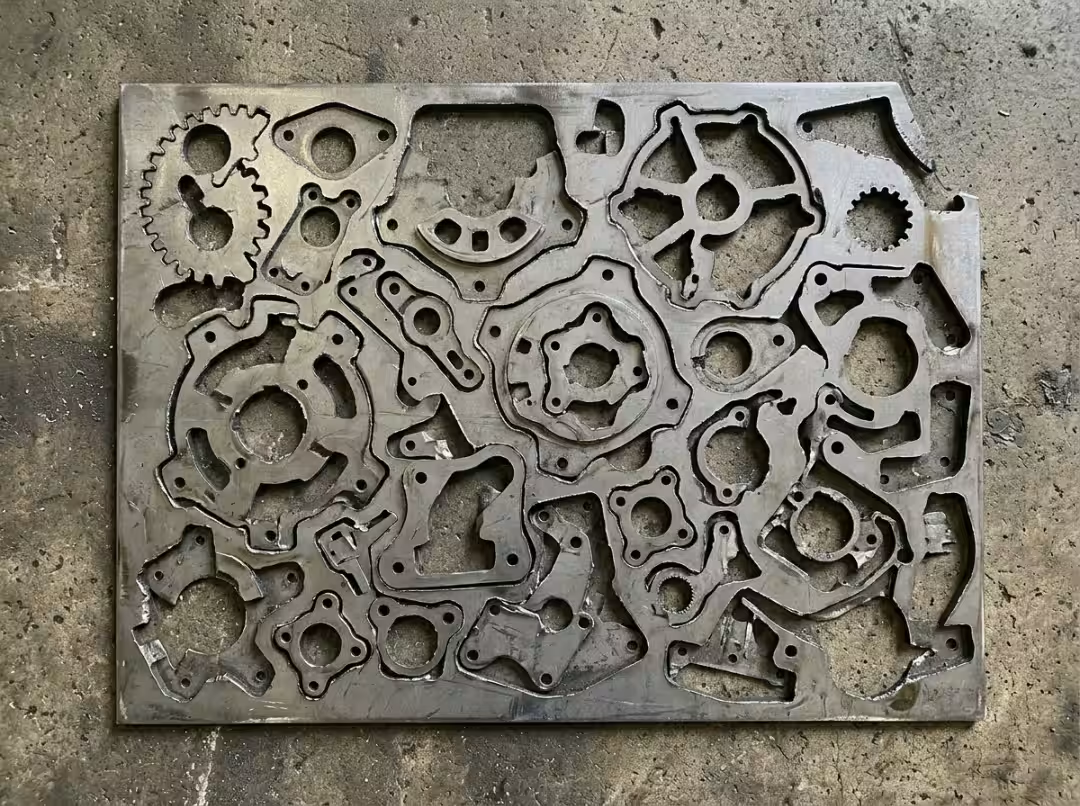
That combination — speed, consistency, and untouched metallurgy — is hard to beat for large runs of the same flat part.
Applications of Steel Blanking
Blanked parts are everywhere once you know where to look:
- Automotive: gears, brake backing plates, leaf springs, seat brackets, engine mounts
- Appliances and architecture: control panels, brackets, frames, and ventilation components. Coated steel like prepainted steel is often blanked into finished panels for home appliances, skipping a separate painting step later
- Electrical and electronics: high-volume motor and transformer laminations, contact plates
- Industrial equipment: sprockets, filter elements, plate parts, and heavy-duty components
- Medical devices: repeatable stainless parts held to tight tolerances
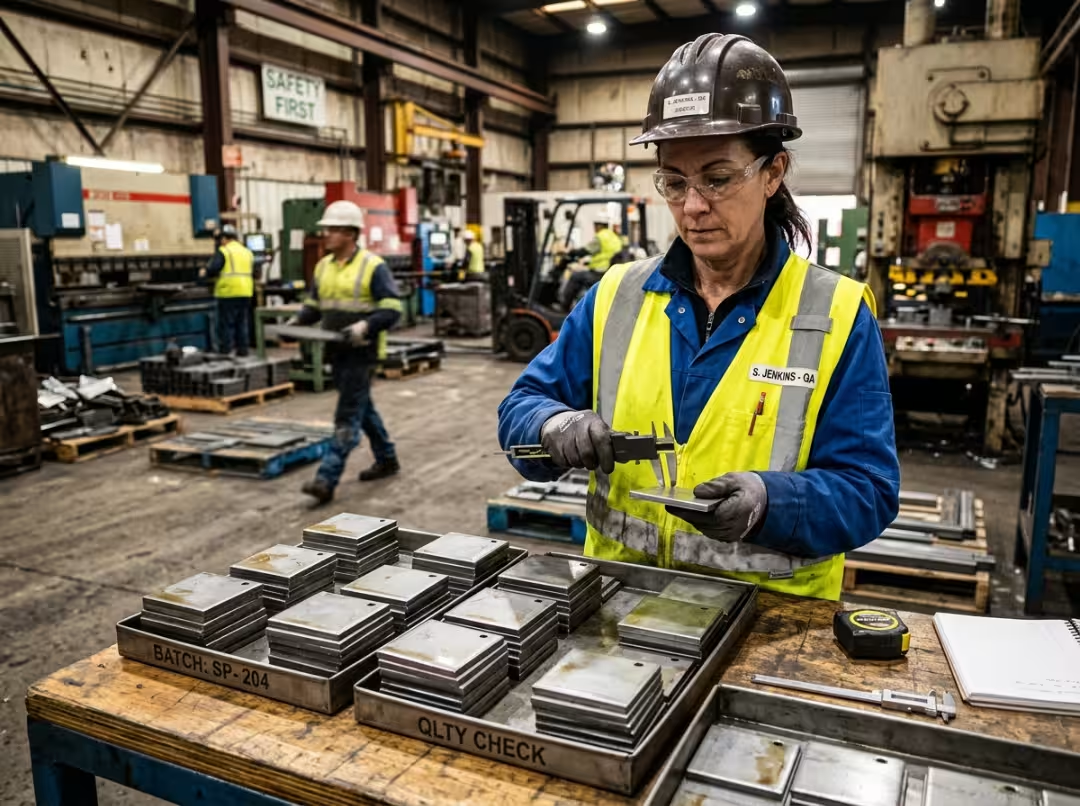
The common thread: high volume, the same shape repeated, and tolerances that must hold across the batch.
Blanking vs. Other Cutting Methods
No process wins everywhere. Here’s when each earns its place.
Blanking vs. Laser Cutting
- Laser needs no tooling and handles small, custom, or one-off batches beautifully. It’s ideal for prototypes and low counts.
- Blanking wins on speed and cost once volume climbs. Laser’s per-part cost stays flat; blanking’s drops sharply as the run grows.
Rule of thumb: below a few thousand parts, laser usually wins. In the tens of thousands, blanking pulls decisively ahead.
Blanking vs. Waterjet
- Waterjet cuts thick material with no heat and can handle exotic shapes, but it processes one part at a time, slowly.
- Blanking outperforms it whenever the shape is standard, and demand repeats.
Rule of thumb: waterjet for thick, low-volume, heat-sensitive work; blanking for standard shapes at scale.
Blanking vs. Punching
These aren’t competitors — they’re different jobs. Punching makes holes; blanking cuts the outer shape. A compound tool combines both, but the intent differs.
|
Method |
Tooling |
Best volume |
Strength |
|---|---|---|---|
|
Blanking |
Dedicated die |
High |
Speed, repeatability, low per-part cost |
|
Laser |
None |
Low–medium |
Flexibility, no tooling, custom shapes |
|
Waterjet |
None |
Low |
Thick material, no heat |
|
Punching |
Punch tooling |
Medium–high |
Fast internal holes and features |
Design Rules and Common Mistakes
A few practical rules save expensive surprises:
- Set clearance to thickness. Typical die clearance runs about 5–15% of material thickness. Too tight or too loose ruins the edge.
- Respect minimum feature size. Keep slots and holes at or above the sheet thickness to avoid punch breakage.
- Plan for the sheared-edge slope. A blanked edge isn’t perfectly square — the cut plane angles slightly toward the scrap side. Confirm the part functions with that condition.
- Expect some burr. Burr height usually stays under about 10% of material thickness. Check it against your tolerance before committing to a run.
- Budget for tooling first. The die is almost always the highest cost. Minimizing die changes and consolidating parts onto shared tooling pays off fast.
The classic mistake is treating edge finish as an afterthought. You either deburr after the fact or set clearance exactly right up front — decide which before the run, not during it.
Frequently Asked Questions
What’s the difference between blanking and piercing?
Blanking leaves the punched-out piece as the part. Piercing keeps the sheet and discards the slug, leaving a hole. Same mechanics, opposite goal.
When should I choose fine blanking over conventional?
Choose fine blanking when the part must be assembly-ready, with a smooth, near-burr-free edge and no secondary machining — think gears or precision brackets. If a standard sheared edge works, conventional is cheaper.
What burr height should I expect on a blanked part?
Usually under about 10% of the sheet thickness with correct clearance. If your part can’t tolerate that, plan a deburring step or specify fine blanking.
Can I blank prepainted or galvanized steel without wrecking the coating?
Yes, with proper tooling and clearance. Coated and prepainted stock is routinely blanked so parts come off the press already finished — just set clearance to protect the coating at the cut edge.
How does nesting reduce scrap?
Nesting arranges the part shapes on the sheet to pack the maximum number per sheet. A tighter layout means less skeleton scrap and lower material cost per part.
Should I run a pilot before paying for a production die?
Yes. A short pilot on a prototype or soft-tooling setup lets you confirm edge quality, tolerances, and fit before committing to expensive hard tooling.
When does laser cutting beat blanking?
For low volumes, custom shapes, and prototypes. Laser needs no tooling, so it stays cheaper until volume rises into the thousands — at which point blanking’s per-part economics take over.
How thick can steel be for blanking?
It depends on press capacity. Blanking spans thin foil-gauge sheet up to heavy plate, but thicker and harder material needs far more force and wears tooling faster.
The Bottom Line
Steel blanking is a high-output, repeatable way to turn sheet steel into precise flat parts — fast. Its edge lives at the intersection of three things: consistent edge quality, low scrap, and press speed that leaves per-part cutting methods behind. For any team producing the same flat shape in large quantities, a blanking tool chain is hard to beat.
The decision always comes down to two questions: what geometry do you need, and how many will you run? Standard shape, high volume, tight repeatability — blanking wins. Custom shape, low count, or very thick material — look at laser or waterjet first.
Your next step is concrete. Write down your sheet grade, thickness, part shape, and target volume, then hand that spec to a blanking specialist and ask for a short pilot run. Within days you’ll know whether blanking is the lowest-cost path to your part — or whether a different method fits better.
